
Shisha charcoal buyer guide
How to Compare Shisha Charcoal Samples Objectively
A practical side-by-side protocol for importers, distributors, and brand owners—plus a scorecard that keeps Supplier A, B, and C on the same test conditions.
Practical guideControlled test methodCSV + print export
The comparison rule
If the setup changes, the result is not comparable.
Burn time is not a universal product number. Cube dimensions, quantity, ignition method, airflow, device, room conditions, and the chosen start and end points can all change the outcome.
The useful question is not “Which supplier wrote the biggest number?” It is “Which sample best meets our requirement when every supplier is tested by the same documented method?”
Seven-step protocol
Set the method before you light the first cube.
The protocol below is intentionally equipment-neutral. Your team chooses the acceptance criteria; the discipline comes from applying them consistently.
- 01
Write the acceptance criteria first
Define mandatory pass/fail requirements before seeing the results. Otherwise, a persuasive supplier can quietly move the goalposts after the test.
- 02
Identify every sample
Record supplier, product or grade, dimensions stated by the supplier, sample code, dispatch date, and arrival condition. Use neutral codes if the tester can be blinded.
- 03
Control the physical check
Select the same number of pieces from each sample. Measure dimensions and individual weights with the same instruments, then record breakage, chips, dust, and visible cracks.
- 04
Standardize ignition
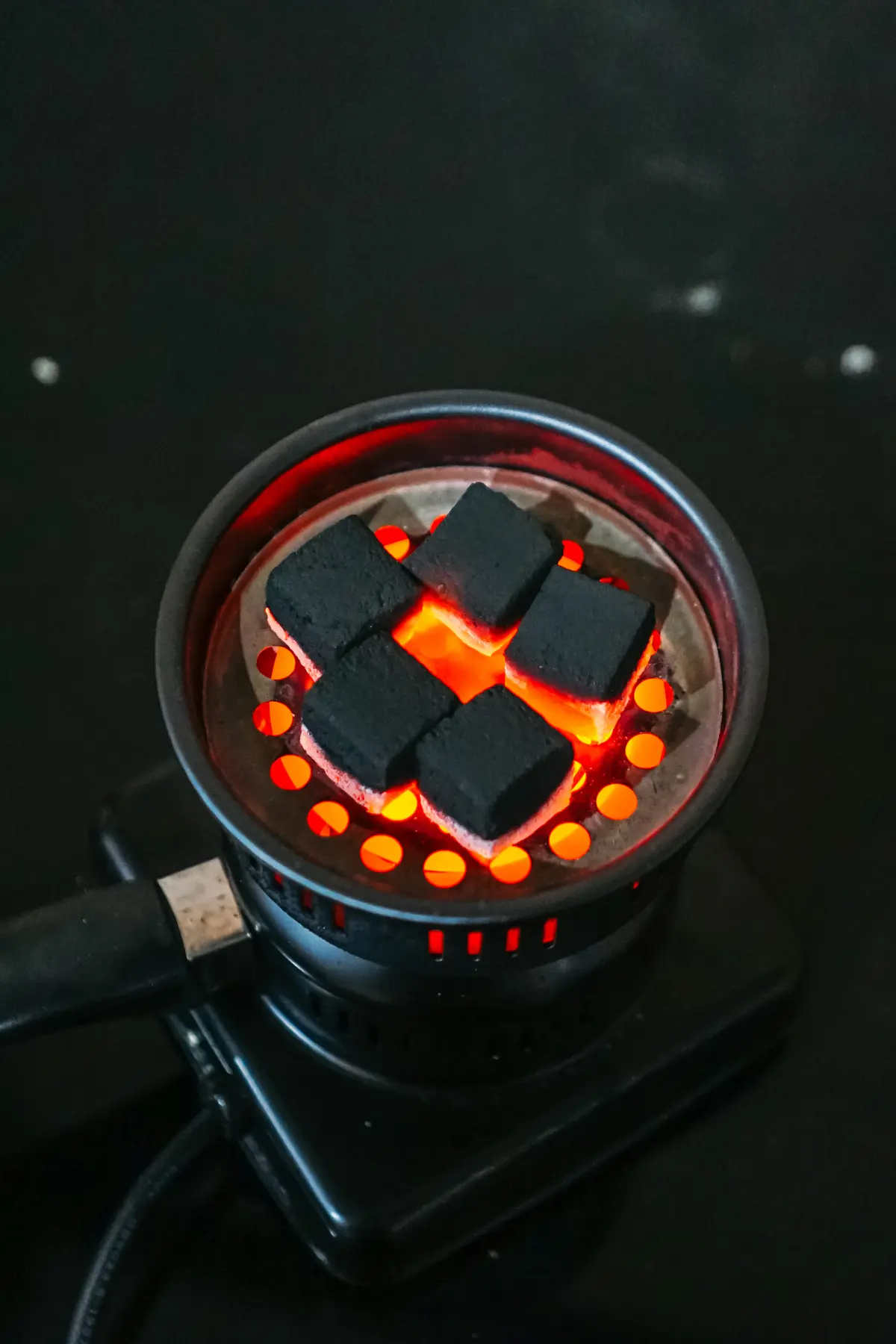
Use one heater, power setting, cube position, turning method, and ready-to-use endpoint. Start the timer at the same event for every sample.
- 05
Record observable behavior
Log time stamps, visible smoke, sparking, odor observations, extinguishing, heat behavior, and uneven burn. Keep measurements separate from subjective notes.
- 06
Handle ash and cubes consistently
Photograph the same stages and use the same turning, tapping, and handling routine. Ash color alone is not a complete quality verdict.
- 07
Repeat before approval
One run can expose obvious failures, but repeat the comparison before treating a result as representative. Preserve the method and the sample identity.
Evidence hierarchy
Keep measurements, observations, and claims separate.
Raw record
Dimensions, individual weights, time stamps, counts, photographs, and the exact test setup.
Buyer observation
Odor acceptance, handling, heat behavior, and operating fit under the buyer's documented conditions.
Supplier document
Review the sample identity, method, reporting basis, date, and relevance before relying on a specification or report.
Compare three samples on one controlled basis.
Enter raw observations first, then score each supplier against your written requirement. Your entries stay in this browser tab unless you export or print them.
Lock the test setup
Complete this before opening or igniting the samples.
Score against your requirement
0 = not tested · 1 = poor fit · 3 = meets requirement · 5 = strongest fit
Review raw measurements and mandatory pass/fail criteria before choosing a supplier.
Record the decision
State why a sample passed, failed, or needs a repeat test.
Common comparison errors
Six ways a sample test quietly becomes useless.
Most bad comparisons do not fail because the tester lacks equipment. They fail because the method changes halfway through.
Different ignition setups
A stronger heater or longer ignition can make one sample appear better before the actual comparison begins.
Undefined burn-time endpoints
Supplier claims cannot be compared when one timer stops at first ash and another stops at complete extinction.
Judging only by ash color
Color is observable, but ash quantity, stability, shedding, and the buyer's operating requirement are separate questions.
Mixing raw data with impressions
Record dimensions, weights, time stamps, and counts separately from words such as good, weak, clean, or strong.
Choosing by the total score alone
A high total cannot rescue a sample that fails a mandatory requirement such as dimensions, odor acceptance, or packaging integrity.
Treating one sample as a container guarantee
A sample test supports product selection. Repeat-order control still requires an agreed specification and order-linked evidence.
Limit of the test
A good sample is a selection tool—not a container guarantee.
Sample approval should lead to an agreed product specification, clear acceptance criteria, packaging alignment, and evidence connected to the commercial order. A polished sample with no repeat-order control is still a procurement risk.
Sample comparison FAQ
Questions buyers should settle before approval.
The scorecard improves consistency. It does not replace product judgment, technical documents, or supplier verification.
01What should I test in a shisha charcoal sample?+
At minimum, record dimensions, individual weight, breakage on arrival, ignition conditions, odor observations, visible ignition behavior, heat and burn behavior, ash handling, and cracking. Use the same setup for every supplier.
02How should I score different charcoal suppliers?+
Write your acceptance criteria first, keep raw measurements, and score each sample against the same buyer-defined requirement. A total score is only a summary and should not override a mandatory failed criterion.
03Does ash color prove shisha charcoal quality?+
No. Ash color is one observable characteristic. Buyers should also record ash quantity or mass when measured, stability, shedding, cleanup behavior, and the conditions of the burn test.
04Can one sample prove future container consistency?+
No. A sample describes the product evaluated under the recorded conditions. Repeat-order consistency also depends on an agreed specification, production control, acceptance criteria, and evidence linked to the commercial order.
05Can I request a shisha charcoal sample from Unimax?+
Yes. Unimax offers a free product sample up to 10 kg. The buyer pays international courier costs, and the sample procedure is confirmed for the destination and product requested.
Evaluate before you order
Request a Shisha Charcoal Sample
Product samples are free up to 10 kg. The buyer pays international courier costs. Share your company, country, target requirements, and current buying stage.
Request sample on WhatsApp