
Coconut charcoal buyer guide
How to Verify a Coconut Charcoal Factory Before You Order
A practical due-diligence method for importers, distributors, and brand owners—built around current access, product-specific evidence, and a clear link from sample approval to the commercial order.
7-step methodLive-call routePrint / save PDF
The verification rule
Do not verify a label. Verify control.
“Factory” and “trader” are sales labels. A buyer needs to know which legal company is quoting, which facility will produce the order, who controls production decisions, and how the approved sample will be connected to commercial output.
Factory photographs help, but current access and order-linked evidence are stronger. The goal is not to collect the largest pile of documents. It is to close the specific risks that could change quality, packaging, timing, or accountability.
Seven-step verification method
Follow the quotation back to the factory floor.
Complete these steps before treating a website, sample, or video call as sufficient proof for a commercial order.
- 01
Identify the company behind the quotation
Record the legal company name, website, contact person, and the entity expected to invoice or contract. A brand name alone is not enough for due diligence.
- 02
Map the company-to-facility relationship
Ask who owns, operates, or controls the facility and which site will produce your order. The useful question is production control—not whether the salesperson prefers the word factory or trader.
- 03
Request current, product-specific access
Arrange a live call or visit and ask to see the product format being offered. Generic exterior photos do not prove current shisha-cube or BBQ-briquette capability.
- 04
Follow the order through the operation
Ask to see relevant production, handling, packing, finished-goods, and loading-preparation areas. Let the supplier explain each visible stage without guessing from a photograph.
- 05
Connect quality evidence to identity
Check which product, grade, sample, method, reporting basis, and date a specification or test record describes. A report without identity is decoration with numbers.
- 06
Verify packaging and loading readiness
Review inner packs, outer cartons, artwork route, shipping marks, packing configuration, and what evidence will be available before loading.
- 07
Link the approved sample to the order
Document acceptance criteria and connect the approved sample, agreed specification, packaging brief, and commercial order. Factory access matters most when it supports repeat-order control.
Evidence hierarchy
Move from prepared claims to order-linked proof.
Prepared claim
Website copy, brochures, certificates shown without scope, old photographs, and edited company videos. Useful for orientation, weak as standalone proof.
Current visual evidence
Dated product photos, current packing activity, live factory video, finished goods, and loading preparation relevant to the product being sourced.
Order-linked evidence
An identified sample, agreed specification, packaging approval, applicable record, and loading evidence connected to the buyer's actual commercial order.
Factory Verification Checklist
A completed checklist is not automatic approval. Resolve every mandatory gap before deposit or commercial production.
Buyer-directed live call
Use a route the supplier cannot answer with a slideshow.
A live call is useful when the buyer controls the questions and route. It is weak when it becomes a rehearsed tour with no connection to the quoted product.
- 01
Start outside or at the entrance
Confirm the live location context and move continuously into the relevant operating area.
- 02
Show the product being offered
Ask for the same cube, briquette shape, grade, or pack format—not a convenient substitute.
- 03
Follow one continuous route
Move through relevant production, handling, packing, and finished-goods areas with minimal cuts.
- 04
Ask process-specific questions
What is visibly happening here? Which stage comes before and after? What changes for this product?
- 05
Inspect identification
Ask how products, samples, grades, packaging, and buyer approvals are kept distinct.
- 06
Review packing materials
See inner packs, sealing, outer cartons, artwork or labels, shipping marks, and staged finished goods.
- 07
Ask for current documents separately
A live video proves visible conditions; it does not authenticate every technical or legal document.
- 08
Close with unresolved items
List missing evidence, owners, deadlines, and the next verification step before the call ends.
Read factory photos correctly
What the image proves—and what it does not.
Good verification does not reject photographs. It labels their limits so the buyer does not turn a visible scene into an invisible claim.
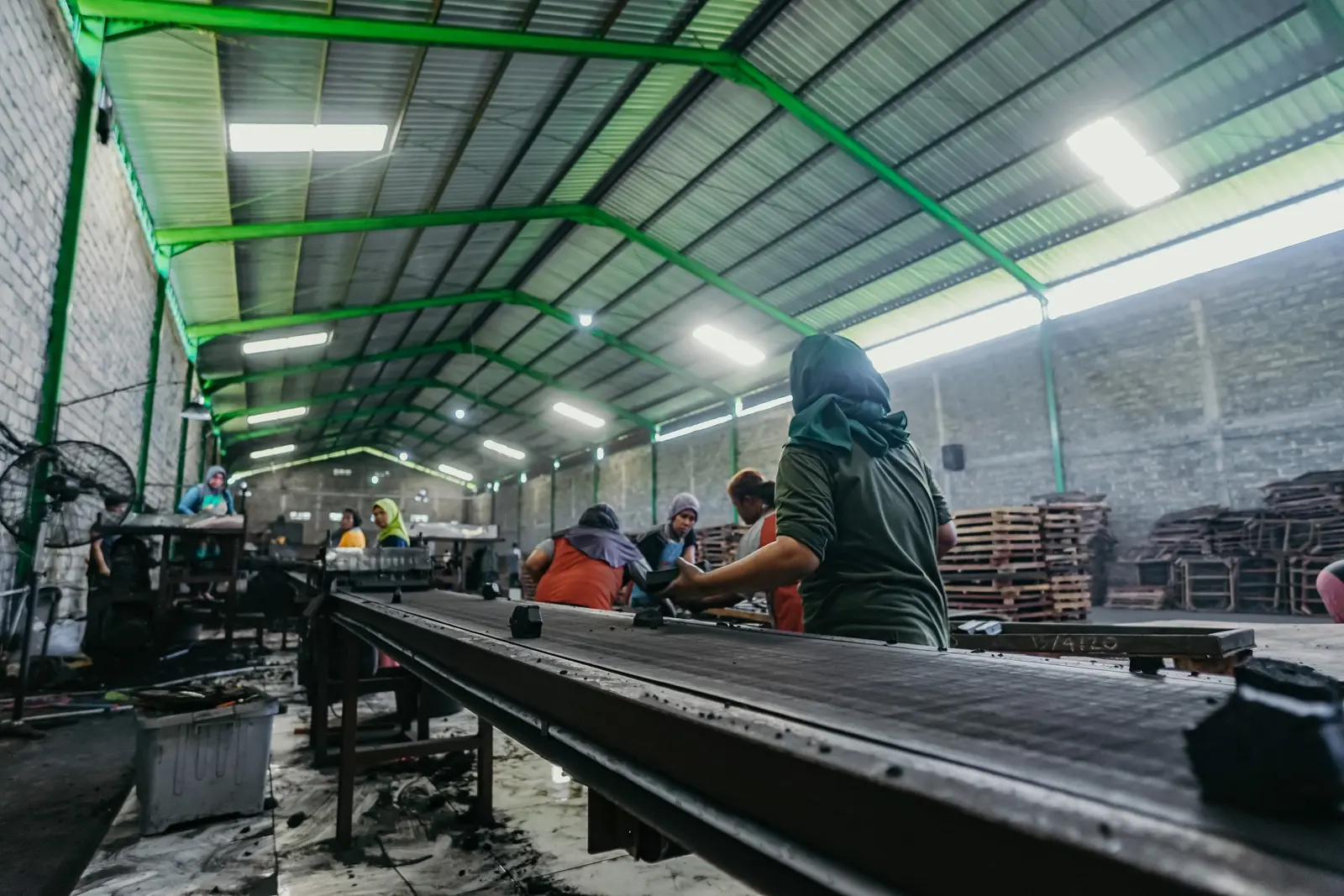
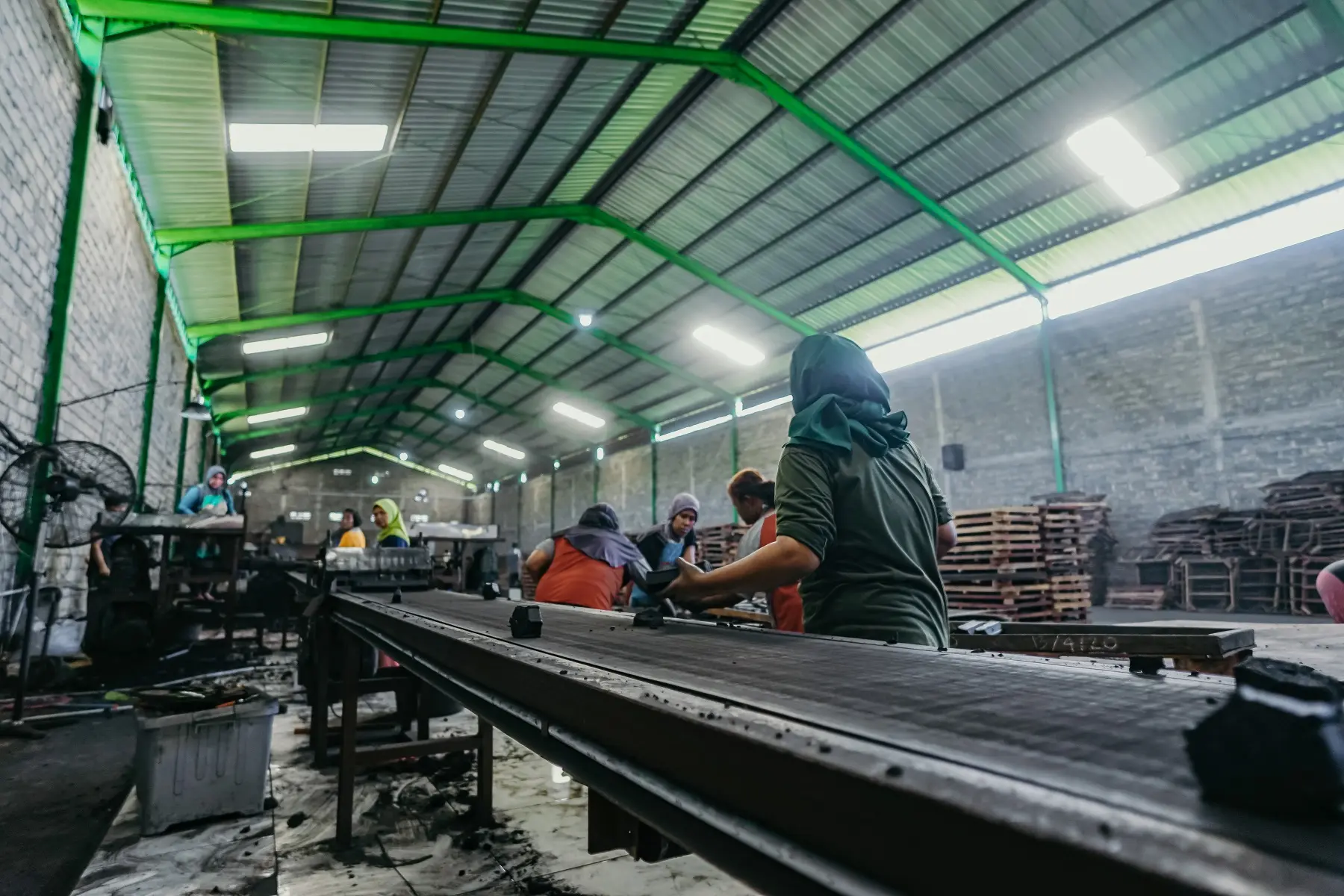
Production-floor activity
Proves: People, material, equipment, and the visible operating environment at the photographed moment.
Does not prove: Exact throughput, automation level, product specification, or the result of a quality test.
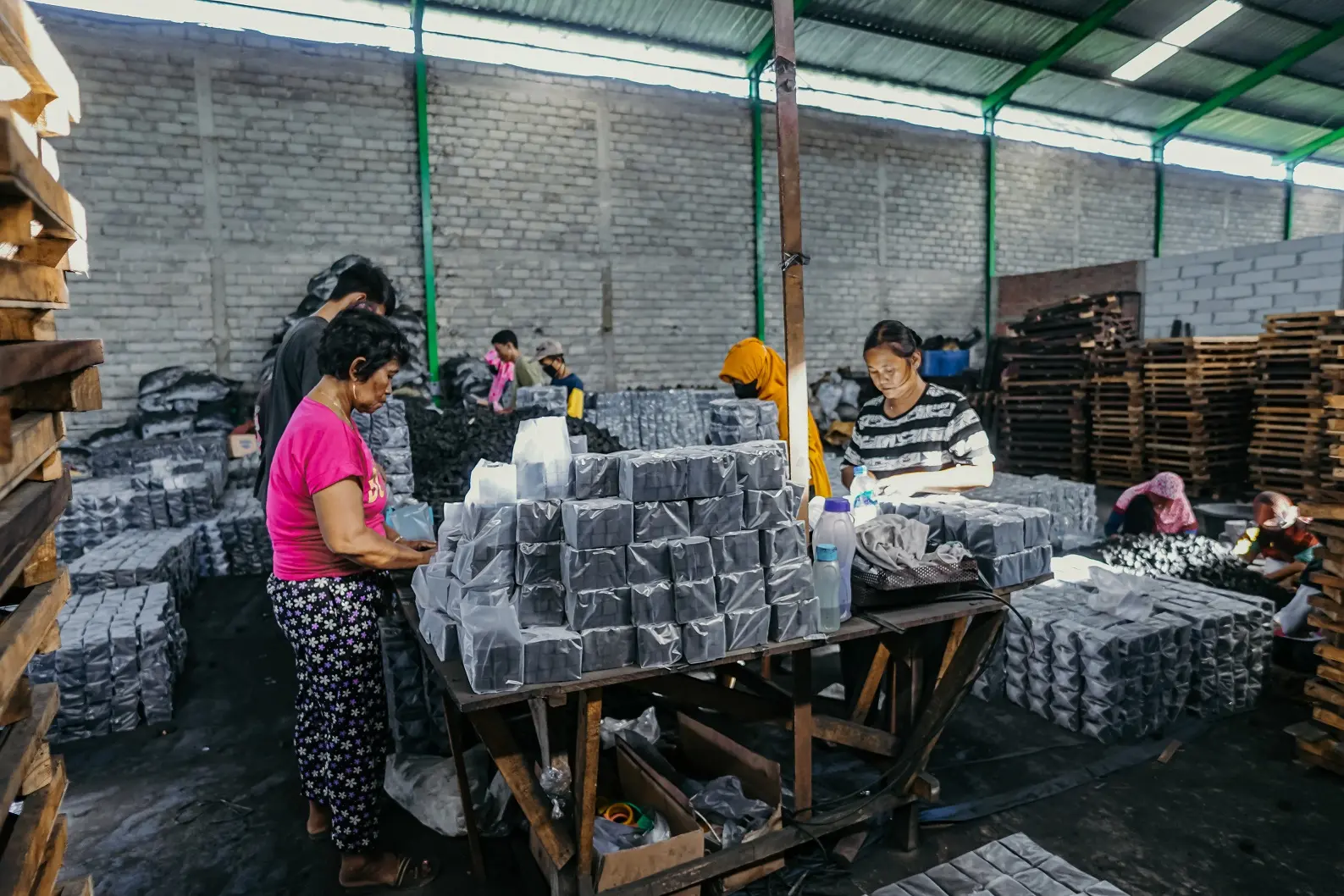
Packing activity
Proves: Coconut charcoal briquettes and sealed inner packs being handled at a packing station.
Does not prove: Cube dimensions, bag weight, batch identity, sealing tolerance, or final inspection result.
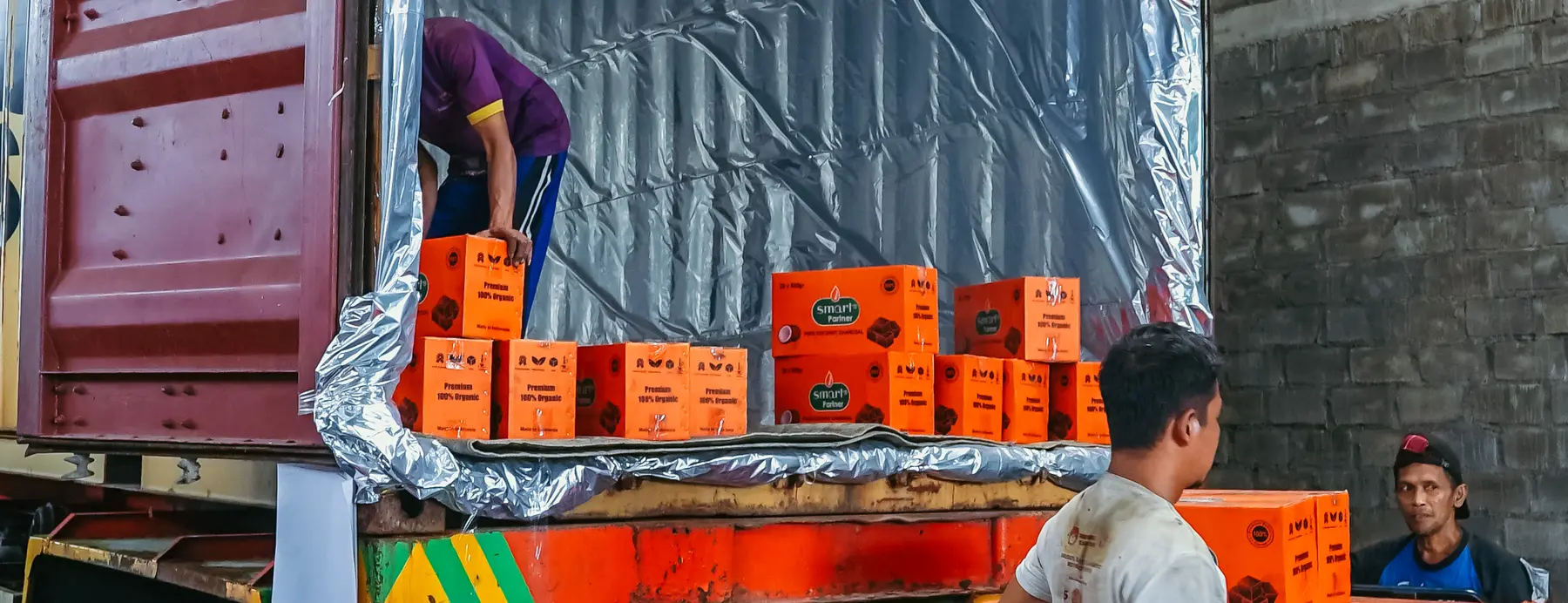
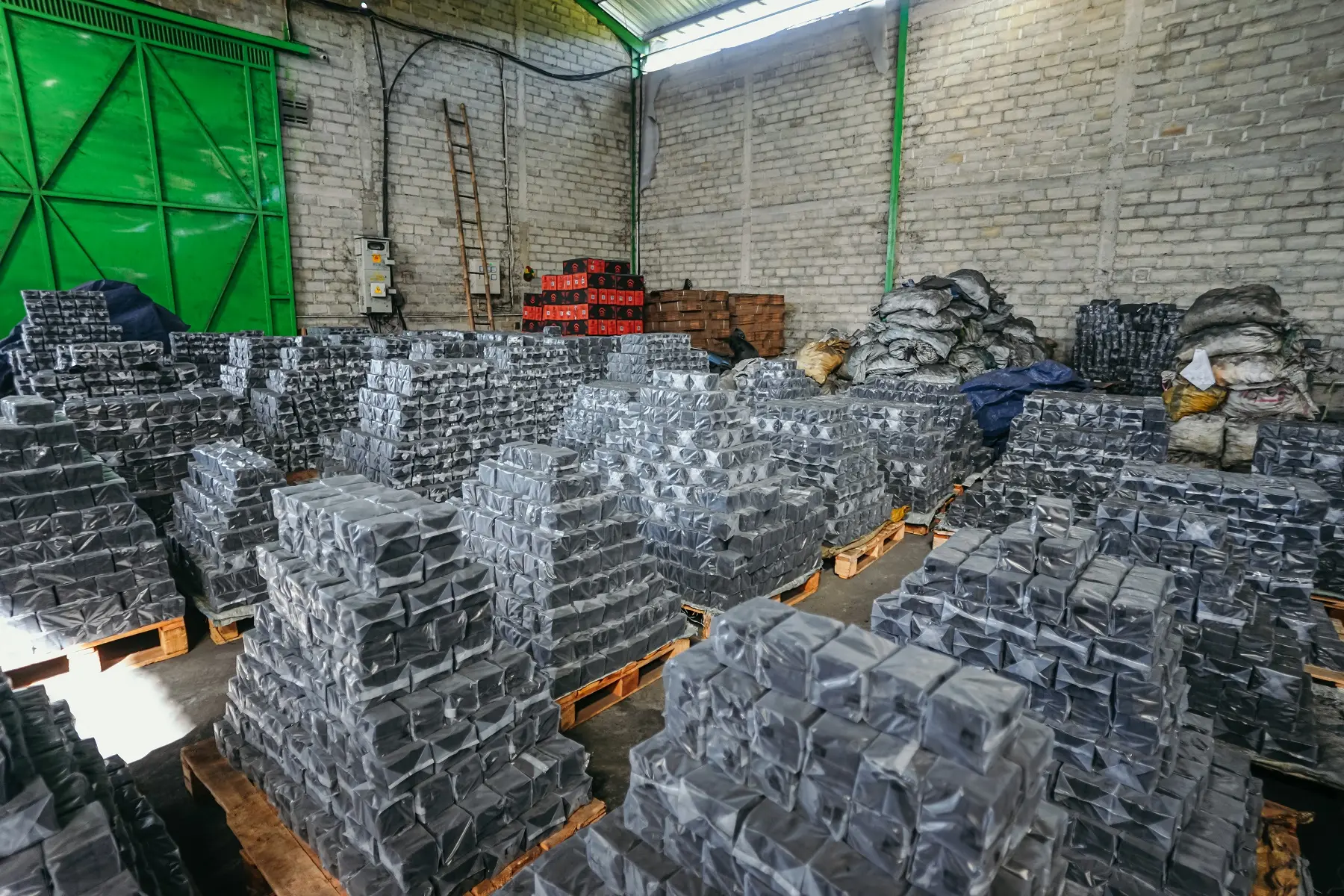
Outer cartons and loading
Proves: Printed outer cartons, a foil-lined container, and visible loading activity.
Does not prove: The destination, customer identity, total shipment quantity, or suitability of the same configuration for another buyer.
Factory-verification red flags
Six signals that deserve a second question.
A red flag is not automatic rejection. It is a gap that must be resolved before the buyer increases financial exposure.
Only polished media
Every supplier has a cinematic video now. Ask for a live, buyer-directed route and product-specific evidence.
The product keeps changing
The quote is for shisha cubes, but the call shows unrelated shapes, old stock, or only generic raw material.
Facility relationship stays vague
The supplier cannot explain which company controls the operation or which site will produce the order.
Documents have no identity
Specifications or reports are shared without product, grade, sample, method, date, scope, or reporting basis.
Commercial answers arrive too early
MOQ, lead time, loading quantity, or packaging promises are quoted before the actual product and pack configuration are reviewed.
Evidence stops after the sample
The sample looks good, but there is no agreed acceptance criterion or plan connecting it to commercial production.
How Unimax should be verified
Our facility relationship is stated without theatre.
PT Unimax has equity ownership and operational control in the production facility.
Qualified buyers can arrange a factory visit around Solo, Central Java, or request a live factory video call. Product samples are free up to 10 kg; the buyer pays international courier costs. Current product and order details are confirmed for the actual sourcing requirement.
Factory verification FAQ
Questions to settle before supplier approval.
The checklist organizes due diligence. It does not replace commercial judgment, product testing, or order-specific review.
01How can I verify a coconut charcoal factory remotely?+
Arrange a live, buyer-directed video call. Ask for a continuous route through the product-relevant production, handling, packing, finished-goods, and loading-preparation areas. Record unresolved questions and request documents separately.
02Does a factory video prove product quality?+
No. It proves only what is visibly shown at that time. Product approval still requires an identified sample, controlled evaluation, agreed specification, acceptance criteria, and evidence relevant to the commercial order.
03How do I tell a factory from a trader?+
Do not rely on the label. Verify the legal company, its relationship to the production facility, who controls production decisions, which site will make the order, and whether current product-specific access is available.
04Should I rely on a laboratory report or certificate?+
Only after checking issuer, scope, date or validity, sample identity, method, reporting basis, and relevance to the offered product. A document can support due diligence, but it does not automatically represent every future shipment.
05Can buyers verify Unimax Charcoal in person?+
Yes. Qualified buyers can arrange a factory visit around Solo, Central Java, or request a live factory video call before travelling.
06What should happen after factory verification?+
Resolve missing evidence, evaluate the physical sample, agree on product and packaging requirements, define acceptance criteria, and confirm what order-specific evidence will be available before commercial production.
Verify before you commit
Arrange a Live Factory Verification
Share your company, country, buyer type, product, buying stage, and estimated volume. We can focus the call or visit on the production and evidence relevant to your requirement.
Verify Unimax on WhatsApp