
Shisha buyer guide · Article 230
How to Evaluate a Shisha Charcoal Production Trial for a New Specification
Set the objective and baseline, label the samples and compare measured results. Review packaging, costs and approval conditions before adopting a new specification commercially.
01 · Define the decision the trial must support
A trial needs a question and an agreed target.
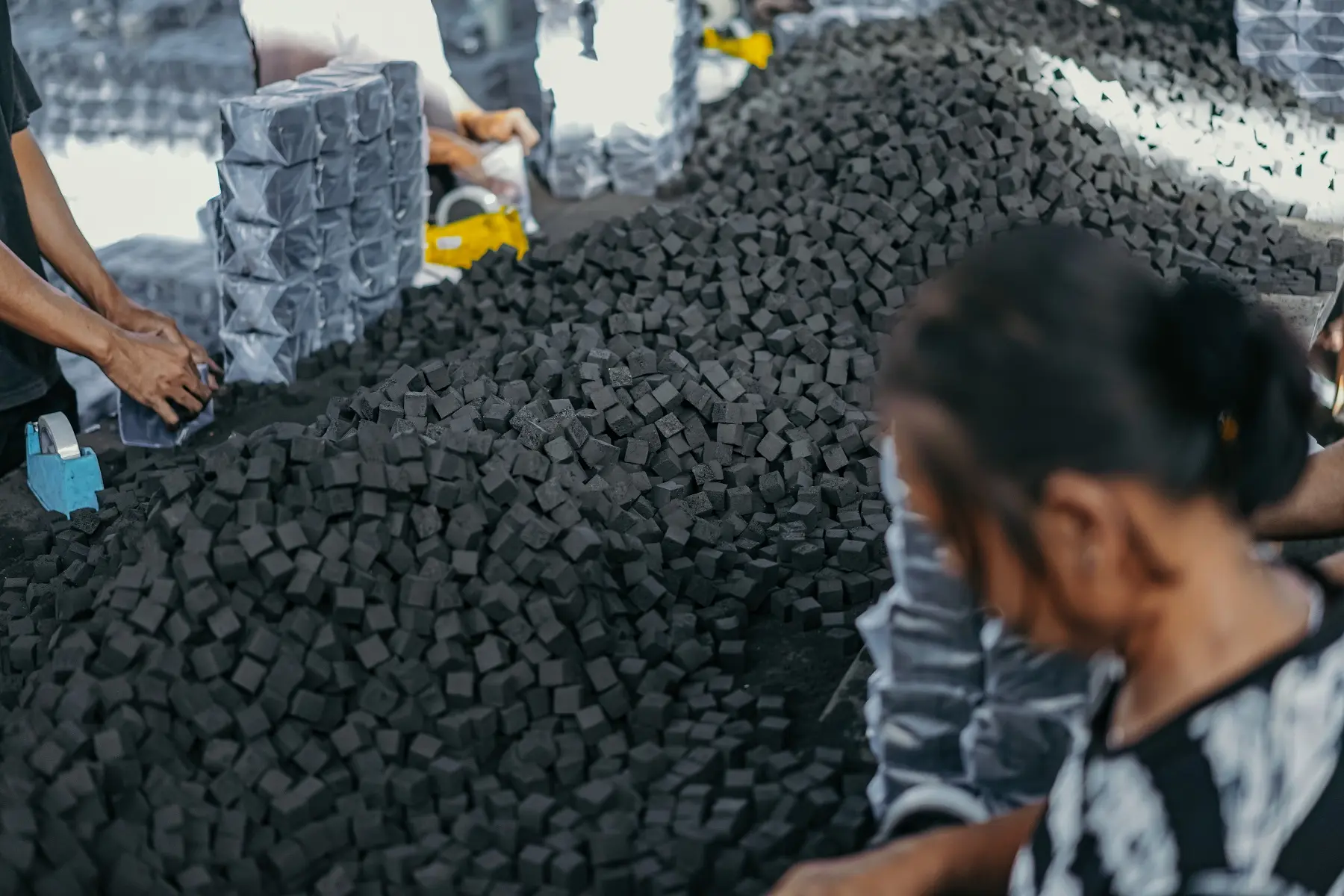
A shisha charcoal production trial should test whether a proposed specification is suitable for an identified commercial requirement. Start with the change requested, the reason for it and the buying decision that will follow. A request to make the charcoal better is too vague to produce a defensible approval.
Identify the current specification revision and the proposed revision. List the finished-product characteristics to be assessed, their agreed criteria and the measurement method. Separate essential acceptance conditions from preferences and exploratory observations; do not invent a universal tolerance or silently relax a condition after seeing the result.
Clarify the scale of the work: a development sample, an identified production trial or a commercial-scale verification. A successful small run supports a conclusion about that run under its recorded conditions. It does not automatically demonstrate repeatability across future batches or capacity for a container order.
Agree who can approve the trial plan, who reviews the evidence and who may authorize commercial adoption. Approval to conduct a trial, approval of its samples and authorization to change a purchase order are distinct decisions.
02 · Establish a usable baseline and comparison
Compare like with like before judging improvement.
Use an identified baseline such as the currently approved product or retained reference sample, with its specification, lot and handling history. Explain any limitations if the comparison material is old, opened or stored differently. A baseline is useful only when the buyer knows what it represents.
Define what changes in the trial and which relevant conditions remain comparable. Where several characteristics change together, record them rather than attributing the outcome to a single variable. The supplier can provide a controlled change summary without disclosing recipes or proprietary settings.
Agree sample selection and the number and source of distinct pieces or packs before testing. Keep repeated readings on one piece separate from results on additional pieces. Match preparation, equipment, units, reporting basis and use-test conditions where relevant to the intended comparison.
Record both favorable and unfavorable results, including characteristics not intended to change but important to acceptance. A gain in one measured property does not establish overall suitability if another agreed requirement fails. State when a difference is too uncertain to support a conclusion.
03 · Keep trial samples and evidence traceable
A promising anonymous sample cannot define a new order.
Assign a trial reference and identify production date, product revision, source lot and sample groups. Label samples so that the laboratory, buyer and supplier can connect observations to the same material. Include the sampling point and whether the pieces are unpacked trial goods or taken from the proposed retail pack.
Retain the test record, method, individual or grouped results and relevant photos under that reference. Record who selected, prepared and evaluated the material. If a result is from supplier testing, identify it as such; do not describe it as independent verification without that evidence.
Agree retained-sample arrangements and handling instructions where these support later comparison. Preserve the baseline and trial identities separately. If a sample is relabeled, repacked or submitted for further testing, keep the link rather than creating an untraceable new reference.
When the trial does not meet a criterion, record the original result and the proposed next step. A revised trial needs its own identity and change summary. Replacing a failed result with a favorable later sample conceals the development history needed for review.
04 · Review packaging, timing and cost exposure
Finished-product changes can affect the commercial plan.
Check whether the proposed product still fits the intended inner pack, retail box and master carton. Review count, net-weight target, packing arrangement and any required artwork change using actual trial evidence. Do not infer final pack suitability from a loose sample photo.
Identify which packaging and handling checks the change justifies and agree their scope. If transport, closure or storage performance must be assessed, specify that review separately. A dimensional check alone cannot demonstrate shipping durability or packaging moisture resistance.
Before the trial begins, agree who bears the trial fee if any, sample and testing charges, packaging development costs, freight and the disposition of unused trial goods. Discuss exposure from printed packaging or other commitments that could become unusable if the specification changes again. No particular fee, minimum quantity or remedy is assumed here.
Ask how trial scheduling and approval timing affect the commercial production window. Record dependencies such as revised packaging supply, additional verification and buyer approval. A successful technical trial is not automatically confirmation of price, lead time or an available production slot.
05 · Use explicit approval gates for adoption
Approve the evidence and define what happens next.
First approve the trial plan: objective, baseline, revision, criteria, methods, sample identity and commercial exposure. Next review the identified results and outstanding questions. Record whether the outcome is rejected, requires another trial, is accepted for a defined next verification step or is approved within an explicit commercial scope.
For a hypothetical example, a proposed cube format meets the agreed dimensional check but requires different retail-box packing. Record the dimensional result as passed and the packing question as open. Do not call the complete specification commercially approved until the agreed packing review and other required gates are closed.
For adoption, issue the approved specification revision, reference sample identities, packing instruction and effective order or lot. State any conditions and any further production verification required. Keep the earlier baseline and trial record accessible so future production can be compared with the actual approval.
PT Unimax Pro Indonesia has equity ownership and operational control in the production facility. Discuss specific product requirements, available production evidence or a qualified live factory call. This guide does not report a completed Unimax development trial or promise that every proposed specification is technically or commercially available.
Buyer tool · production trial approval worksheet
Connect the trial objective to the adoption decision.
Trial reference ___; product and proposed revision ___; baseline reference ___; evaluation date ___; buyer and supplier reviewers ___. Complete the criteria before testing; this worksheet is not a trial result.
| Check | What to review | Evidence / entry | Decision / follow-up |
|---|---|---|---|
| Objective and scope | Question, trial scale and buying decision | Trial ID / requested change / purpose ___ | Plan approver / date ___ |
| Baseline | Current product and comparison limits | Specification / lot / reference sample ___ | Handling differences ___ |
| Proposed revision | Finished characteristics and agreed criteria | Revision / acceptance limits / method ___ | Essential versus exploratory ___ |
| Sampling and labeling | Identified distinct samples and custody | Group IDs / selection / dates ___ | Preparation and storage ___ |
| Measured results | Matched comparisons and all required checks | Baseline / trial / method / result ___ | Pass / fail / unresolved ___ |
| Packing implications | Fit, count, weight and checks required | Pack instruction / artwork / evidence ___ | Open verification and owner ___ |
| Commercial exposure | Trial, testing, packaging and freight terms | Agreed charges / unused goods ___ | Approval before commitment ___ |
| Schedule | Trial and adoption dependencies | Milestones / supply / verification ___ | Provisional dates and owner ___ |
| Adoption gate | Decision, revision and effective scope | Reject / retrial / conditional / approved ___ | Approver / conditions / order or lot ___ |
Record the trial decision
Objective ___; baseline and trial IDs ___; accepted results ___; unresolved checks ___; packing and cost implications ___; reject / retrial / conditional / approve ___; effective revision and scope ___; approver and date ___.
Production trial questions
Does a successful sample approve commercial production?
Only within the scope explicitly agreed. Record whether further packing, production-scale or repeatability verification is required before adoption.
Can several characteristics change in one trial?
Yes, if recorded in the plan, but the outcome may not isolate the effect of one change. State that limitation when interpreting results.
When should trial costs be agreed?
Before testing or committing to packaging and other development expenses. Define responsibility and the disposition of unused trial goods.
What if the product passes but packaging remains unresolved?
Keep packaging as an open approval condition. Do not describe the whole specification as commercially approved until the agreed gates are closed.
Commercial discussion
Discuss the production evidence your buying decision needs.
Share the proposed specification change, baseline requirements, packing format and the trial evidence your buying decision needs. Discuss available production evidence, current specifications and a qualified live factory call.
Discuss production evidenceFactory and quality evidence · About PT Unimax Pro Indonesia · Shisha charcoal products · Contact Unimax
Related buyer guides
Match approved samples to production · Raw-material variation and batch consistency · Factory audit checklist for buyers