
Shisha buyer guide · Article 225
How Pressing and Mold Condition Affect Shisha Charcoal Cube Geometry
Review dimensions, edge finish and visible cracks using an identified sample and a consistent method. Request production evidence before attributing a finding to pressing or mold condition.
01 · Start with the finished-product agreement
Define geometry before judging a cube.
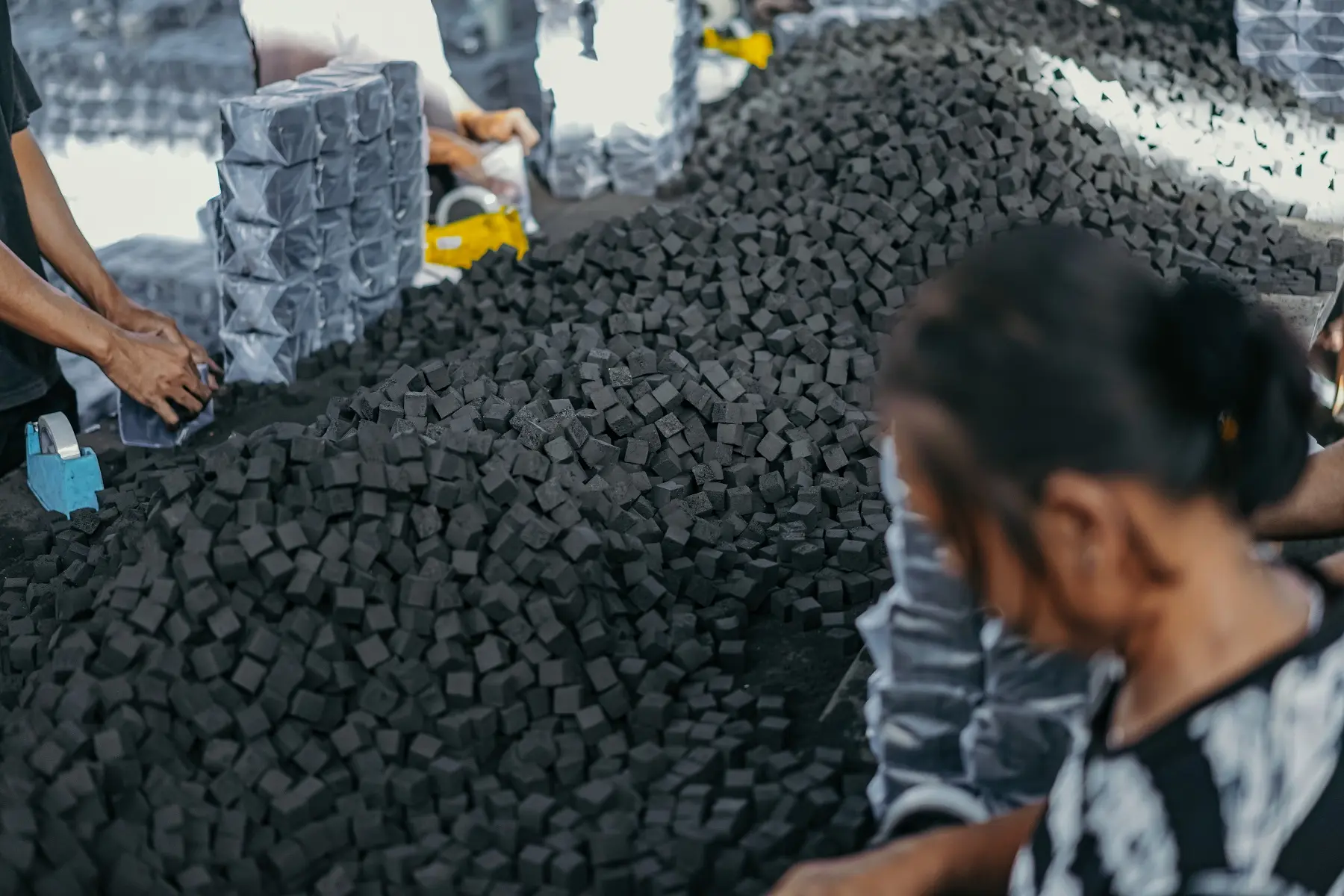
Shisha charcoal mold condition cube size is a production-control question, but the buyer’s starting point is the agreed finished-product drawing or specification. Record nominal length, width and height, permitted variation, edge expectations and the stage at which dimensions will be assessed. A nominal 25 mm label alone does not define an inspection tolerance.
Ask whether the stated size describes finished, dried cubes and how the supplier measures them. Do not compare an in-process reading with a finished-product requirement without identifying the difference. This guide does not set universal tolerances or publish current Unimax inspection results.
Pressing and the forming tool are relevant stages to investigate when cube shape changes. However, an observed size difference is not evidence that a mold is worn or that a pressure setting is wrong. Keep the measured finding separate from the proposed explanation.
02 · Make dimensional readings comparable
Use one agreed measurement procedure.
Identify the lot, carton, pack and individual cube. Agree how distinct cubes will be selected across the goods under review. Record the coverage and its limits; convenient selection from one open pack does not establish the condition of an entire container.
Use a suitable measuring instrument, record its identification and resolution, and confirm its verification status. Agree measurement locations, orientation and contact technique so that rounded edges, loose particles or excessive contact force do not create inconsistent readings.
Record length, width and height separately for each cube rather than only a combined average. If repeated readings are taken on the same piece, keep them distinct from readings on additional pieces. An average can hide an individual dimension outside the agreed range.
Photograph identified pieces beside their records where useful. Photos can document visible condition and orientation, but perspective and an informal scale do not replace controlled dimension measurements.
03 · Inspect edge finish and visible cracks
Describe what you see without inventing the cause.
Agree descriptions for chipped corners, damaged edges, visible cracks and shape irregularities before classifying findings. Record the affected face or edge, the number of distinct pieces examined and the number showing each observation. Preserve an agreed reference sample or labeled reference images.
Check packaging condition and when damage was first observed. A chipped cube on arrival may require investigation of forming, drying, sorting, packing and handling. Appearance alone cannot identify the stage responsible.
Do not convert a visible crack into a claim about internal strength or combustion performance. Where the buying decision requires those properties, agree separate suitable tests and retain their methods and results. Geometry, visual condition and use performance answer different questions.
04 · Request production evidence for a suspected trend
Link the finding to the process records.
When comparable measurements show a recurring pattern, ask which production periods, forming tools or cavities can be linked to the samples, if that traceability is available. Request relevant tool-condition checks, maintenance summaries and in-process inspection records. A generic factory video does not establish the tool condition for a particular lot.
Ask whether the process or tool changed between the approved sample and the questioned production. Request a dated change summary and matched before-and-after finished-product checks. Proprietary pressing settings and recipes need not be disclosed to demonstrate whether an agreed output was met.
Possible differences in material preparation, drying, handling and measurement remain investigation alternatives. If the records cannot distinguish them, record the cause as unresolved. A maintenance action becomes evidence of improvement only after an identified verification run meets the agreed requirements.
05 · Close the review with a purchasing decision
Keep the finding, action and verification together.
For a hypothetical review, a buyer finds one dimension outside the agreed range in an identified sample group. First confirm the method and individual readings. Define which goods are affected, request the relevant production evidence and agree additional sampling or verification before accepting a process explanation.
Record the decision owner and whether the affected goods are held, sorted, rechecked, accepted under an authorized exception or released against the original agreement. Do not silently replace a failed record with a favorable retest. Retain both and explain their relationship.
PT Unimax Pro Indonesia has equity ownership and operational control in the production facility. Discuss your specific product requirements, available production evidence or a qualified live factory call. This relationship does not imply that every record requested in this checklist is already available for every order.
Buyer tool · cube geometry inspection checklist
Record the finding before assigning the cause.
Product ___; lot ___; agreed specification ___; sample plan ___; inspection date ___; reviewer ___. Use agreed product-specific limits; these prompts are not a factory test report.
| Check | What to review | Evidence / entry | Decision / follow-up |
|---|---|---|---|
| Product agreement | Nominal dimensions and finished-product stage | Drawing / tolerance / reference sample ___ | Buyer and supplier approval ___ |
| Sample identity | Distinct cubes across agreed coverage | Lot / carton / pack / cube IDs ___ | Selection plan and limits ___ |
| Instrument and method | Comparable contact points and orientation | Instrument ID / resolution / verification ___ | Method and measurement date ___ |
| Length / width / height | Individual dimensions, not only averages | Cube ID and three readings ___ | Against agreed limits ___ |
| Edges and corners | Visible chips and irregular finish | Location / count / identified photos ___ | Agreed visual criteria ___ |
| Visible cracks | Describe the observation separately | Affected pieces / inspected pieces ___ | Separate strength test if required ___ |
| Suspected production pattern | Link samples to production and tools | Dates / tool references / maintenance ___ | Alternative causes still open ___ |
| Corrective verification | Confirm the result after an action | Trial ID / matched checks / results ___ | Disposition and approver ___ |
Close the inspection
Finding ___; affected goods ___; evidence requested ___; unresolved cause ___; corrective action ___; verification result ___; hold / exception / release decision and approver ___.
Cube geometry questions
Does a different cube size prove mold wear?
No. Confirm the agreed measurement method and review linked production and tool-condition evidence before assigning a cause.
Is nominal size enough for inspection?
No. Agree finished-product dimensions, tolerances, measurement locations and sampling coverage before judging conformity.
Can a photograph prove dimensional conformity?
A photograph can support an identified observation. It does not replace comparable instrument readings against an agreed specification.
Must the supplier disclose pressing settings?
Ask for evidence demonstrating the finished result and corrective verification. Exact proprietary settings are not automatically necessary.
Commercial discussion
Discuss the production evidence your buying decision needs.
Share the product and lot references, individual dimension readings, inspection methods, packaging condition and the question you need resolved. Discuss available production evidence, current specifications and a qualified live factory call.
Discuss production evidenceFactory and quality evidence · About PT Unimax Pro Indonesia · Shisha charcoal products · Contact Unimax
Related buyer guides
Match approved samples to production · Raw-material variation and batch consistency · Factory audit checklist for buyers