
Shisha buyer guide · Article 166
Live Factory Video Call Checklist for Shisha Charcoal Buyers
Plan a live route from facility context and a current date cue to product, active production, packing, finished goods and QC. Ask focused camera questions, respect access limits and finish with a written follow-up record.
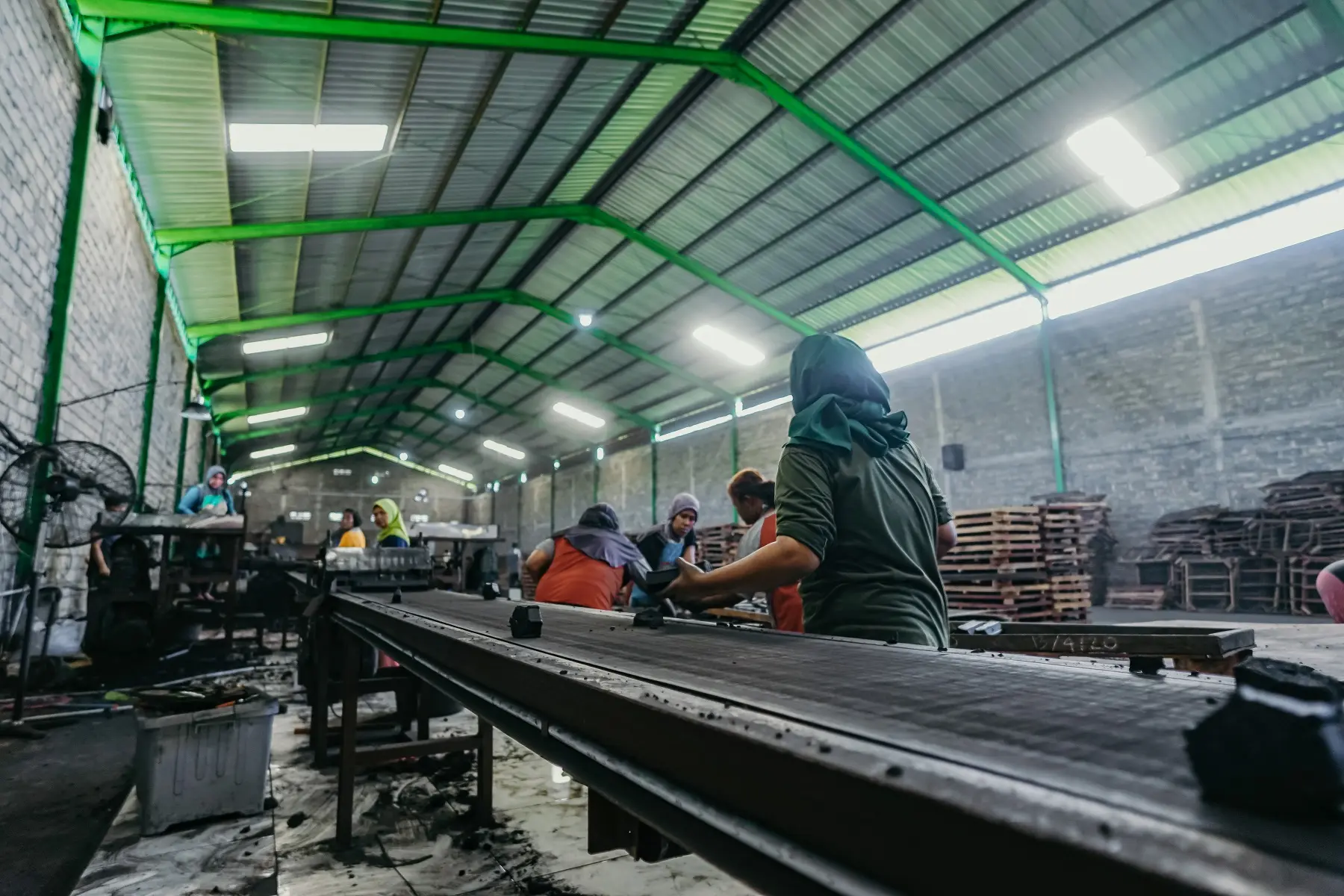
01 · Before the call
Agree a route around the sourcing decision.
Use this shisha charcoal factory video call checklist to plan a focused conversation with the supplier. Share your company, destination, buyer role, cube or grade requirement, estimated volume and timing. State whether you are screening the facility, reviewing sample handover or clarifying an identified order.
Confirm the host’s role, call date, time zone, working language, expected duration and the areas available to view. Ask which relevant stages are expected to be active. Do not schedule around an assumed production pattern or treat an idle stage as proof that the supplier cannot produce.
Agree recording or screenshot permissions before capturing anything. Ask the supplier to protect other customers’ labels, personal information and proprietary process details. Prepare a note sheet with columns for the question, observation, explanation, evidence reference and unresolved follow-up.
02 · Opening context
Identify the people, place and current session.
At the start, ask the host to identify the operation and their connection to it. Where appropriate and permitted, request exterior or entrance context before moving into the work area. If an exterior view is unavailable, record that limit and ask for an alternative way to establish the relevant location context.
Confirm the current date and an agreed call reference during the live exchange. A buyer-directed request to show that reference alongside the relevant scene can help connect the observation to the session. It does not prove ownership or make every claim in the call independently verified.
If connection quality prevents a clear view, say which point remains unobserved. Note any breaks or later prerecorded material separately. A follow-up recording may still be useful, but it should not be described as a continuous live observation.
03 · Product and active stage
Follow the product rather than only the machinery.
Ask the host to identify the visible product and whether it is work in progress, finished output, a sample or another order. Request a close view where safe, followed by a wider view that explains its place in the operation. Do not infer grade, formulation or final performance from cube appearance.
For a stage that is active, ask what operation is occurring and how it relates to the product under discussion. Request a safe camera move from the stage to its visible output where practical. If stages cannot be connected during the call, record the explanation and the missing link instead of filling it in yourself.
Useful buyer-directed questions include: “Which stage is this?”, “Is this finished product?”, and “What reference identifies the material being shown?” Avoid asking staff to approach moving equipment or disclose process settings just to satisfy a camera request. The host should control safe access.
04 · Packing and finished goods
Ask which order the visible material represents.
At packing, ask whether the visible configuration is an example, a prototype or an identified order. Where permitted, request the applicable artwork or packaging reference, pack identification and carton marking. Compare these with your approved requirements rather than simply noting that packing is taking place.
For finished goods, ask how the visible cartons or lots are identified and whether they are released, awaiting inspection or unrelated to your order. A stack of cartons does not establish their contents, total available stock or shipment quantity. Treat a stated quantity as an explanation until its supporting scope is clear.
Ask for a close-up only where it answers a defined question, such as a permitted carton code. Protect other buyers’ branding and details. If information must be covered or redacted, agree how the supplier can still show the relevant link to the product or order being reviewed.
05 · QC tools and records
Connect a demonstration to an identified result.
Ask the host to explain a relevant check and its acceptance criterion. Where a demonstration is appropriate, request a readable view of the selected piece, measurement and method. Clarify how the piece was chosen. One measurement illustrates that observation; it does not establish conformity of all cubes.
For a result or record shown on camera, ask which product, sample and lot it covers, when the check occurred and whether the information can be provided afterward in an agreed form. A device in the room does not prove calibration, routine use or release of the order.
PT Unimax Pro Indonesia has equity ownership and operational control in the production facility. This supports coordination between commercial requirements and production. It does not imply 100% ownership, zero variation or the availability of every record or viewing area. Confirm the scope possible for your inquiry before the call.
06 · Questions and limits
Use specific follow-ups while the host can respond.
If a view is unclear, ask to revisit the particular product, code or observation where access permits. For example: “Can you show the reference for those cartons?” or “Which agreed limit applies to that measurement?” A targeted request helps distinguish what you saw from what was only described.
A live call can support observations about the permitted scene at that time. It cannot by itself prove legal ownership, total capacity, formulation, laboratory properties, consistency across future orders or the conformity of an entire shipment. Keep those decisions linked to their own evidence requirements.
When a question cannot be resolved live, name the missing evidence and responsible contact. Respect confidentiality and offer a redacted summary, another permitted view or a later agreed review as alternatives. Do not pressure the host to expose another customer’s information or treat every restriction as evidence of wrongdoing.
07 · Close and follow up
Leave with an action record, not a vague impression.
Before ending, read back the important observations and unresolved questions. Separate directly observed points, supplier explanations and records still to be provided. Agree who will send each follow-up, the expected date and how it relates to your sample, product or order decision.
Preserve the call reference, participants, date, viewing limits and permitted evidence links in your sourcing record. An illustrative follow-up might say: “Packing was observed live; the connection to our order remains unconfirmed pending the identified packing reference.” That is more useful than “factory approved.”
Decide whether the remaining gaps require another call, a sample comparison, relevant documents or another agreed inspection method. Keep sample approval and shipment release distinct from the call outcome. A productive video call narrows uncertainty; it does not eliminate variation or replace written acceptance criteria.
Buyer tool
Live factory video call route checklist
Use this proposed route as a planning checklist, then adapt it to the confirmed facility and inquiry. Add a status, evidence reference and follow-up owner to each row. Viewing areas and records must be agreed with the supplier.
| Call stage | Live request | Record before moving on |
|---|---|---|
| Before connecting | Confirm purpose, host, time zone, areas and recording permissions | Call plan and buyer questions |
| Opening | Identify host and operation; show current cue and exterior context where appropriate | Observed context and any location/connection limits |
| Product and stage | Show the product, explain active stage and request a safe connected view | Product status and links established or missing |
| Packing | Show permitted pack revision and identification | Example/prototype/order scope and unresolved references |
| Finished goods | Explain carton/lot identity and release status | Observed markings versus quantities or status only stated |
| QC | Explain check, selection, result and criterion; show permitted record | Observation scope and evidence to obtain afterward |
| Closing | Read back findings; assign follow-up owners and dates | Open questions and next approval decision |
Mark each point observed, explained only, follow-up required or unavailable. Describe the scope and reason; an unavailable view should not be recorded as either a pass or a proven defect.
Questions buyers ask
What if the connection drops?
Note the interruption and which point was not clearly observed. Revisit it live if possible, or label later recordings separately and agree a follow-up.
Can the buyer direct the camera?
Request specific permitted views through the host. The host should control safe movement and protect confidential areas and other customers’ information.
Does a successful call approve the order?
No. Record the call findings separately from sample approval and shipment release, which depend on the agreed requirements and supporting evidence.
Arrange a call around your buyer questions.
Send your company, destination, buyer role, grade and cube requirements, estimated volume and timing. Identify the factory, packing or QC question you need answered. Discuss a factory video call or discuss a qualified live video call and confirm what can be shown.
Discuss a factory video callReview factory and quality evidence · About PT Unimax Pro Indonesia · Shisha charcoal · Contact
Related buyer guides
Match the approved sample to production · Batch records for buyers · Evaluate production-line evidence