
Shisha buyer guide · Article 165
What Production-Line Evidence Matters to Shisha Charcoal Buyers
Ask for current, buyer-directed evidence of the facility, visible product, process stage, packing and quality checks. Record what each view supports and which order-specific questions still need other evidence.
01 · Define the buyer question
Request evidence for a decision, not a factory tour.
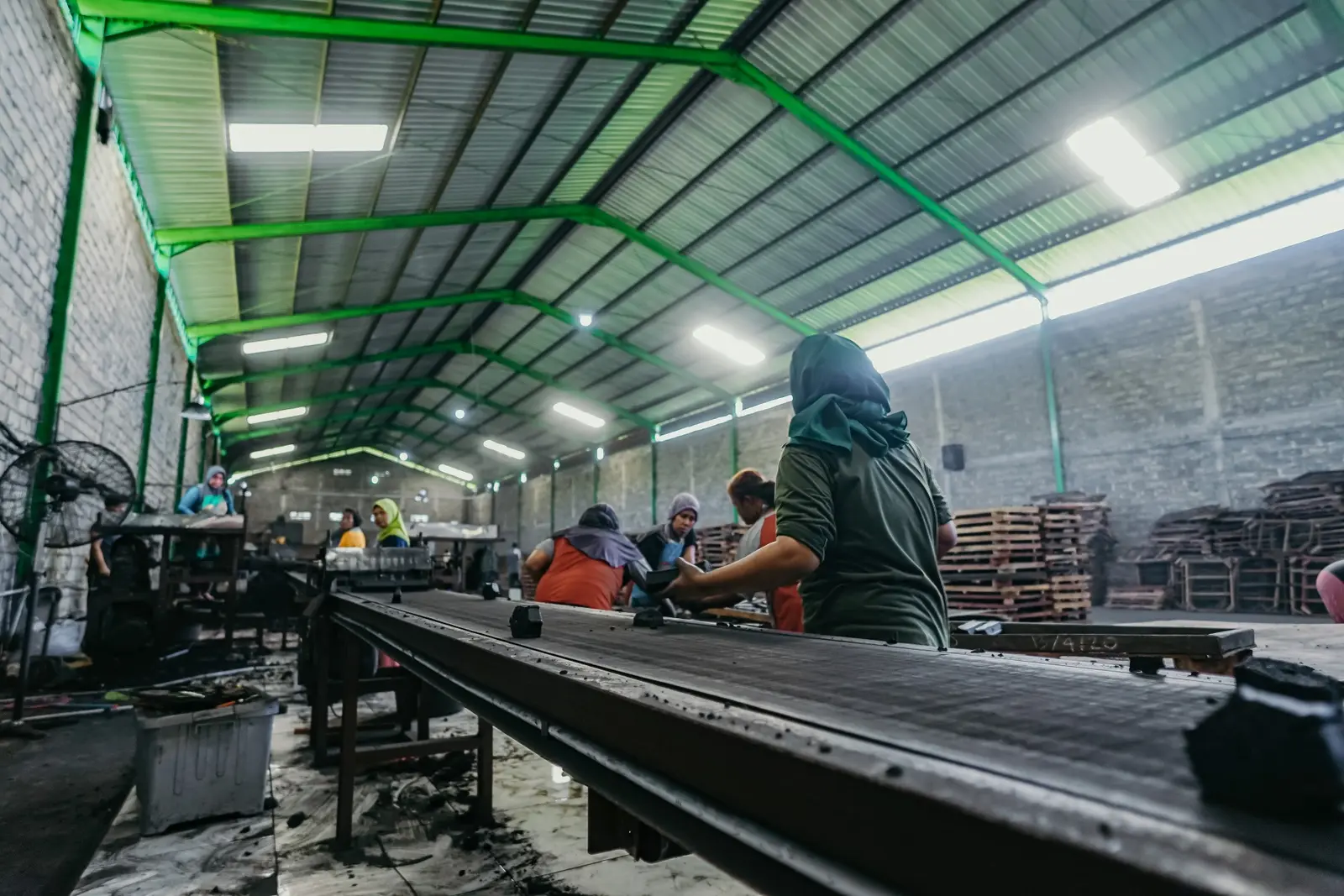
Shisha charcoal production line evidence is useful when it answers a specific buyer question: is this the stated facility, what product is being shown, which stage is active, and how does the evidence relate to the proposed order? A polished collection of machinery photographs may leave all four questions unanswered.
Before requesting footage, identify your company, buyer role, destination, cube requirement, estimated volume and intended timing. Explain whether you are screening a supplier, reviewing a sample-to-production handover or checking an identified order. The scope of evidence should follow that purpose.
Keep three levels separate: general facility context, a current observation and order-linked evidence. A clip can support the first two without proving anything about a particular shipment. Record the level actually established rather than letting one convincing view stand for the entire sourcing decision.
02 · Current facility activity
Establish context and recency together.
Ask the supplier to identify the location or operation shown, the recording date and the visible activity. A buyer-agreed date cue or reference phrase shown during a newly requested recording can add useful context. A filename or a timestamp alone is weak support for an assumption that footage is current.
Request a connected sequence or a short follow-up view that answers a question about the scene. For example, ask to move from the visible work area to the product being handled, where access permits. This can make the explanation easier to assess, but it is not a guarantee of authenticity or a substitute for other checks.
Clarify whether the line is operating for a different product or order. A temporarily idle machine is not by itself evidence of incapacity, and a running machine does not establish monthly production output. Capacity and delivery commitments require a separate discussion of relevant records and scheduling.
03 · Cube identity and process stage
Know what the camera is showing.
Ask for product context alongside the equipment: the grade or product description, the stage being shown and whether the visible cubes are work in progress or finished material. Do not infer final dimensions, formulation or burn performance from a pile of cubes beside a machine.
A close-up of a measurement can document a particular observation if the piece, tool reading and method are clear. Ask how the piece was selected and what it represents. One measured cube cannot establish dimensional conformity across a production run.
Request only the stages relevant to the buyer question, such as forming, a stated drying stage, finished handling or packing. Let the supplier explain the actual process and access available. Do not demand that every factory follow an assumed layout, and do not infer operating conditions from equipment appearance.
04 · Packing and finished goods
Connect the product to the approved pack.
Packing footage can show the visible pack construction, handling activity or identification at that moment. Ask whether the pack is a prototype, another customer’s order or material intended for your order. If it is order-specific evidence, request the relevant order or lot reference without exposing other buyers’ information.
Where permitted, ask for a view of the applicable artwork revision, pack identification and carton markings. A visible box does not establish the weight or contents of every carton, and a finished-goods stack does not establish shipment quantity or release status.
Compare the references shown with the approved packaging requirements. Keep artwork approval, packing observations and loading evidence distinct. Seeing one correct retail pack does not resolve an outstanding question about the master carton or the material packed elsewhere in the order.
05 · Quality-control evidence
A tool in a video is not a test result.
QC footage can show that a stated check is being demonstrated, but ask for the method, sample identity, result and acceptance criterion. A caliper, scale or laboratory device in the scene does not establish calibration, routine use or conformity of the commercial order.
For an order-linked result, ask what lot or cartons the sample represents and how the selection was made. Compare any report or summary with the recorded reference. A demonstration selected for a video and a documented sampling exercise answer different questions; describe them accurately.
PT Unimax Pro Indonesia has equity ownership and operational control in the production facility. This supports coordination between commercial requirements and production. It does not imply 100% ownership, zero variation or the availability of every proposed record. Confirm which current evidence and checks can be provided for your inquiry.
06 · Buyer-directed follow-up
Turn a missing link into a specific request.
If a clip shows machinery but no identified product, ask for product context. If packing appears current but its order is unclear, ask which order or lot it represents. If a QC demonstration has no result, request the relevant recorded observation and its scope. These focused requests are more useful than repeatedly asking for “more factory videos.”
A qualified live video call can help address unresolved questions through agreed camera requests. Confirm the purpose, available areas, responsible contact and timing with the supplier. This article focuses on choosing evidence; a detailed call route should be agreed separately to match the actual operation.
Protect confidential information and follow site access rules. A redacted record or an alternative view may answer the question without revealing recipes, other customers’ labels or restricted equipment details. An access limit is a constraint to resolve, not automatic proof that a supplier’s statement is false.
07 · Evidence decision
Write down what is established and what is still open.
Use the matrix below to record the buyer question, file or call reference, supplier explanation and unresolved gap. Classify each point as directly observed within the stated scope, supported by a linked record, explained only or unresolved. Do not promote an explanation into a verified result simply because it accompanies a video.
Illustrative example: a new clip shows cubes being packed with a date cue, but no order reference. It may support a current packing observation. It does not establish that the cubes belong to your approved sample, meet your acceptance limits or form part of your shipment. Request those links separately.
Before making an order decision, resolve the evidence gaps that matter to your accepted requirements. Use identified samples, written specifications, agreed checks and relevant commercial documents alongside the visual evidence. A factory video is one part of supplier verification, not a guarantee of repeat-order consistency.
Buyer tool
Production-line evidence review matrix
Use this proposed buyer framework to assess the evidence available. Add the date, file or call reference, order scope, reviewer and follow-up decision. These requests do not imply that every view or record is available.
| Buyer question | Evidence to request | Limit to record |
|---|---|---|
| Facility and recency | Identified operation, recording context and buyer-agreed current cue | Does not establish ownership, continuous operation or capacity |
| Product and stage | Visible product with stated grade, stage and selection scope | Does not prove recipe, final dimensions or finished performance |
| Measurements | Identified piece, readable observation and explained method | Does not establish conformity of an entire lot |
| Packing | Relevant pack, approved reference and permitted order/lot identification | Does not prove all carton contents, weights or shipment quantity |
| QC activity | Explained check plus identified results and acceptance criteria | Equipment footage alone does not establish routine control or release |
| Order connection | Matching sample, production, pack and available record references | A general factory clip does not establish a specific shipment’s conformity |
Prioritize missing links that affect your order decision. Ask for a specific follow-up view or record, name the responsible contact and agree the next review step. Keep general facility evidence separate from shipment acceptance.
Questions buyers ask
Does current factory footage prove the supplier owns the facility?
No. Visual access and ownership are different questions. Verify the company relationship through relevant company information and supporting evidence.
Can a running machine prove monthly capacity?
No. It shows activity within the observed scope. Capacity and order timing need relevant production and scheduling evidence.
Is a live call enough to approve a shipment?
It can clarify visual questions. Shipment acceptance still depends on the agreed product, sample, checks and order-linked evidence.
Request evidence around your sourcing decision.
Send your company, destination, buyer role, grade and cube requirements, estimated volume and timing. Identify the factory, packing or QC question you need answered. Request current factory evidence or discuss a qualified live video call and confirm what can be shown.
Request current factory evidenceReview factory and quality evidence · About PT Unimax Pro Indonesia · Shisha charcoal · Contact
Related buyer guides
Plan the live factory video call →
Match the approved sample to production · Batch records for buyers · Batch coding and traceability