
BBQ packaging & logistics buyer guide
BBQ Charcoal Packaging and Container Loading Checklist
Connect the approved pack to master cartons, finished goods, empty-container inspection, loading evidence, closure, and the buyer's receiving process.
6 control layers15 checkpointsPrint / save PDF
The shipment-readiness rule
A good pack and a good loading photo are not the same control.
Packaging protects and identifies the product. Container loading positions that packaging for transport. Treating either stage as proof of the other leaves a neat-looking gap in the evidence chain.
Approve the final pack, inspect finished cartons, document the empty container, follow a written load plan, record milestones, and tell the buyer how to inspect arrival before unloading.
Six linked control layers
Shipment readiness starts before the truck reaches the door.
Each layer should identify what is approved, what is observed, and what evidence still needs order-specific confirmation.
Approved product and pack
The order should identify the BBQ grade, briquette format, pack material, fill arrangement, closure, label, and approved reference.
Do not let a visually similar pack replace the version actually approved for the order.
Inner protection
Pack movement, unit contact, headspace, liners, dividers, sealing, and moisture barrier affect what happens before and during transit.
Review the final filled and sealed pack—not an empty bag, sample pouch, or artwork image.
Master-carton system
Dimensions, packed weight, internal fit, board requirement, closure, orientation, marks, and stack behavior work as one system.
Confirm the closed carton with the real packed product inside before loading quantity is treated as final.
Finished-goods release
Sealed packs, closed cartons, counts, identifiers, and visible condition should be checked before goods enter the loading sequence.
Keep product, packaging version, order, and carton records connected so substitutions are visible.
Container and load plan
Cleanliness, dryness, odor, holes, floor condition, carton orientation, weight distribution, voids, and unloading assumptions matter.
Inspect the empty container and agree the pallet or floor-loading plan before the first carton is placed.
Closure and handoff
Final stack condition, door area, closure, seal record, shipping references, and receiving instructions complete the evidence chain.
A loading photo without order linkage, final-door evidence, or receiving protocol is useful—but incomplete.
Evidence by stage
Capture the chain—not one photogenic moment.
Evidence becomes useful when the stage, identifier, purpose, and limitation are clear enough for buyer and supplier to compare the same order.
Product, grade, pack material, net-weight basis, fill arrangement, closure, label or artwork version, master carton, and approval date.
Shows which configuration production and shipment preparation should follow.
Representative sealed packs, closed cartons, marks, count basis, visible condition, and order-linked identifiers.
Connects the approved packaging version to goods staged before loading.
Interior, floor, walls, roof, door area, cleanliness, dryness, odor observation, holes, and visible damage.
Records the container condition before product and protective materials hide the surfaces.
First layer, intermediate sections, orientation, stack pattern, voids, restraint, handling, and any rejected cartons.
Shows how the written load plan was applied through the container—not only at the door.
Rear stack, door clearance, final visible condition, closure, seal application or reference, date, and handoff.
Completes the pre-departure record and supports later comparison with arrival condition.
Container opening, visible stack, moisture signs, shifted or crushed cartons, sampled positions, unopened packs, and storage conditions.
Preserves evidence before unloading, sorting, repacking, or warehouse handling changes the scene.
Six-step loading-control method
Turn packaging approval into a shipment record.
Freeze the pack version
Confirm the final product, pack, carton, marks, closure, and approval reference before calculating the load or releasing production.
Reconcile goods and records
Check representative finished packs, carton identifiers, count and weight basis, visible condition, and the commercial order.
Inspect the empty container
Document the interior before loading. Resolve cleanliness, moisture, odor, holes, floor, door, or damage concerns before goods enter.
Follow a written load plan
State pallet or floor loading, orientation, stack pattern, weight distribution, void treatment, and unloading assumptions.
Capture milestones
Record the first layer, representative intermediate sections, rear section, final condition, door area, and closure using consistent identifiers.
Prepare the receiving handoff
Tell the buyer what to photograph before unloading and how to record sampled carton locations, unopened packs, damage, and moisture signs.
BBQ Packaging & Container Loading Checklist
Completing the checklist does not prove the container will arrive damage-free. It creates a comparable record of the approved pack, container condition, loading process, and receiving handoff.
Read visual evidence correctly
State what the photograph proves—and stop there.
Original factory and loading images are valuable when their visible facts are separated from product, quantity, moisture, seal, destination, and arrival claims they cannot establish.

Sealed inner packs staged in the facility
Proves: Large stacks of sealed silver inner packages are visibly staged on pallets inside the photographed facility.
Does not prove: That the packs contain BBQ charcoal, their exact weight, pack specification, stock quantity, customer, destination, or shipment release status.
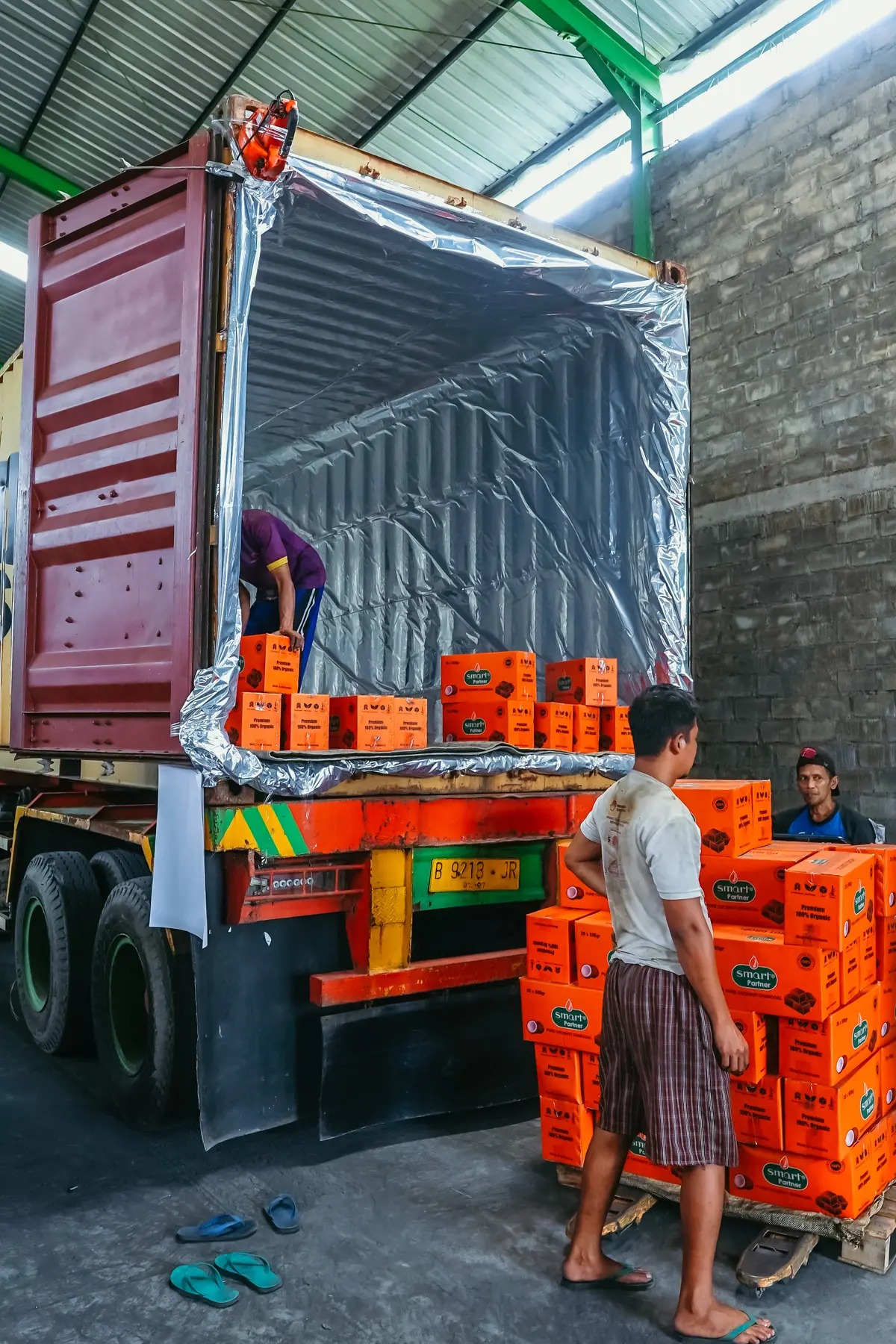
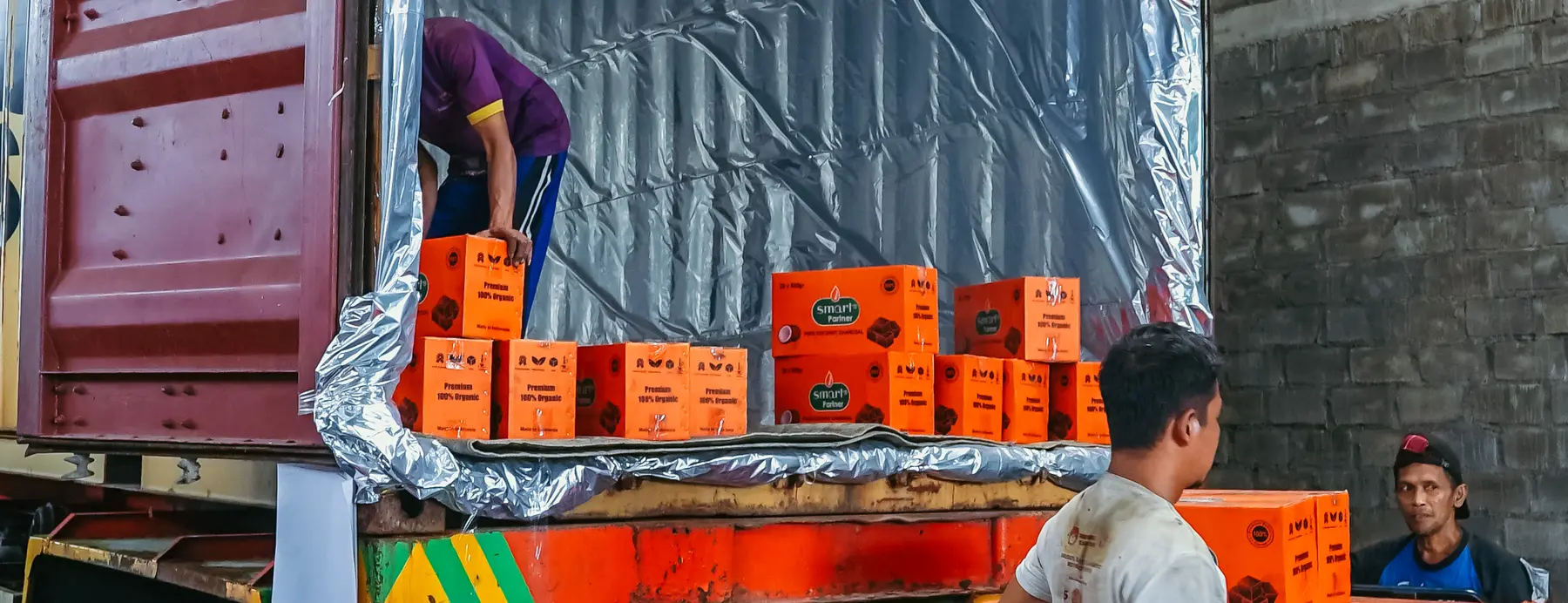
Printed outer cartons at loading
Proves: Printed cartons, a loading area, workers, and a lined container are visible at the photographed moment.
Does not prove: The product in every carton, carton board specification, total quantity, order conformity, route, or arrival condition.
Container-loading activity
Proves: Cartons are visibly being handled into a lined container during an active loading process.
Does not prove: Empty-container inspection, complete load pattern, final carton count, seal application, moisture control, or damage-free delivery.
Minimum shipment evidence packet
Keep the records connected from approval to receiving.
Pack approval
Product and packaging version, artwork or label reference, pack and carton decisions, approval date, and responsible parties.
Finished-goods release
Representative pack and carton condition, identifiers, count and weight basis, exceptions, and release date.
Container inspection
Interior-condition photos or record, visible issues, corrective action, container reference, date, and inspector.
Loading record
Start, intermediate, and final-stage evidence tied to the load plan, order, carton version, and container reference.
Closure and handoff
Final door-area condition, seal record when available, dispatch references, and receiving instructions.
Packaging and loading red flags
Six shortcuts that make shipment evidence look stronger than it is.
The expensive mistakes are usually not cinematic. They are missing identifiers, provisional dimensions treated as final, and controls nobody wrote down.
Loading quantity is promised too early
Pack and carton dimensions or weights are still provisional, yet the final container quantity is quoted as if geometry has signed a contract.
Only the last row is photographed
A tidy door view does not show empty-container condition, first layers, internal voids, intermediate handling, or the complete stack.
Pallet versus floor loading is assumed
The method changes space use, handling, protection, unloading, and sometimes market expectations. It should be agreed—not discovered at dispatch.
Liner equals moisture guarantee
A visible liner documents one feature. It does not prove container dryness, seal quality, route climate, pack integrity, or arrival condition.
Photos cannot be linked to the order
No consistent pack version, carton, date, order, container, or seal reference means the evidence may be real but commercially weak.
Receiving starts after unloading
Once cartons are moved, opened, mixed, or stored, useful position and condition evidence may already be gone.
Apply the checklist with Unimax
Start with the final pack—not a guessed container quantity.
Product, packaging, and loading assumptions should be reviewed in that order.
Unimax can discuss the available BBQ specification, sample procedure, packaging brief, factory verification, finished-goods evidence, and loading-stage documentation for the buyer's sourcing stage. Exact pack configuration, loading quantity, commercial terms, and shipping arrangement are confirmed after project-specific review.
BBQ packaging & loading FAQ
Questions to settle before the doors close.
Use the answers as a procurement framework, then confirm the exact product, pack, carton, loading method, and shipment.
01Should BBQ charcoal be palletized or floor-loaded?+
Neither method is universally correct. The buyer and supplier should review pack and carton dimensions, weights, protection, space use, destination handling, unloading capability, and commercial requirements before agreeing the method.
02Does a foil-lined container guarantee moisture protection?+
No. A visible liner is one documented feature. Moisture risk also depends on the container condition, product and packaging condition, sealing, storage, route, temperature changes, handling, and receiving conditions.
03When can the final container loading quantity be confirmed?+
After the final product, retail or bulk pack, master carton dimensions, packed weights, pallet or floor-loading method, and load plan are reviewed. Before that, any quantity should be treated as provisional.
04What loading photographs should an importer request?+
Request evidence that covers the empty container, first layer, representative intermediate stages, final stack and door area, closure or seal record when available, and identifiers connecting the images to the order and container.
05Can loading photos prove that every carton will arrive intact?+
No. They document selected stages before departure. Arrival condition is also affected by product and pack design, carton strength, load restraint, transit, unloading, storage, and the buyer's inspection method.
06Can Unimax discuss BBQ packaging and loading before an order?+
Yes. Share the BBQ format, destination, intended pack, carton requirement, pallet or floor-loading preference if known, sourcing stage, and expected volume. Exact configurations and commercial terms are confirmed after project-specific review.
From pack approval to receiving evidence
Build a Shipment-Ready BBQ Charcoal Brief
Share your company, destination, BBQ format, intended pack, master carton, loading preference if known, sourcing stage, and expected volume.
Discuss it on WhatsApp