
BBQ packaging & shipping buyer guide
Why BBQ Charcoal Briquettes Break During Shipping
Trace damage across the briquette, inner pack, master carton, loading, transit, and receiving process—then compare packed systems with one written breakage method.
6 risk points12 control checksPrint / save PDF
The first diagnostic rule
Breakage is a system result—not a one-variable verdict.
A briquette can leave production intact and still arrive chipped if the pack allows repeated movement. A damaged carton can also contain mostly whole product. Neither photograph alone identifies the cause.
Define the damage categories, inspect the final packed product, record handling and loading evidence, then document receiving before sorting. That turns a vague complaint into a testable supply-chain investigation.
Six breakage entry points
Damage can begin before the carton enters the container.
Product strength matters, but it is not a diplomatic immunity card for weak packaging. Review every layer that transfers, restrains, or records force.
Briquette condition
Shape, dimensions, compaction, drying condition, cooling, visible cracks, and unit-to-unit contact all influence how a briquette tolerates handling.
Assess an identified product sample before packing. Do not infer strength from color, sound, or one unbroken display piece.
Movement inside the pack
Void space lets pieces accelerate and collide. A pack that looks full from one angle may still allow movement during repeated vibration or turning.
Inspect the final filled and sealed pack, including headspace, side gaps, dividers, liners, and movement when handled.
Master-carton system
Packed weight, carton dimensions, internal fit, closure, orientation, and stacking affect how forces reach the inner packs.
Review the full packed carton rather than approving an empty carton or artwork mock-up.
Loading and stack restraint
Carton orientation, stack height, voids, uneven support, and movement inside the container can change compression and impact exposure.
Request loading-stage evidence and make the planned configuration part of the packaging review.
Transit and transfer handling
Road vibration, terminal transfers, container movement, carton drops, and repeated manual handling can accumulate damage.
Use a realistic packed-product test as a comparison tool. It cannot reproduce every route event, but it can expose weak pack configurations.
Unloading and receiving
Damage can be added or evidence can be lost while cartons are unloaded, opened, mixed, repacked, or stored before inspection.
Document the container, stack, carton positions, unopened packs, sampled quantity, and storage condition before sorting the product.
Damage-pattern diagnosis
Use the pattern to narrow the investigation.
A symptom does not prove one cause. It tells the buyer which product, pack, carton, load-position, and receiving evidence to compare next.
Pre-existing cracks, briquette strength, product condition, pack movement, unit contact, repeated vibration, and the breakage definition.
Pre-shipment baseline, sealed-pack handling result, inner-pack photos, representative arrival sample, and a count or weight by agreed category.
Briquette-to-briquette rubbing, headspace, loose fill, repeated movement, pack seams, handling cycles, and whether small chips are classified consistently.
Pack-fill and movement check, dust weight or agreed category count, before-and-after handling photos, and unopened arrival packs.
Internal clearance, divider or liner coverage, edge impact, carton deformation, stack contact, and loading orientation.
Carton map, layer position, external carton photos, internal arrangement, and damage distribution within the pack.
Compression, uneven support, overhang, stack height, wet or weakened cartons, movement, and events during unloading or warehouse handling.
Container and stack photos before unloading, carton deformation, location in the load, moisture exposure signs, and sampled breakage result.
Carton position, pack-fill consistency, product or pack version, sampling bias, route exposure, unloading sequence, and storage after arrival.
A sampling plan across load positions, carton identifiers, pack version, time-stamped photos, and separate results for each sampled carton.
Six-step packed-product method
Test the briquette and packaging as one system.
Define the damage categories
Agree what counts as whole, chipped, broken, dust, and unusable. One buyer may reject a cosmetic chip that another buyer still sells.
Choose one calculation basis
Use count or weight, define the denominator, and state the sample size. Do not switch methods when the result becomes inconvenient.
Test the final packed configuration
Use the actual briquette, inner pack, fill level, closure, master carton, packed weight, and arrangement being evaluated.
Record the handling sequence
Document any drop, vibration, compression, turning, or transport simulation, including sequence, duration, orientation, and repetition.
Compare before and after
Photograph and assess the same identified pack before and after testing. Keep product breakage separate from carton damage.
Use the result to improve the system
Change one controlled variable at a time—product, pack restraint, carton, or handling—then repeat the same method.
BBQ Charcoal Shipping Breakage Checklist
A completed checklist does not prove zero breakage. It makes the product, pack, handling method, and arrival evidence comparable enough to investigate the result.
Read visual evidence correctly
Photos document a stage. They do not prove the whole journey.
Original photographs are useful when the visible fact and its limit are stated separately. Shipping performance still needs identified packs, a method, and receiving evidence.
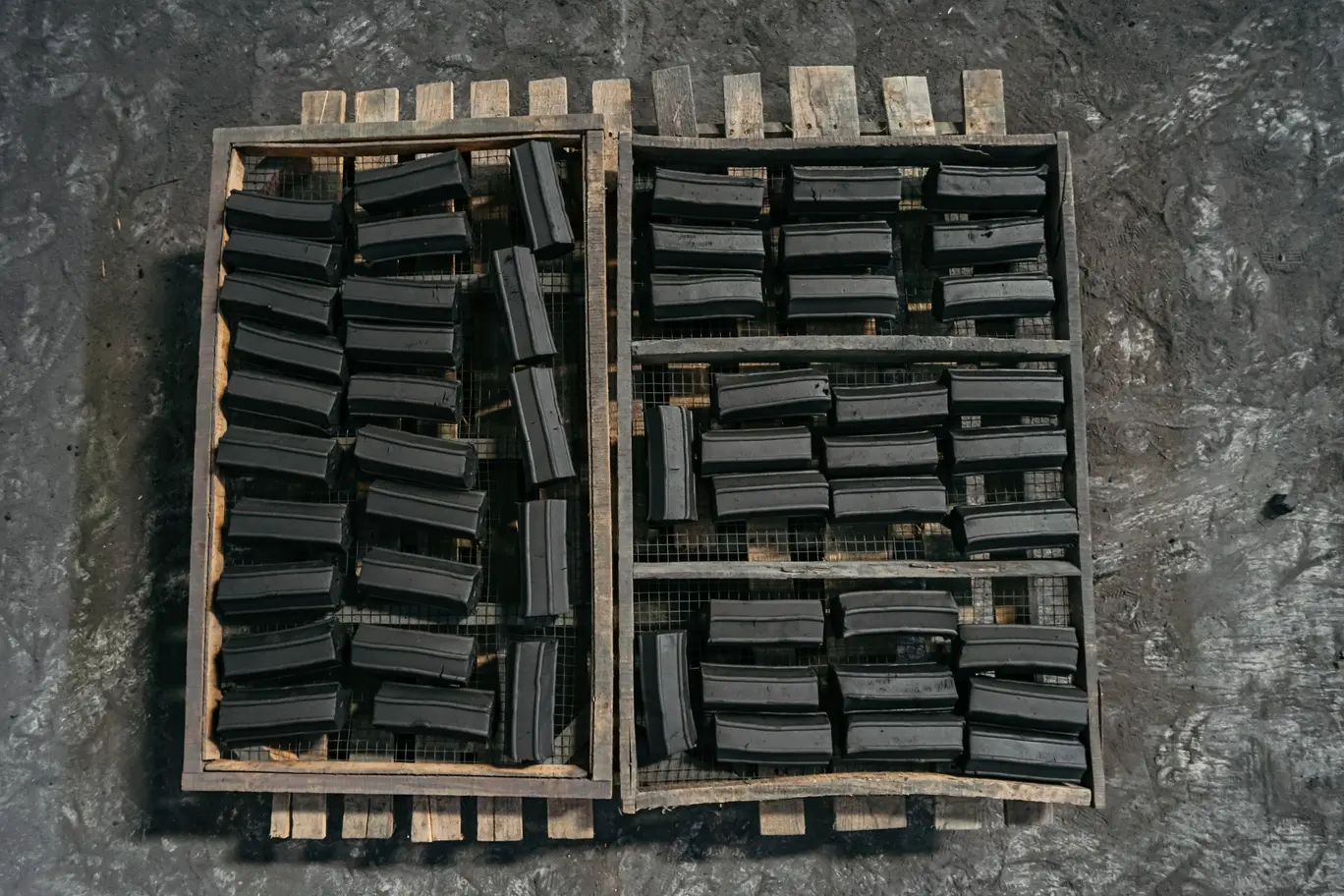
BBQ briquette form on trays
Proves: The visible elongated briquette form, surface condition, and tray arrangement at the photographed handling stage.
Does not prove: Transport strength, internal cracks, moisture, packed-product survival, or arrival breakage rate.
Outer cartons at loading
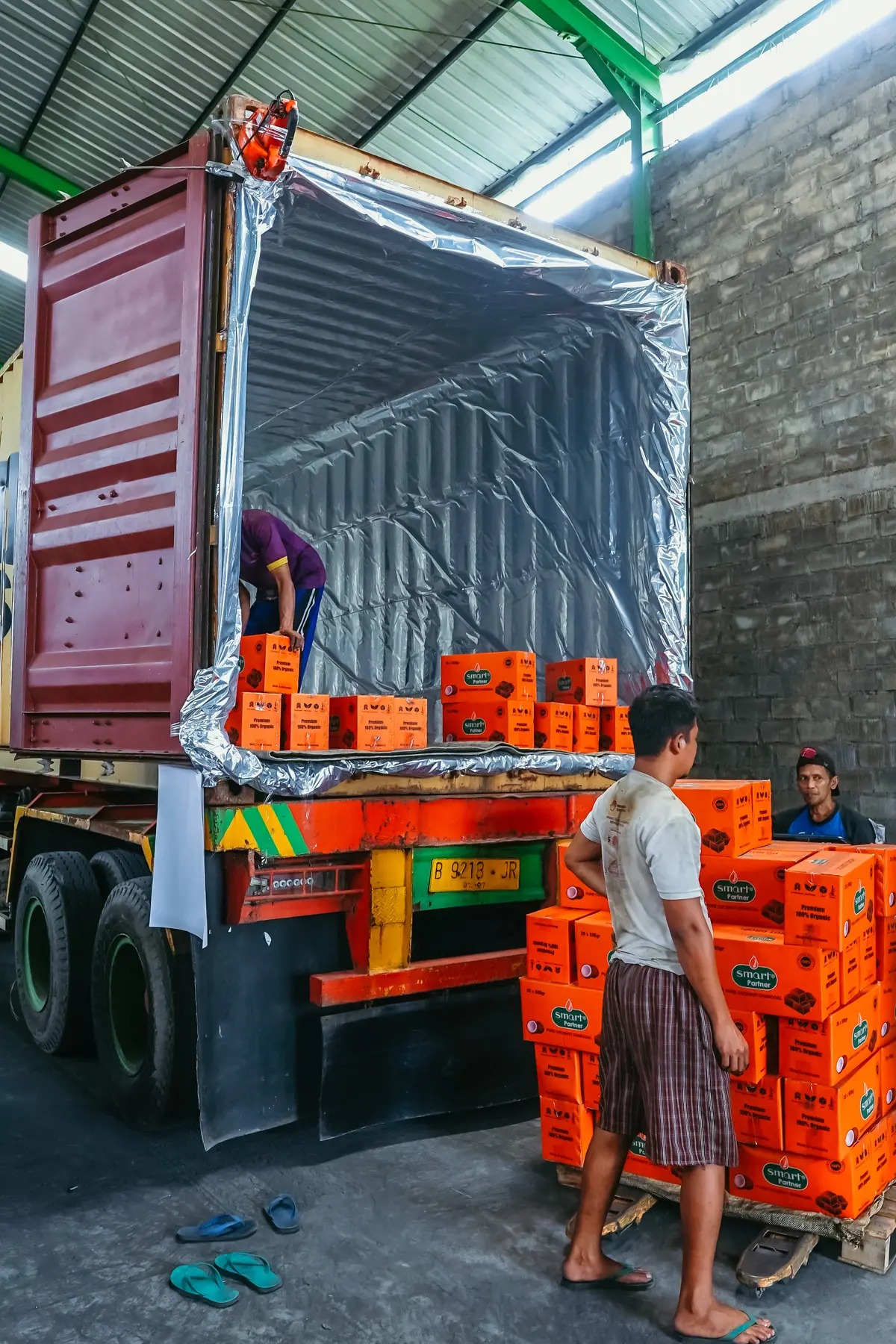
Proves: Printed cartons, palletized cartons, and an active loading area are visible at the photographed moment.
Does not prove: The product inside every carton, carton specification, total quantity, stacking conformity, or arrival condition.
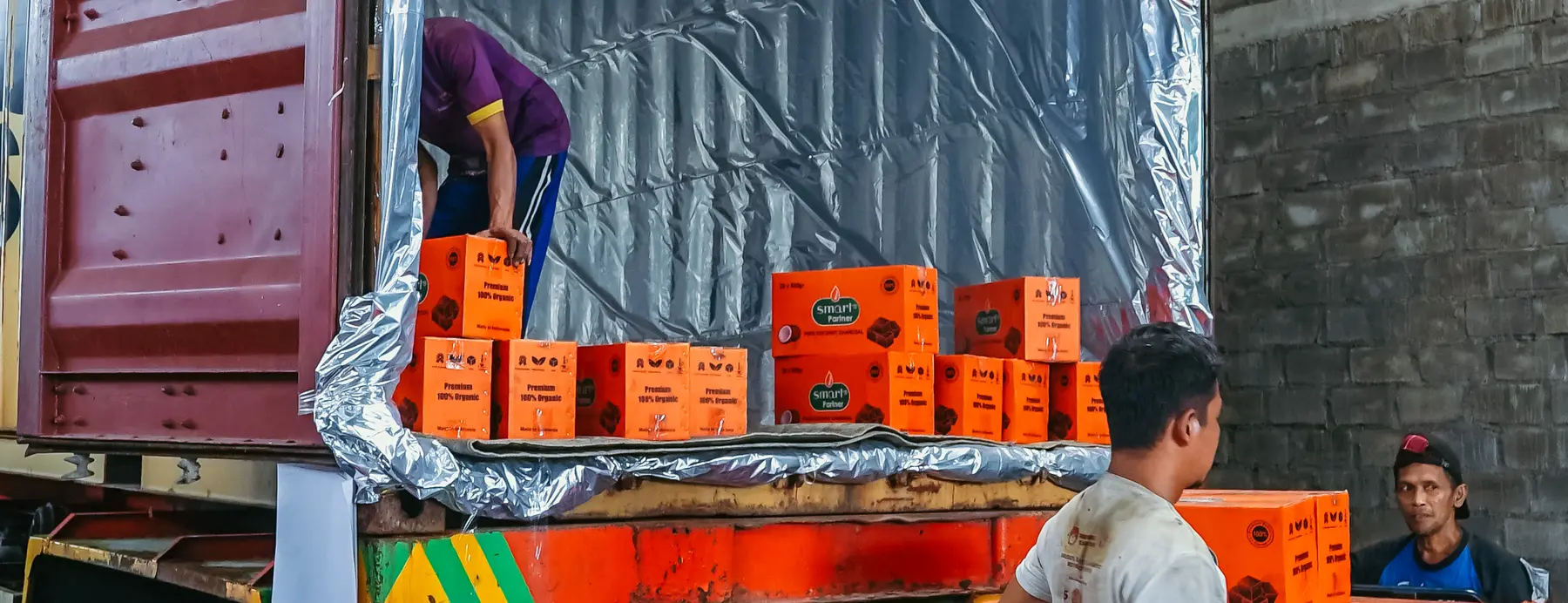
Container-loading activity
Proves: A lined container, printed cartons, workers, and loading activity are visibly documented.
Does not prove: Zero movement in transit, route conditions, destination, breakage percentage, or damage-free delivery.
Arrival evidence sequence
Document first. Unload, sort, and argue later.
Before unloading
Photograph the container opening, visible stacks, leaning or collapsed cartons, moisture signs, and any shifted load before cartons are moved.
Map sampled cartons
Record front, middle, rear, upper, lower, edge, and center positions when practical. Random cartons without location data hide useful patterns.
Open without sorting
Photograph the unopened outer carton, inner packs, seal condition, fill arrangement, and first product view before good and broken pieces are separated.
Measure on one basis
Use the agreed count or weight method and keep categories separate. Report the sample size and denominator with the result.
Preserve the link
Keep shipment, carton, pack, date, storage, and test identifiers together so evidence can be reviewed against the ordered configuration.
Shipping-breakage red flags
Six shortcuts that turn damage into a guessing contest.
Breakage disputes become expensive when product condition, packaging, handling, sampling, and arrival evidence are treated as interchangeable.
“Strong briquette” is the whole answer
Product strength matters, but an uncontrolled pack, carton, stack, or receiving process can still create avoidable damage.
Breakage has no definition
Chips, clean breaks, fragments, and dust are mixed into one percentage, so nobody can reproduce the calculation.
An empty carton is approved
Artwork and dimensions are reviewed without the final product, inner pack, packed weight, closure, or stack configuration.
The simulation has no method
A carton is shaken, dropped, or driven around, but orientation, duration, repetition, and before-and-after results are not recorded.
Arrival photos start after sorting
Broken pieces are already pooled and cartons are moved, so damage location, sampling basis, and handling history disappear.
Zero breakage is promised
A serious supplier should define product, packaging, test method, evidence, and acceptance—not sell physics-defying confidence.
Apply the method with Unimax
Review the product and pack before discussing a container.
Start with the current BBQ product, the intended pack format, and one written breakage method.
Unimax can discuss the available BBQ specification, sample procedure, packaging brief, factory verification, and loading-stage evidence for the buyer's sourcing stage. Exact tolerances, packing configuration, test method, and commercial terms are confirmed for the reviewed product and order.
BBQ shipping-breakage FAQ
Questions to settle before assigning blame.
Use the answers as a procurement framework, then define the exact product, pack, route, sample, and acceptance method.
01Does breakage always mean the BBQ briquette is too weak?+
No. Briquette condition is one variable, but movement inside the pack, carton fit, stacking, loading, transit handling, unloading, storage, and the counting method can also change the reported result. Diagnose the product and packaging system together.
02What is a reasonable BBQ charcoal breakage percentage?+
There is no useful universal number without defining the briquette, pack, route, sample size, damage categories, calculation basis, and commercial acceptance rule. Buyer and supplier should agree on those details for the reviewed product and order.
03Can a drop test guarantee container arrival condition?+
No. A recorded packed-product test can compare pack configurations and expose weaknesses. It does not reproduce every vibration, transfer, compression, climate, unloading, or storage event on an actual route.
04Should breakage be measured by count or by weight?+
Either can work if the categories, denominator, sampling method, and reporting basis are written and used consistently. Weight can describe fragments and dust more clearly; count can be intuitive for whole retail units. Do not mix the two without explanation.
05What evidence should a buyer collect when a shipment arrives damaged?+
Start before unloading: record the container and stack condition, carton locations, unopened cartons and inner packs, moisture signs, sampled quantity, breakage categories, calculation method, dates, and storage conditions. Keep the evidence linked to the shipment.
06Can Unimax provide a BBQ charcoal sample for testing?+
Yes. Product samples are free up to 10 kg, while the buyer pays international courier costs. Ask for the current BBQ specification and sample procedure for the shape, size, destination, and pack format being evaluated.
From vague breakage to comparable evidence
Build a Better-Protected BBQ Charcoal Pack
Share your company, destination, briquette shape and size, current pack, observed damage, breakage method, sourcing stage, and expected volume.
Discuss it on WhatsApp