
Supply continuity planning
How to Verify Charcoal Production Capacity Claims
To verify charcoal production capacity, connect the quoted maximum to the product, practical output, packing flow, and production slots available for your order. A large monthly number is a starting question; the purchasing decision needs a schedule supported by evidence.
Defined outputAvailable slotsConfirmed schedule
Start with definitions
Ask which tonnes the capacity claim counts.
Importers assessing supply continuity need more than a machine count or a headline charcoal supplier output figure. Installed capacity describes equipment capability under particular assumptions. Practical output reflects the actual product mix, operating pattern, yield, and constraints. Confirmed available capacity accounts for the work already committed in the relevant period.
A number may describe gross production, accepted finished goods, or a theoretical maximum. Ask for its basis before comparing suppliers. Historical output provides context, but a past month does not reserve space in a future schedule.
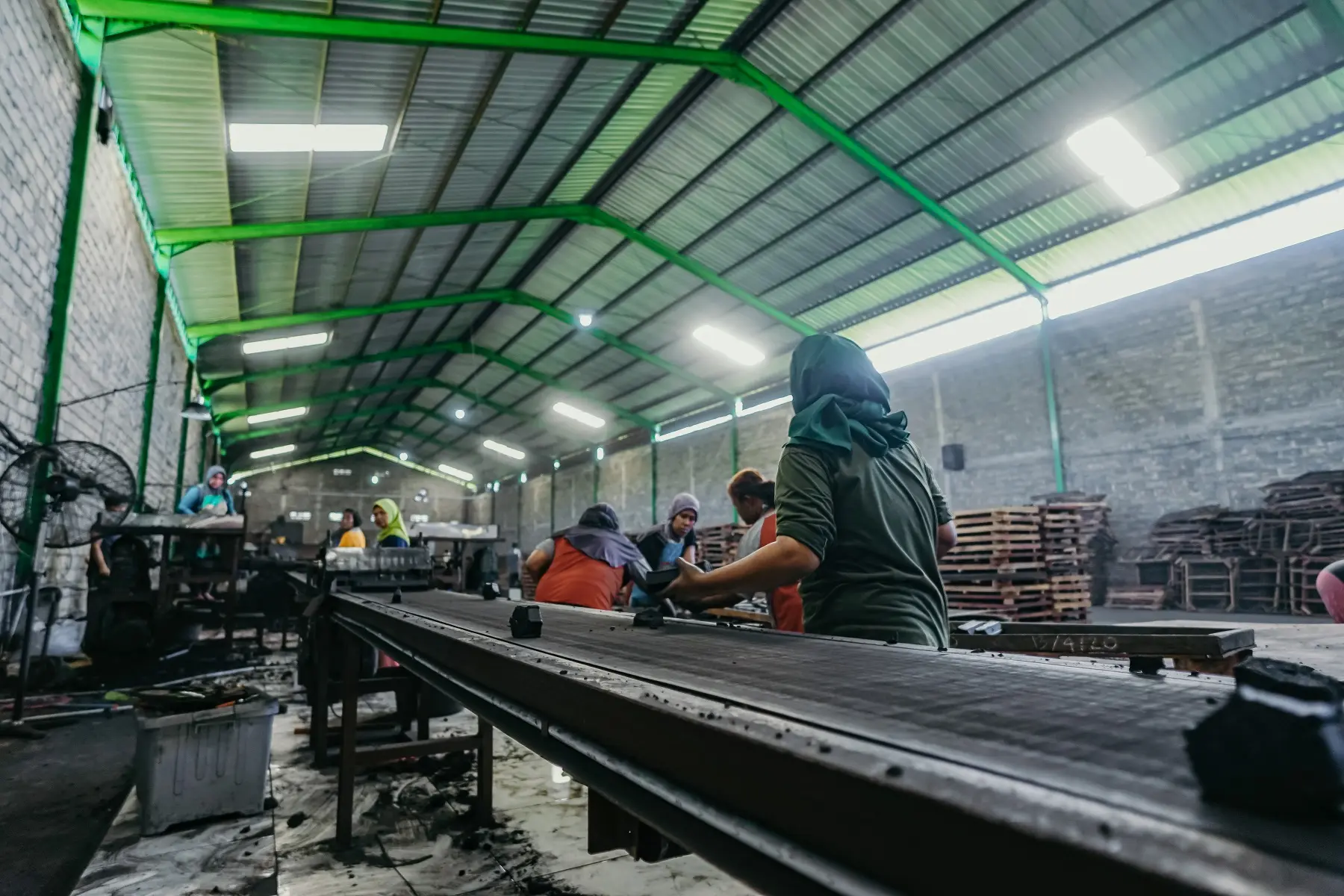
Unimax states capacity up to 300 metric tons per month across three production lines, subject to product requirements and the production schedule. Use Factory & Quality for the factory context, then confirm the quantity and slot available for your actual specification and packaging.
Briquette production capacity evidence
Ten questions that connect capacity to delivery.
Record the claim, assumptions, period, evidence reference, limitation, and responsible contact. Request proportionate redacted evidence rather than confidential customer data.
- 01
Define the capacity statement
Ask whether the number means installed equipment capacity, historical saleable output, forecast output, or available capacity for a new order. Confirm the period, facility, lines, product format, grade, and packaging included. Compare figures only after their scope and units match.
- 02
Separate product mix and line allocation
Ask which lines can produce your specification and what other products share those lines. Different formats, grades, and packing configurations may require different settings and changeovers. A factory-wide total cannot be assigned entirely to your BBQ charcoal order.
- 03
Check shifts and operating time
Ask which shift pattern supports the figure and how planned working days, breaks, changeovers, and downtime are treated. Distinguish an assumed maximum operating calendar from the schedule actually staffed and planned for your requested production window.
- 04
Reconcile yield and saleable output
Ask whether the quoted tonnes refer to material input, intermediate product, or finished goods accepted for sale. Request an explanation of relevant losses, rejected quantities, and rework. Review consistent production and release records; input tonnes are not automatically shipment-ready tonnes.
- 05
Find the practical bottleneck
Ask which stage currently limits output for your specification. Review preparation, forming, drying where applicable, inspection, packing, and release as a connected flow. Extra equipment at one stage does not eliminate a constraint elsewhere in the process.
- 06
Review maintenance and interruption plans
Ask about planned maintenance within your delivery window, relevant downtime history, and the response to an equipment or input interruption. Request the basis for any recovery allowance. A contingency plan should identify what can realistically be rescheduled and which changes require buyer approval.
- 07
Include packaging and release capacity
Ask whether packing materials, approved artwork, available packing staff, inspection, and release can keep pace with the proposed output. Confirm the actual pack configuration. Unpacked or unreleased stock cannot be counted as goods ready for your agreed shipment.
- 08
Account for existing commitments
Ask for an aggregate view of reserved production and packing slots during your requested period, without customer names, prices, or private contracts. Clarify tentative reservations versus confirmed commitments. Protect confidential data while still requesting a credible explanation of the available balance.
- 09
Connect available capacity to the order schedule
Ask for the quantity and production window specifically proposed for your order, with dependencies for specification approval, materials, packaging, inspection, and release. Keep production completion, shipment readiness, and transport arrangements separate in the plan.
- 10
Confirm the evidence and review point
Request representative redacted output summaries, batch or release references, a line-allocation explanation, and a proposed schedule. Reconcile inconsistent numbers with the responsible team. Agree when availability will be reconfirmed and which changes trigger a revised commitment.
Read the available balance
A factory maximum is not an unallocated order slot.
As an illustrative example, a supplier might forecast 100 MT of accepted finished output for the relevant product and period, with 70 MT already committed. The remaining 30 MT would still be provisional until packing, inspection, material availability, and scheduling assumptions were checked. These example figures are not Unimax output or availability claims.
Do not subtract bookings from a theoretical equipment maximum and call the result confirmed supply. First establish a realistic output basis for the requested product and time window, then reconcile commitments and constraints against that same basis. Avoid counting the same shared line capacity twice across different products.
Use the supplier comparison scorecard to record the evidence and unresolved questions. A higher headline figure should not automatically outweigh a clearer, supported order schedule.
Repeat-order control
Confirm the monthly plan and its dependencies.
Send your expected monthly volume, first required shipment window, product specification, pack format, and repeat-order cadence. Ask which approvals or inputs must be complete before the slot can be confirmed, and whether the proposal is a forecast, reservation, or agreed order commitment.
Align product and artwork approval, material readiness, production, packing, inspection, and release. The sample-to-shipment guide explains the approval sequence and why lead time must be confirmed for the actual project.
Agree a review point before repeat orders and a notification process for changes in product mix, line allocation, material supply, maintenance, or schedule. Record how a shortfall would be handled and which substitutions require your approval. An annual demand forecast alone does not confirm every monthly production slot.
Capacity verification FAQ
Keep capability and availability distinct.
Review product-specific output and confirmed scheduling before making a supply commitment.
01Does installed capacity equal available monthly output?+
No. Installed capacity describes equipment capability under stated assumptions. Practical output depends on the product, operating time, yield, constraints, maintenance, packing, and release. Availability for your order also depends on existing commitments.
02What charcoal factory capacity does Unimax state?+
Unimax states capacity up to 300 metric tons per month across three production lines, subject to product requirements and the production schedule. Confirm the available quantity and slot for your specific order before using that maximum in a purchase plan.
03Must a supplier reveal its other customers to prove availability?+
No. Aggregate booked quantities or slot summaries, with sensitive information removed, can support a scheduling discussion. Request evidence sufficient for your sourcing decision while protecting customer identities, pricing, and confidential records.
04Can a live video of three lines prove monthly supply continuity?+
No. It can support observations about the lines shown during the call. Monthly output and available supply require product-specific records, operating assumptions, commitments, and a reviewed order schedule.
Confirm the available slot
Match monthly volume to confirmed available capacity.
Share your product, specification, required monthly quantity, pack configuration, first shipment window, and repeat-order plan. Include approval and inspection requirements so production and packing can review the complete scope.
Unimax can discuss the available schedule for your proposed order. The stated capacity is up to 300 MT/month across three lines, subject to product requirements and the production schedule; actual available quantity and timing need order-specific confirmation.