
Shisha buyer guide · Article 175
How Ocean-Freight Moisture Can Affect Shisha Charcoal Packaging
Temperature changes, trapped moisture and wet handling can affect the shipment in different ways. Separate packaging observations from product-moisture results, then agree a control and evidence plan for the actual route.
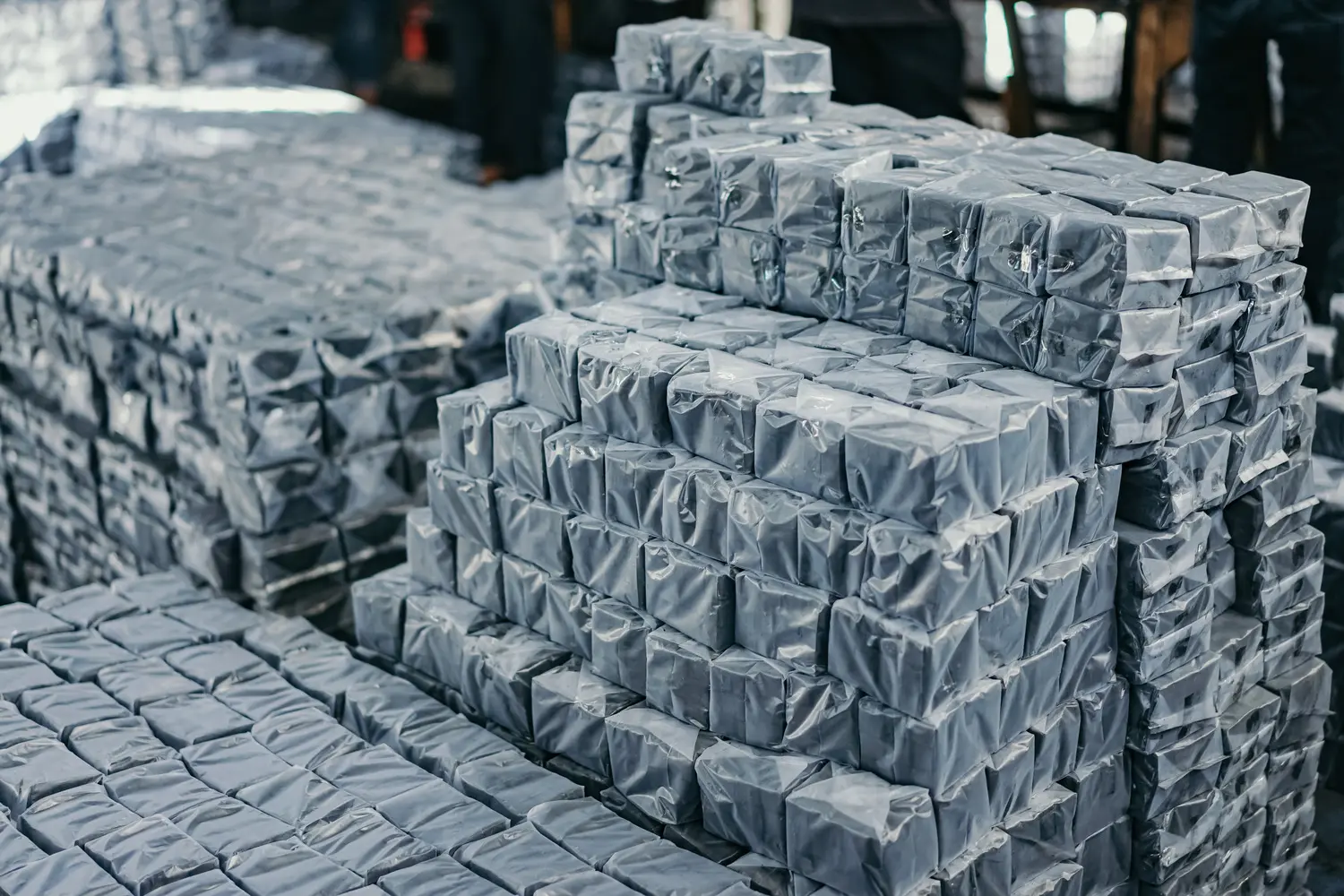
01 · Humidity and temperature cycles
A closed container can still contain moisture.
Ocean-freight moisture risk for shisha charcoal packaging starts with the whole journey: storage, loading, inland transport, port waiting, sea passage and destination handling. Record expected conditions and delays rather than choosing a control from the destination climate alone.
Relative humidity describes how close air is to saturation at its current temperature; it is not the same as the amount of water in the charcoal. As moist air cools to its dew point against a colder surface, water can condense. Changes in temperature can therefore matter even when no rain enters the unit.
Condensation on the inside roof or walls may drip onto cargo, often called container rain. Condensation on a colder cargo surface is a different location of the same physical process. Neither observation, by itself, identifies when moisture entered or proves a manufacturing fault.
02 · Where the water can come from
Review the cargo, packaging and unit together.
The moisture picture includes the goods, paper-based packaging, wooden pallets or dunnage where used, container flooring and enclosed air. Also check direct exposure during storage and loading, water ingress and a recently cleaned unit that has not dried. Treat these as possible sources to investigate, not a diagnosis from a photograph.
TT Club describes damp wood and insufficiently dried containers as potential contributors to condensation and packaging damage. A dry-looking outer surface does not quantify moisture inside a product or material.
Record what was actually observed or measured before loading. Where a product-moisture result is required, identify the lot, sampling scope, method, measurement basis and date. Keep a packaging-condition check and a container inspection as separate records.
Sources: TT Club: Managing climatic risks in the logistics supply chain
03 · Packaging damage and product results
Wet cartons and product moisture answer different questions.
At inspection, describe visible findings precisely: water marks, softened or deformed cartons, lifting labels, affected closures, wet inner packaging or odour. Record the location and extent instead of writing only “moisture problem.” Have the responsible reviewer assess whether the packaging still protects and supports the goods.
A wet outer carton does not establish a numerical charcoal-moisture result. Conversely, an accepted pre-shipment product result does not demonstrate that the packaging stayed dry through transit. Connect each conclusion to the evidence that actually supports it.
Compare identified production or pre-shipment results with properly sampled arrival results only when methods and reporting bases are comparable. Keep sampling timing, package condition, storage history and any handling after arrival visible. A temperature or relative-humidity logger is environmental evidence, not a direct charcoal-moisture test.
Quarantine suspect stock under the agreed receiving process and obtain a technical disposition. Do not relabel it as acceptable, dry it for resale or promise a performance outcome merely because the exterior appears to recover.
04 · Liners, barriers and desiccants
Select a system for the actual load and route.
A liner, a sealed product pack and a container desiccant serve different functions. Ask which barrier is intended to limit exposure, how closures are made, what moisture the absorbent is designed to manage and how the installation is checked. Confirm the supported materials and construction for the actual pack format.
Do not use a generic bags-per-container formula. Request a documented selection basis covering cargo and packaging condition, unit size, journey duration, anticipated conditions, control capacity and installation instructions. Have the relevant supplier or qualified reviewer confirm suitability and any risks from damaged or leaking control packs.
Controls do not justify loading wet goods, concealing a defective unit or ignoring required charcoal transport measures. An inadequately selected or closed barrier can leave moisture inside its protected space; adding more material is not evidence that the arrangement works.
Confirm compatibility with current dangerous-goods and carrier requirements before changing liners, ventilation, stowage or transport controls. Maersk’s Indonesia export page requires charcoal loading acceptance and publishes current charcoal procedures. That example does not establish another carrier’s rules or Unimax approval for a booking.
Sources: Maersk: Current Indonesia export and charcoal procedures
05 · Storage, loading and sealing
Protect the approved condition until the handover.
Agree storage and staging conditions with the supplier and logistics team, including protection from rain, damp floors and unsuitable neighbouring materials. Identify who checks packs after storage and before loading. Record any wetting or delay and the review decision rather than relying solely on an earlier release.
Check the assigned empty container and its identifier before cargo conceals the interior. If water, unsuitable residues or damage is found, hold the unit for the responsible review. Confirm any required floor, pallet and packaging checks before the reviewed loading arrangement proceeds.
Install and document the agreed controls at their specified stage. Keep the approved load distribution, securing and any required clearances. This article does not authorize opening vents, sealing ventilation paths or modifying a container to manage humidity.
Record final carton and lot counts, relevant photographs, closure condition, seal number and release owner. A security seal provides a shipment reference; it is not a moisture barrier and does not prove the interior remained dry.
06 · Arrival evidence and discrepancy review
Preserve the condition before it is changed.
Plan a safe receiving inspection with the responsible warehouse or survey team. Record container and seal references, time, visible external condition and the unloading sequence. Photograph the first observed condition before moving or disposing of affected packaging, where safe and permitted.
Map affected cartons by position, SKU and lot; distinguish wet surfaces, staining and damaged closures. Record condition of the liner, desiccants and inner packs where accessible. Retain relevant original images, logger files, packing records and identified samples under an agreed procedure. Protect customer branding in public copies.
Compare the arrival record with loading evidence and available transit information. A distribution pattern may guide investigation but does not independently prove condensation, leakage or the responsible party. Obtain the appropriate survey or technical assessment when the cause is disputed.
Notify the responsible parties under the contract and insurer’s actual instructions, including applicable deadlines. Ask before altering or discarding evidence. The Livingston cargo-insurance overview is a general reference; it does not confirm coverage, causation or a payable claim for this shipment.
Sources: Livingston: Cargo insurance overview (general reference)
07 · Route-specific control plan
Assign the evidence and decision before production.
Create one identified plan for the target market, product, estimated volume, pack configuration and expected route. Include storage and port stages, control selection and installation, loading checks, evidence owners, acceptance points and the action if a check fails. Record assumptions about journey duration and arrange review if the booking or schedule changes.
Confirm current requirements with the actual carrier, appointed broker, insurer or intermediary and relevant official sources. The CTU Code offers packing guidance; it does not replace mandatory rules, the carrier’s charcoal procedure or destination requirements. Public sources were reviewed on 16 October 2026, not as approval of a particular shipment.
Agree how pre-shipment condition, environmental records and arrival findings will be compared. After a discrepancy, revise the confirmed control plan on the basis of the investigation instead of assuming that another liner or extra desiccant automatically resolves the cause.
This guide supports buyer–supplier coordination. Obtain qualified advice for the actual cargo, packaging and shipment; it is not legal or customs advice or a guarantee of moisture-free delivery.
Sources: IMO: CTU Code guidance
Buyer tool
Route-specific moisture-control checklist
Record the order, product/lot, pack revision, route and expected journey. For each checkpoint, identify the requirement, evidence, owner, acceptance decision and review date. Keep assumptions and unresolved items visible.
| Plan element | Evidence to identify | Review decision |
|---|---|---|
| Journey and responsibilities | Route, storage/port stages, duration assumptions and review owners | Review changes before relying on the plan |
| Product evidence | Lot, sampling method, moisture-result basis and date | Keep product results separate from ambient RH |
| Pack condition | Approved construction, closures and pre-loading observations | Hold wet or unsuitable packs for disposition |
| Container condition | Unit identity, empty inspection and resolved findings | Do not conceal wetness or damage |
| Control selection | Liner/barrier/desiccant purpose, selection basis and compatibility | Obtain actual supplier and carrier confirmation |
| Loading and sealing | Installed-control evidence, tally, photos and seal record | Record release owner and accepted scope |
| Arrival evidence | Location of affected packs, originals, samples and logger files | Preserve condition and notify required parties |
| Investigation and follow-up | Comparable tests, survey findings and revised control plan | Separate observation, hypothesis and established cause |
Status options: planned, awaiting confirmation, hold, corrected pending review, accepted for the stated scope, or not applicable with a review basis. A completed checklist does not guarantee a dry arrival or carrier acceptance.
Ocean-freight moisture questions
Does a wet carton prove the charcoal failed its moisture specification?
No. Record the packaging damage and obtain comparable, identified product-test evidence before reaching a product-moisture conclusion.
Will more desiccant guarantee a dry shipment?
No. Selection depends on the load, packaging, conditions and journey. Resolve wet goods or an unsuitable unit and confirm the approved control system.
Can a humidity logger replace a product-moisture test?
No. It records conditions at its sensor location. It does not directly measure the charcoal’s moisture content or establish the cause of damage.
Should every charcoal shipment use the same liner or ventilation arrangement?
No. Obtain route-specific packaging and carrier confirmation. Do not change dangerous-goods transport controls using a generic condensation guide.
Send the packaging concept and target route for review.
Send Unimax the target market, product, estimated volume and packaging concept. Add the expected route, timing, storage conditions and your carrier’s or broker’s requirements, then ask which packaging scope and evidence can be supported before production.
Discuss packaging and routeReview current shisha charcoal products · Contact Unimax
Related buyer guides
Container loading checklist · Arrival inspection checklist · Why product moisture matters