
Shisha buyer guide · Article 214
How to Record Cube Count Variation in Shisha Charcoal Packs
Record cube counts alongside net mass, fragments and measured size observations. Keep sample findings tied to their source packs and any confirmed count requirement.
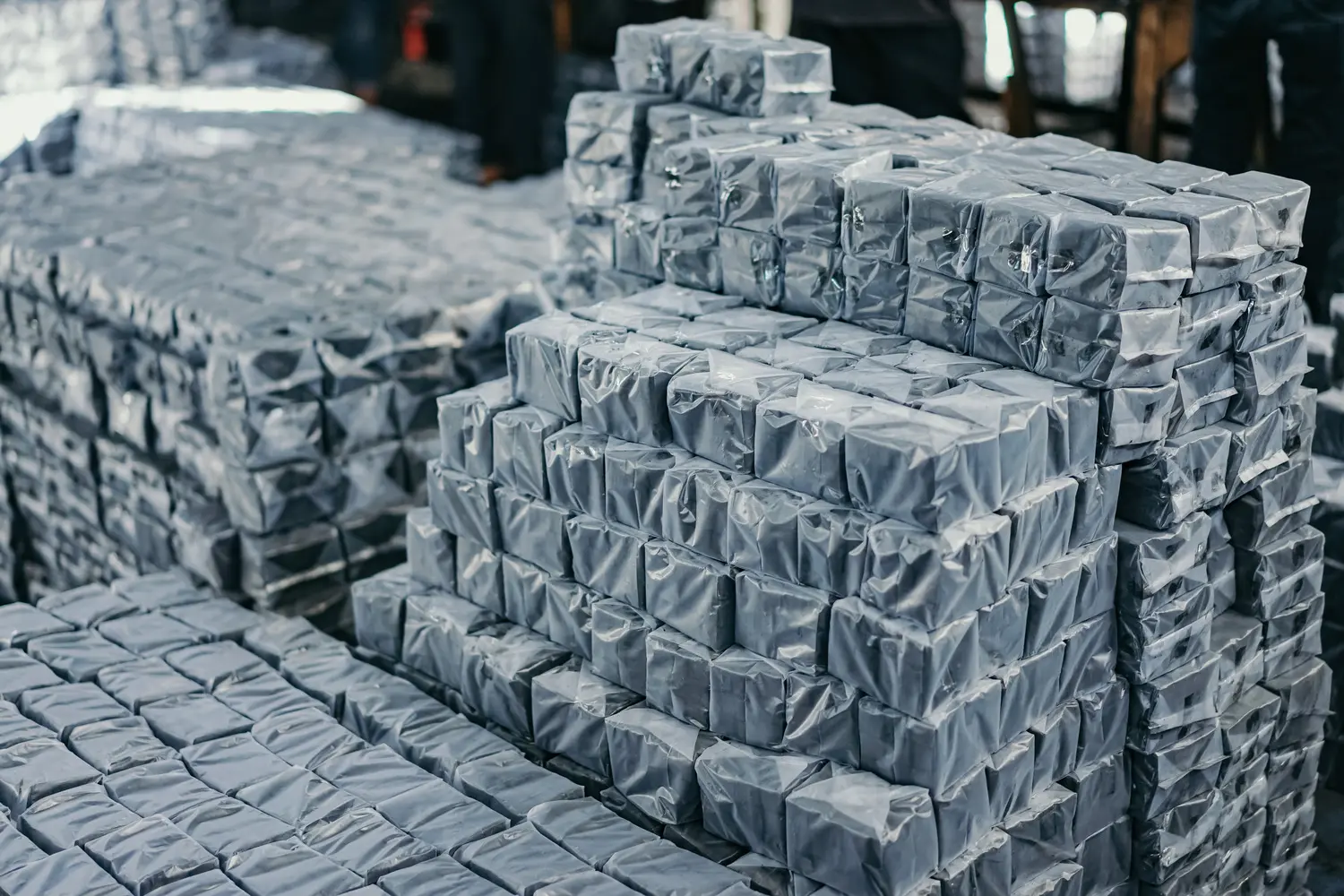
01 · Confirm what the pack declares
Weight and piece count answer different questions.
Shisha charcoal cube count per pack is useful inspection information, but it must be read alongside the pack’s declared quantity and the agreed product specification. First establish whether the actual offer is based on net mass, a stated piece count or both. Record the label and specification revision rather than inferring the sales basis from the way cubes look inside a bag.
For a pack filled to a mass target, the number of cubes depends on the masses of the pieces included. Different piece masses can produce different counts at similar total net mass. Count variation alone therefore does not establish a net-weight shortage; a matching count also does not establish that net weight is correct.
Any exact piece-count requirement should be expressly agreed and confirmed for the proposed configuration. This guide does not state current Unimax pack formats, official cube counts or guaranteed pieces per unit. It provides a buyer observation record, not an ISO, AQL or accredited sampling procedure.
02 · Understand the arithmetic
A fixed mass does not imply identical piece masses.
For a defined group of intact cubes, total cube mass divided by the number of cubes gives the observed average mass per cube. That average describes the measured group. It does not mean every cube has the same mass or allow an exact count to be promised for a different pack.
Illustrative arithmetic only: 1,000 g of intact cubes averaging 10 g each corresponds to 100 cubes; 1,000 g averaging 12.5 g each corresponds to 80 cubes. These hypothetical values demonstrate the relationship between mass and count. They are not Unimax specifications, measured results or available pack options.
Dimensions are relevant context, but nominal edge size alone does not determine each cube’s mass. Record actual dimension observations where needed and avoid converting a nominal cube size directly into an exact piece mass. If dimensions differ, investigate that observation against the agreed specification rather than assigning a cause from count alone.
Keep loose fragments and fines identifiable. A pack containing intact cubes plus fragments has a different measurement basis from a group consisting only of intact cubes. Dividing the pack’s entire net mass by its intact-cube count incorrectly attributes all fragment mass to the intact pieces.
03 · Define the counting method
Agree how a chipped cube and a broken piece will be recorded.
Before opening packs, document the counting categories. Define an intact cube, a chipped but countable cube, a fragment and any fines category in terms the inspection team can apply consistently. Use agreed descriptions or reference images and retain the revision. Do not invent an industry-wide category boundary.
Count each physical piece once under the chosen rule. If the buyer wants intact and chipped cubes reported separately, keep separate fields and state which categories contribute to any reported cube total. Do not silently count two fragments as one reconstructed cube.
Keep condition observations separate from acceptance judgments. A fragment count can be difficult to compare if small pieces are split or handled differently. Where the agreed method calls for fragment mass, record it separately using the documented weighing approach and units.
Use a consistent opening and transfer process that preserves the observed contents. Record spills, pieces broken during handling and material left in packaging. If an event changes what can be counted or weighed reliably, retain the exception and identify whether a new pack or additional review is needed.
04 · Select and identify the packs
Preserve the route back to each carton and lot.
Define the population, lot boundaries, carton locations and packaging revision before selecting packs. Agree the number of packs and the selection method for the inspection objective. Use recorded random selection where the plan requires it and disclose any access limitations or replacements.
Assign each pack a unique ID linked to its lot and carton. Record label declaration, condition before opening, collection date and operator. Keep different nominal sizes or pack declarations in separate groups so their counts are not pooled into a misleading comparison.
For each selected pack, record net mass using the agreed direct-weighing or tare method. Retain gross and tare readings when that method is used. Count observations do not substitute for the weighing procedure, scale suitability or product-recovery record.
Use the carton-and-lot sampling guide to plan source coverage and the net-weight guide for weighing records. A set of packs from one convenient carton supports observations about that collection; it does not automatically characterize all production lots.
05 · Record size distribution and count spread
Keep individual observations visible.
Log each pack’s intact-cube count, chipped-cube count, fragment observation or mass, and measured net mass. State the rule used to form any combined cube total. Review results by product, lot and carton before producing an overall summary.
If dimensional context is needed, select identified cubes under a documented measurement plan. Record cube IDs, source pack, measured axes, units and the number of distinct cubes examined. A dimensional subset should not be presented as measurements of every piece in the pack.
Retain the individual dimension readings and describe any grouping boundaries used for a size-distribution summary. Grouping into smaller or larger pieces without explicit boundaries makes comparison unreliable. Report the extent of the measurement coverage alongside the summary.
Summarize observed count range or average only for the packs actually examined. Include the number of packs, their source groups and relevant exceptions. An average of sample counts is not a minimum quantity promise, and the lowest observed count is not an established lower bound for future supply.
06 · Review differences before changing the offer
Investigate count, mass and condition together.
When counts differ, compare the net masses, counting categories, fragment observations and dimension evidence first. Check whether records concern the same product and packing revision. Differences may need investigation, but the count alone does not identify whether the issue is filling, dimensions, individual piece mass, breakage or the counting method.
If a pack appears to meet the count expectation but its mass requires review, keep the mass question open. If mass is as expected but the cube count differs, review the actual count commitment and product findings. Apply the named agreed criteria rather than inventing a universal tolerance.
Record the disposition for the tested configuration: accept under agreed criteria, clarify the specification, investigate an exception or revise the inspection plan. Preserve the original records and the reason for any additional collection.
Before publishing a retail count claim or quoting pieces per pack, ask the supplier to confirm whether that exact requirement is feasible and included in the commercial scope. Keep an observed sample count, a planning estimate and an agreed guaranteed quantity clearly distinguished.
Buyer tool · retain one record per selected pack
Pack count variation log
Inspection ID ___; company / market ___; product and pack revision ___; method owner ___; date ___. Repeat the pack-level fields for every selected pack and retain the original observations. This log supplies no universal sample count, acceptance tolerance or pieces-per-pack guarantee.
| Record area | Definition / observation | Evidence to retain | Review / action |
|---|---|---|---|
| Reference / declaration | Pack ID ___; product / nominal size ___; label revision ___ | Declared net mass ___; count statement if any ___ | Confirmed sales basis ___; offer reference ___ |
| Source / selection | Lot ___; carton ___; selection method ___ | Planned / actual packs ___; collection date / operator ___ | Access limits / replacements ___ |
| Count definitions | Intact rule ___; chipped rule ___; fragment / fines rule ___ | Method revision / reference images ___ | Categories included in reported total ___ |
| Net mass | Measured net mass / units ___; weighing method ___ | Gross / tare if applicable ___; scale / record reference ___ | Handling or recovery exceptions ___ |
| Piece observations | Intact ___; chipped ___; reported cube total ___ | Fragments / fines observation or mass ___ | Do not reconstruct a count from fragments without a defined rule. |
| Dimensions / distribution | Distinct cubes measured ___; cube IDs / source packs ___ | Axes / units / readings ___; grouping boundaries ___ | Subset coverage and measurement limits ___ |
| Optional mass-per-cube | Mass of the defined intact-cube group ___; cube count ___ | Observed average = group mass ÷ group count ___ | Exclude separately recorded fragments from that group. |
| Summary / comparison | Packs examined ___; count range / average ___ | Results by lot / pack revision ___; exceptions ___ | Observed sample summary, not a guaranteed pack count. |
| Decision / claim review | Criteria / commercial reference ___; unresolved findings ___ | Accept / clarify / investigate ___; evidence ___ | Reviewer ___; count claim confirmed ___; next action ___ |
Pack-level entry: pack ID ___; net mass ___; intact cubes ___; chipped cubes ___; reported cube total and rule ___; fragments / fines ___; dimensional subset reference ___; exception ___.
Summary record: packs examined ___; source lots / cartons ___; observed range / average ___; unresolved findings ___; agreed criterion ___; reviewer / next action ___. Do not turn the sample average into an exact retail claim.
Pack cube-count questions
Why can packs with similar net mass have different cube counts?
The total depends on the masses of the pieces included. Different individual piece masses can produce different counts at a similar total mass. Review dimensions and fragments as separate observations.
Does a lower cube count prove that a pack is underweight?
No. Measure net mass using the agreed method and compare it with the actual declaration and criteria. Review any separate count commitment independently.
Should broken pieces be counted as whole cubes?
Use the agreed counting categories. Keep intact cubes, chipped cubes and fragments identifiable, and state which categories contribute to the reported total.
Can the average sample count become a guaranteed retail count?
An observed average is not a guarantee. Confirm an exact piece-count requirement, its feasibility and the commercial commitment before using it in an offer or label.
Commercial discussion
Confirm the pack basis before specifying a piece count.
Share your product requirements, destination, proposed net mass and any exact piece-count requirement. Request current specifications, identified samples or an agreed inspection scope. Ask Unimax to confirm current packing feasibility and any count commitment for the inquiry.
Discuss an inspection scopeFactory and quality evidence · Shisha charcoal products · Contact Unimax
Related buyer guides
Evaluate a shisha charcoal sample · Prepare a pre-shipment inspection · Check retail-pack net weight · Plan cube measurement counts · Sample across cartons and lots