
Packaging buyer guide · Article 234
Packed Shisha Charcoal Drop Tests: Inner Pack vs Master Carton
Compare primary packs, inner packs and filled master cartons under an agreed impact procedure. Record external and internal findings separately, with clear limits on what the result establishes.
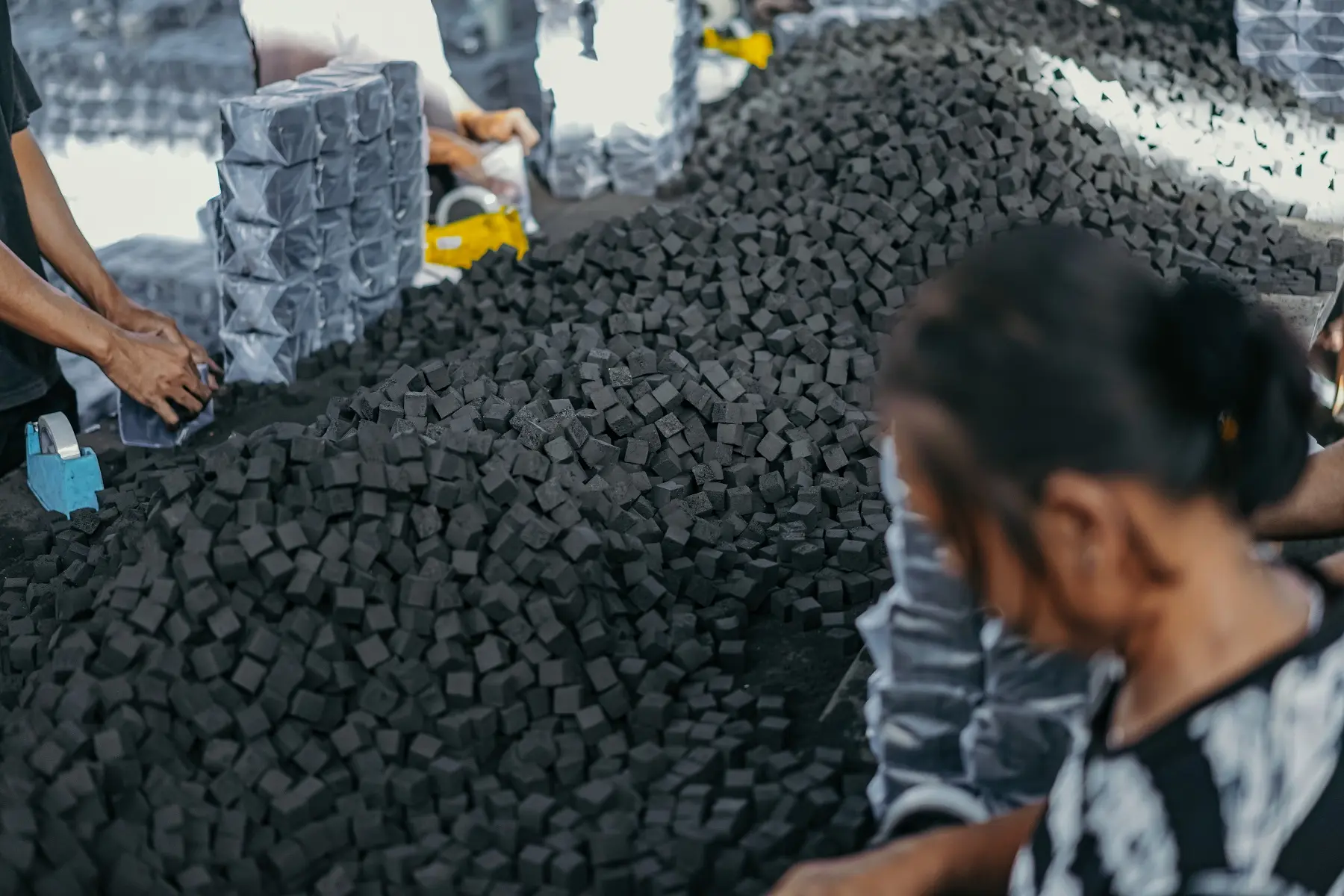
01 · Identify the packaging level
Test the configuration that answers the buying question.
A shisha charcoal packed drop test should identify the exact filled unit being evaluated. A primary pack directly contains the charcoal; an inner pack may group units inside a master carton; the master carton is the outer shipping package. Terminology varies, so draw or describe the actual layers instead of assuming that inner pack always means the same construction.
A retail unit dropped by itself and that same unit carried inside a filled master carton answer different handling questions. Record product fill, number and arrangement of units, closures, inserts where present, dimensions, gross mass and packaging revision. Do not claim that an outer-carton result automatically qualifies every separately handled retail pack.
Agree the purpose and acceptance criteria before testing: visible damage, opening, product breakage or another defined requirement. This guide sets no universal drop height, sequence, number of drops or damage allowance. A custom comparison provides evidence only for its stated setup.
02 · Agree a controlled and suitable procedure
Define the method before observing the outcome.
Record specimen selection, initial condition, conditioning history and any prior handling. Use distinct identified units and define whether each follows a sequence of impacts or receives one impact. Repeated drops on the same package represent accumulated exposure, not independent replicate specimens.
Document the agreed release height and how it is measured, intended orientation, impact surface, release method and sequence. Record actual deviations, including unintended rotation or secondary contact. Do not describe an uncontrolled hand toss as a repeatable laboratory procedure.
Use appropriate equipment, a clear exclusion area and a safe handling procedure. Heavy filled cartons need suitable facilities; do not improvise releases from ladders or place people beneath suspended goods. If the intended procedure cannot be performed safely and consistently, use a qualified packaging test provider.
When comparing pack alternatives, keep product, fill arrangement, conditioning and the impact procedure comparable. If a change affects several factors, record all of them. A different result does not isolate one board grade, closure or insert as the cause without supporting investigation.
03 · Inspect from the exterior through to the cubes
Keep each observation attached to its specimen.
Before exposure, photograph the identified units and record dents, tears, closure condition and any available product baseline. Plan the baseline assessment so opening and repacking do not silently change the specimen. Separate comparable baseline units may help, but document their limits.
After the agreed impact or sequence, record damage location and severity using pre-agreed descriptions. Distinguish panel dents, corner crushing, seam failure, tears, opening and loss of shape. Record cosmetic changes separately from failures against the actual acceptance criteria.
For a master-carton evaluation, map each selected inner or retail unit to its position inside the carton before removal. Inspect closures and pack condition, then examine the product under the agreed plan. This preserves useful context when damage is concentrated in one part of the package.
Use consistent definitions for intact cubes, broken pieces and loose material, with counts or mass and an explicit denominator. Document the opening and emptying process because inspection handling can introduce breakage. Do not attribute every fragment to the drop solely because it was found afterward.
04 · Compare packaging levels without mixing conclusions
An intact outer carton is only one observation.
Keep primary-pack, inner-pack and master-carton findings in separate rows. At each level, state whether the result concerns the unit alone or its performance within a larger filled assembly. Record the number of distinct specimens and all relevant outcomes rather than selecting only the best example.
For a hypothetical result, the master carton remains closed while a retail pack inside opens and contains broken cubes. The exterior closure observation cannot be summarized as the complete package passed. Apply the agreed criteria to the internal finding and preserve its location and specimen reference.
Conversely, a separately dropped retail pack that fails does not establish the result of that pack protected inside a master carton. Define which handling situation matters commercially and what further evidence would close the gap.
Keep custom comparative work distinct from accredited transport testing. If a customer or purchasing specification requires an accredited report, verify the provider’s accreditation scope for the relevant testing and obtain the identified report. An informal video or an unspecified laboratory logo is not evidence of that scope.
05 · Make a bounded packaging decision
Approve the revision and the evidence scope.
A drop observation does not recreate the combined effects of vibration, stacking loads, humidity and an entire distribution route. It does not establish barrier performance, shelf life or damage-free arrival. Ask a suitable test provider to define the required transport evaluation when that broader decision is needed.
Record whether to revise the pack, repeat the comparison, request laboratory testing or approve within a stated scope. Name outstanding checks, owners and dates. If the pack construction, fill or closure changes, identify a new revision and review which checks must be repeated.
Keep the plan, specimen records, original findings, corrective changes and later results together. A favorable retest should not overwrite an unsuccessful result without showing what changed. Update the packaging brief and master-carton instruction only after the appropriate approval.
Send Unimax your target market, pack concept, estimated volume and charcoal specification for packaging review. Discuss available formats and supporting evidence for the actual inquiry. This guide does not report an actual Unimax drop-test result or promise a particular construction, print method, barrier property, shelf life or destination-label compliance.
Buyer tool · pack-level drop test matrix
Compare each pack level against the agreed criteria.
Review ID ___; product / lot ___; pack revisions ___; specimen IDs ___; agreed procedure and criteria ___; reviewer and date ___. This matrix is not an accredited test report.
| Check | What to review | Evidence / entry | Decision / follow-up |
|---|---|---|---|
| Primary pack | Alone or within another assembly | ID / fill / closure / revision ___ | Initial and final product condition ___ |
| Inner pack | Actual grouping and support | Unit count / position / revision ___ | Pack opening / deformation / damage ___ |
| Master carton | Complete filled shipping unit | Contents / arrangement / gross mass ___ | Outer damage and mapped internal findings ___ |
| Procedure | Agreed height, orientation and sequence | Surface / release method / deviations ___ | Custom comparison or defined lab method ___ |
| Specimen history | Distinct units and cumulative impacts | Selection / conditioning / previous drops ___ | Coverage limits ___ |
| Product assessment | Defined breakage measures | Counts or mass / denominator / opening ___ | Baseline and handling limits ___ |
| Evidence status | Report and provider scope where required | Report ID / method / accreditation scope ___ | What remains unverified ___ |
| Decision | Criteria, revision and next action | Revise / repeat / lab / scoped approval ___ | Owner / approver / date ___ |
Record the packaging decision
Criteria met or unresolved ___; findings by pack level ___; deviations ___; product-inspection limits ___; further testing ___; approved revision and scope ___; approver and date ___.
Packed drop-test questions
Does an intact master carton prove the product is undamaged?
No. Inspect the selected internal packs and charcoal using the agreed plan and retain their carton-position references.
Can a primary-pack result qualify the complete master carton?
No. State the actual tested configuration and evaluate the complete assembly separately where required.
Are repeated drops on one unit independent samples?
No. They describe cumulative exposure of one specimen. Record distinct specimens separately.
Is a custom drop video an accredited transport test?
No. Request the defined method, identified report and relevant provider scope when accredited evidence is required.
Commercial discussion
Discuss the pack your target market needs.
Share your target market, pack concept, estimated volume and charcoal specification. Discuss available packaging options and the evidence needed for your handling and distribution conditions.
Review packaging requirementsPrivate-label packaging · About PT Unimax Pro Indonesia · Shisha charcoal products · Contact Unimax
Related buyer guides
Prepare an OEM packaging brief · Specify shisha charcoal master cartons · Factory audit checklist for buyers