
Technical and shipping documents
Charcoal COA, SDS, and Certificate of Origin Explained
A Certificate of Analysis reports results for an identified sample or batch. A Safety Data Sheet communicates product hazards and handling information. A Certificate of Origin supports an origin declaration. Check the purpose, issuer, reference, and revision of each: one cannot replace the others.
Quality resultsProduct safetyOrigin evidence
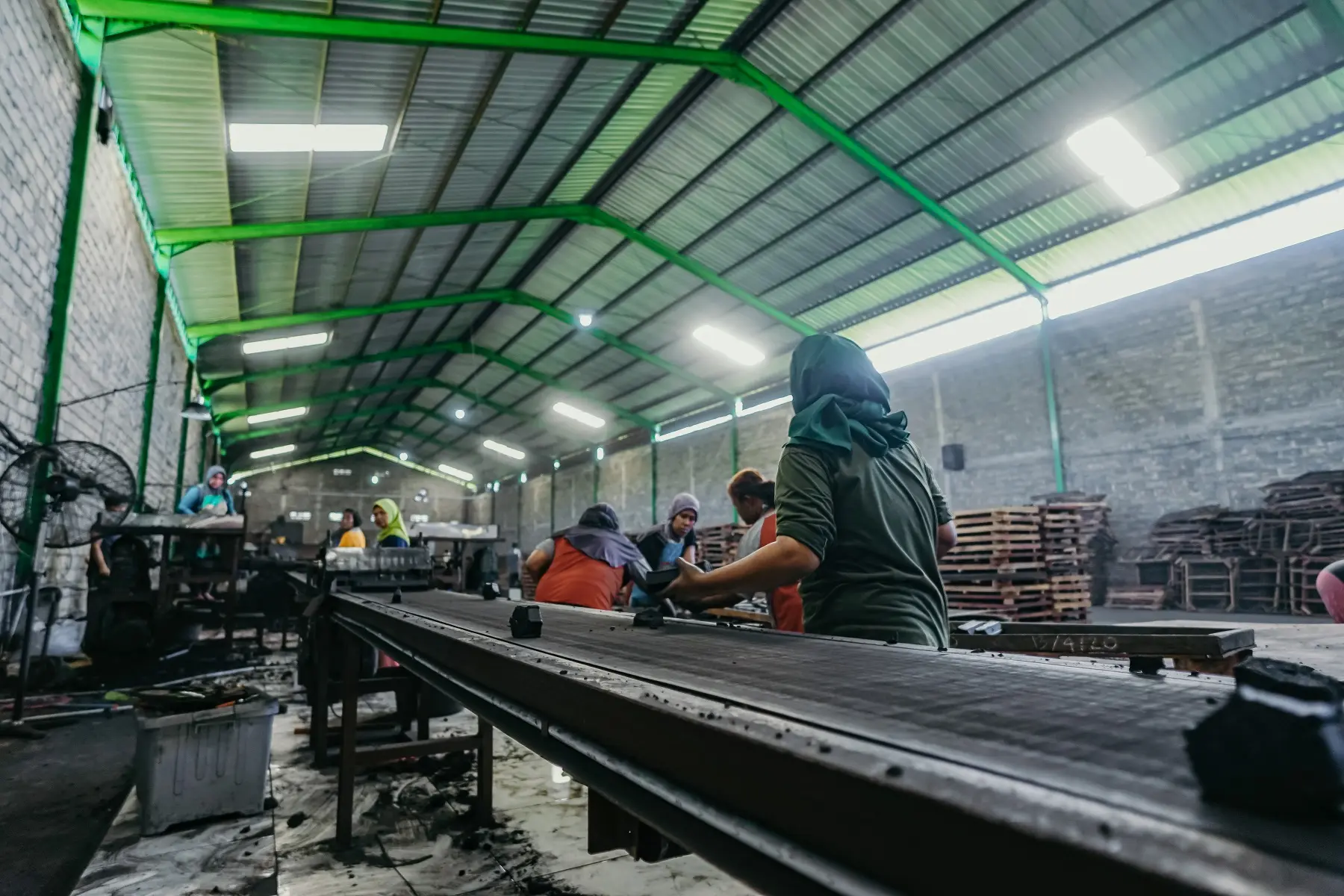
Charcoal COA SDS certificate of origin
Three documents, three different questions.
| Document | Question it answers | Who prepares it | What to trace | What it cannot replace |
|---|---|---|---|---|
| COA — Certificate of Analysis | Reported test results for an identified specimen or batch | Producer or testing laboratory; establish who tested and who issued it | Sample / batch ID, sampling and test dates, methods, units, reporting basis | Does not establish origin, carrier acceptance, or every carton’s performance |
| SDS — Safety Data Sheet | Product hazards, precautions, handling and safety information | Manufacturer, importer or other responsible supplier; check the named entity | Product identifier, composition scope, preparation / revision date and applicable language | Does not certify batch quality or serve as a dangerous-goods declaration |
| COO — Certificate of Origin | Origin evidence for the specified goods under applicable rules | Issuer or certifier permitted by the destination or trade arrangement | Goods description, parties, invoice / shipment references and applicable origin criteria | Does not prove quality or automatically qualify goods for preferential duty |
01 · Quality evidence
A COA needs a traceable sample or batch.
A charcoal COA summarizes analysis results for the material identified on it. Check the reference, who sampled the material, when it was sampled, who performed the tests, and the connection to the goods you intend to buy. A report for an earlier evaluation sample is not evidence that the next production lot has the same results.
For moisture, ash, volatile matter, fixed carbon or calorific value, review the stated test method, units and reporting basis. Compare results with the agreed specification on the same basis. A list of target values copied from a specification is not the same as recorded measurements. Ask whether any value is calculated rather than directly measured.
A producer-issued COA is not automatically an independent laboratory report. Identify the underlying report when external testing is claimed. Read what a charcoal lab report proves and the COA versus specification and lab-report guide for a deeper technical review.
02 · Product safety
An SDS describes hazards and precautions.
SDS is the current term; charcoal MSDS is a legacy search term still used in some carrier paperwork. Request the current product-specific Safety Data Sheet and confirm its format and language with the intended recipient. A generic sheet for a different charcoal product is not a reliable substitute.
Review product identification, responsible-party details, hazard information, handling and storage, stability and reactivity, and the preparation or revision date. The U.S. OSHA Hazard Communication framework uses numbered SDS sections; its requirements and enforcement scope are specific to that jurisdiction. Confirm destination requirements separately rather than treating a U.S. example as a global approval.
Transport information needs current review. Maersk’s Indonesia export guidance, checked on 3 October 2026, requires charcoal bookings to follow its dangerous-goods process and obtain loading acceptance; its linked advisory lists an MSDS alongside other required records. An SDS alone therefore does not equal booking approval. Confirm the selected carrier’s current requirements for the actual product and route.
Do not treat a low-moisture COA or an old self-heating test as permission to declare charcoal non-DG. Have the responsible transport specialist reconcile the safety information with the booking and required declarations.
03 · Origin evidence
A COO addresses where goods originate.
A coconut charcoal COO supports an origin declaration for the identified goods. Origin is determined under the applicable rules; the exporter’s office address or departure port alone does not establish it. The U.S. International Trade Administration distinguishes general origin documentation from FTA origin certification. Ask the destination broker which proof is needed and how the goods must be described.
Distinguish a non-preferential origin certificate from proof used to claim preferential treatment under a trade arrangement. A preferential claim depends on meeting that arrangement’s origin criteria and documentation requirements. A certificate bearing a country name does not automatically reduce duty.
The permitted issuer, certifier, declaration format and validation process depend on the destination and arrangement. Some procedures use an authorized issuing body; some permit specified parties to certify origin. Review parties, goods description, quantities, invoice references, signatures or electronic validation as applicable. Correct material discrepancies through the responsible issuer; do not manually alter a finalized certificate.
Importer review worksheet
Check identity, issuer, scope, version and acceptance.
For each document, record its reference, owner, reviewer, required format, draft deadline, final deadline and status. Use these five checks to resolve gaps.
- 01
Identity
Record the product name, grade and intended use. Match COA specimen or lot references to the order and production records. Match the SDS to the actual formulation. Match origin goods descriptions to the invoice and packing list.
- 02
Issuer
Record the issuing legal entity and contact. Ask whether COA testing was internal or external. Establish who is responsible for the SDS. Confirm with the broker whether the origin proof needs an authorized issuer, validation or a permitted declaration.
- 03
Scope
Separate sample evidence from production-batch evidence. Record which lots a COA represents and how they were sampled. An SDS generally covers a product formulation; an origin proof covers the goods and criteria described in that record.
- 04
Version and dates
Keep the COA issue date and test dates, SDS preparation or revision date, and origin issue date. Recheck changes in formulation, packing, route or required format. There is no single expiry period that can safely be applied to all three documents.
- 05
Review and status
Assign a technical reviewer for analysis, a responsible safety / transport reviewer for the SDS, and the broker for origin requirements. Record accepted, clarification required, or not applicable with a confirmed reason. Resolve open items before the relevant deadline.
A practical mismatch
Matching names are not enough.
Suppose an importer orders a new production lot, but receives a COA for the original sample, an SDS for a different formulation, and a COO draft with a conflicting goods description. These are illustrative issues, not a Unimax shipment record. Ask for the lot-to-test relationship, the correct product SDS, and an issuer-reviewed origin correction before treating the set as complete.
Review the wider pre-shipment document checklist to coordinate these records with the commercial invoice, packing list and transport documents. Keep technical acceptance, transport acceptance and origin review as separate sign-offs.
Common document questions
Does an SDS prove the charcoal meets my specification?
No. Review analysis linked to the relevant sample or lot against your agreed specification. The SDS communicates safety information.
Can one COA cover a whole container?
Only assess that claim after establishing the lots included, sampling plan and traceability. A container reference alone does not prove that all its material was represented by the tested sample.
Is every document available for every Unimax order?
Availability, issuer, format, testing scope, timing and any associated cost must be confirmed for the specific order. Agree this before production; do not assume a website guide is a document commitment.
Where can I verify the requirements?
Use your destination broker, selected carrier and the responsible issuing or testing party. The official references below provide context; the actual order still needs review.
Official references
- OSHA — SDS section content under the U.S. Hazard Communication Standard
- International Trade Administration — Common export documents
- International Trade Administration — FTA certificates of origin
- Maersk — Indonesia export procedures and current charcoal advisory
Sources reviewed 3 October 2026. Recheck the relevant authority and carrier before booking.
Plan the document scope
Confirm which documents apply to your route and product.
Share your destination, intended use, carrier, required analysis and broker-confirmed origin format. Unimax can discuss the available scope for your coconut BBQ charcoal briquette order.