
Importer packaging and logistics guide
Container Liners and Desiccants for Charcoal Shipments
Choose a complete packing system, not a bag count. Review the liner, desiccant, product packs and route together, then record the approved installation and receiving procedure.
Selection inputsInstallation evidenceReceiving and disposal
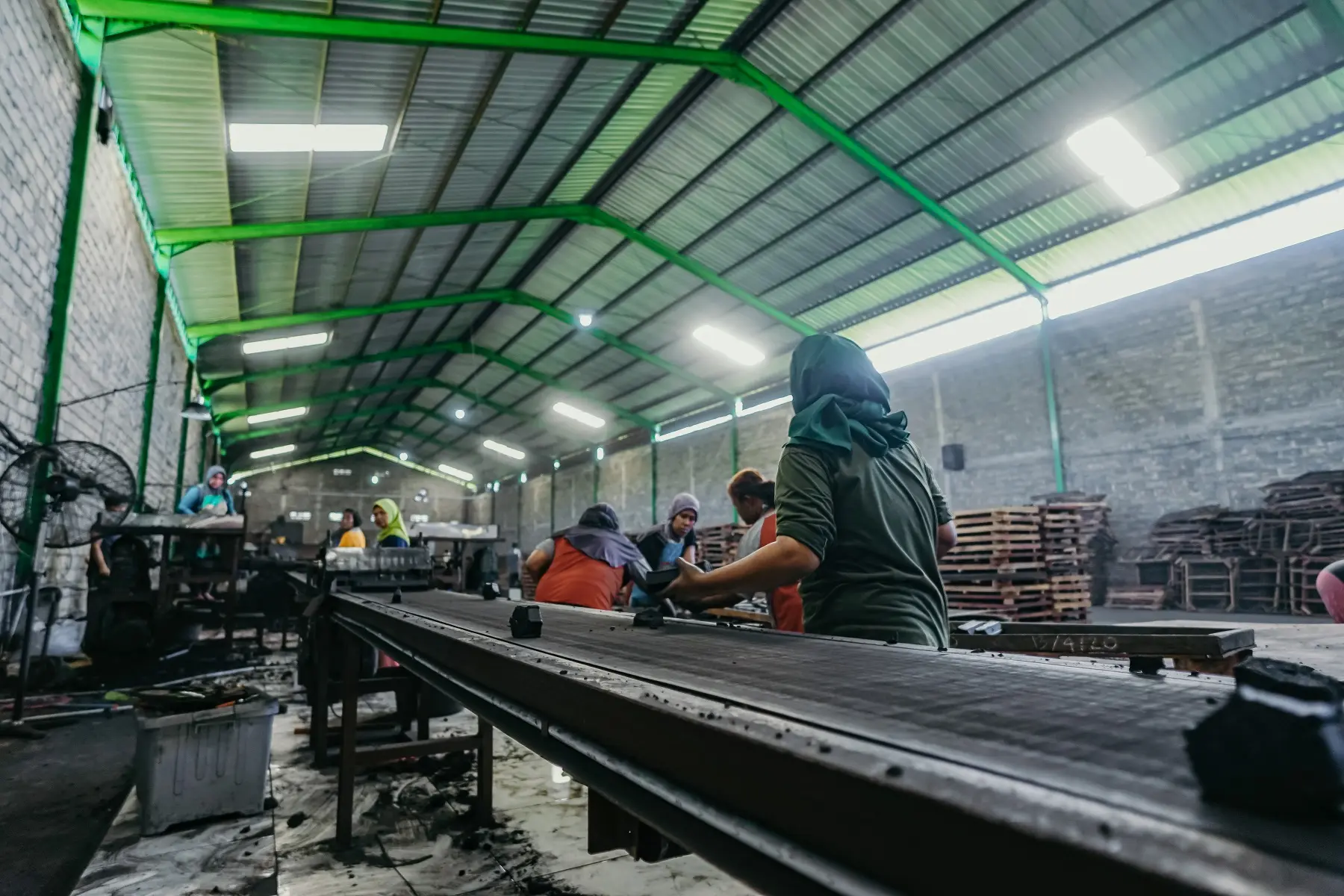
Charcoal container liner desiccant
Start with the protection you need.
For importers and logistics teams, moisture control charcoal shipment planning begins with a clear question: are you trying to limit exposure of the cartons, control water vapour in a defined space, protect the product packs, or combine those aims? A liner and a desiccant are different controls. Their names do not establish how the proposed system performs.
Use the ocean-freight moisture guide to map the exposure first. This guide covers the next decision: what to ask the control supplier, how to check the approved installation, and which records the receiver needs.
For BBQ charcoal, review controls with the packaging team, logistics specialist and carrier. The moisture plan must fit the accepted cargo arrangement; adding a liner does not approve a shipment.
Different layers, different jobs
Distinguish the liner from the vapour-control product.
| Control | Intended role | Review question | Limit |
|---|---|---|---|
| Container liner or barrier | A container-level layer with a defined material, coverage and closure. | Ask what exposure it addresses, where moisture may remain, and how it fits the load. | Its presence does not prove a sealed or moisture-proof enclosure. |
| Carton liner or product bag | A pack-level layer around charcoal inside the outer packaging. | Review seams, closure, permeability and damage in the actual filled pack. | Protection inside a pack and control of container air are separate questions. |
| Container desiccant | A supplied product intended to take up water vapour from its surrounding space. | Confirm product identity, capacity evidence, conditions, retention and installation instructions. | It has finite capacity and cannot correct active water ingress or an unsuitable wet load. |
Selection inputs
Give the supplier a shipment brief.
Include origin storage, loading conditions, destination, shipping season, sea transit, transshipment, terminal dwell and possible delays. Describe container size and type, floor or pallet loading, carton configuration, packing materials and the intended liner enclosure. The sailing time alone is not the exposure period.
Provide product-moisture evidence with the agreed test method and sample identity, plus the condition of cartons, pallets and dunnage. CTU Code Annex 3 identifies cargo and packing materials as sources of internal humidity. It also warns that drying agents can lack sufficient capacity when moisture-bearing cargo is not suitably dry for container transport.
Ask the supplier to state the assumptions behind its recommendation and the conditions under which it should be reviewed again. More material is not automatically a better solution: a revised route, damp load, damaged control product or different enclosure may require a different assessment.
Container desiccant BBQ charcoal
Ask for product-specific evidence.
Clariant’s Container Dri II information describes a cargo desiccant that takes up moisture and offers several formats. It says the number required can vary with shipping conditions and the goods being protected. That is a useful example of why another product’s published count should not become a universal charcoal loading rule.
Obtain the exact product data, current safety information and installation instructions. Ask how capacity was measured, which temperature and humidity conditions apply, and what retention or leakage precautions are needed. Confirm storage before use, package integrity and any expiry or service-life conditions specified by its supplier.
This guide selects no chemical, brand, bag count or replacement interval. A recommendation needs review of the actual product, pack, route and cargo requirements. A generic claim such as “food safe” does not by itself establish compatibility with this shipment.
Charcoal export liner compatibility
Review both sides of the barrier.
Specify the liner material, coverage, seams, closure and intended function. Ask the supplier which spaces the proposed desiccant actually controls when that liner is installed. Do not assume a product outside a closed barrier protects the air inside each sealed product bag.
Review contact points, abrasion, puncture risk, installation access and the interaction with pallets, load securing and unloading. Check how seams and closure remain accessible for inspection. Do not improvise perforations, seal changes or blocked container features to make the controls fit.
The inner-liner guide covers pack-level construction and sealing checks. Keep that approval connected to the container plan: both must describe the same filled-pack arrangement and intended exposure.
Installation and handover
Six checks before the controls disappear behind the load.
Use the approved supplier layout as the reference. Photos document what is visible; they do not certify protection.
- 01
Name the complete system
Record the liner, desiccant and pack references, supplier, document revisions and shipment identity. Avoid approving an unnamed “dry bag” or “container liner.”
- 02
Submit the route and load inputs
Give the supplier the shipping window, likely dwell and delays, container arrangement, load materials, product evidence and expected receiving conditions.
- 03
Approve compatibility and placement
Obtain a reviewed layout with quantity, permitted location, attachment method, clearances and handling precautions for the exact products. Resolve conflicts with cargo securing and carrier requirements.
- 04
Release materials and equipment
Inspect the actual container, packaging and control products under the agreed procedure. Hold unresolved water, damage, missing instructions or substitutions before loading.
- 05
Record installation before it is hidden
Link photographs and checks to product references and container identity. Confirm the approved layout, attachment, package integrity, liner seams or closure, and any documented deviations.
- 06
Plan receiving and disposal
Name who checks condition, isolates damaged controls, retains evidence and follows the supplier’s handling and local disposal requirements. Include the escalation contact.
Placement and installation
Verify the approved layout, then record deviations.
Have the competent packing team check the supplier-approved positions, attachments and clearances before loading obstructs access. Confirm that control packages are intact, protected from the reviewed contact risks and installed without conflicting with the securing plan. There is no universal placement pattern in this article.
Record product references, the installed quantity under the approved plan, container identity, installation date, operator and checker. Photograph relevant attachment points, liner seams or closure, and the arrangement as loading progresses. Note missing, damaged or substituted items and obtain an approved resolution before release.
Use the empty-container inspection guide and packing and loading checklist together. A liner should not hide an unresolved leak or damp surface.
Receiving and disposal
Send instructions to the receiving team.
Arrange for the receiver to record the container and seal identity, opening time, visible carton condition and condition of accessible controls before rearranging the load. Link observations to locations and lot references. If a control is damaged or leaking, follow its supplier’s handling instructions and the agreed isolation and escalation procedure.
Decide in advance which records and samples should be retained, who reviews suspected product contact, and who authorizes disposition. Wet packaging or a used desiccant does not by itself measure charcoal moisture or explain a shipment failure. Keep packaging findings, product tests and proposed causes separate.
Disposal depends on the actual product, its condition and applicable local requirements. Obtain the relevant supplier instructions rather than classifying every spent desiccant or liner as ordinary waste. If the route, delay or storage arrangement changes, request a review of the plan.
Common liner and desiccant questions
Does every charcoal container need the same number of bags?
No. Get a recommendation for the exact control product, load, enclosure, route and expected conditions. Container size is one input, not the complete selection method.
Can a container liner replace an inner product bag?
Not automatically. They operate at different packing levels. Review their intended functions and the complete system with the packaging supplier.
Can desiccants make wet cargo acceptable for loading?
They should not be treated as a way to correct unsuitable starting conditions. Resolve product, material and equipment findings before approving loading.
Is an installation photo proof of a dry shipment?
No. It records visible installation at that moment. Keep supplier approvals, loading records and receiving evidence alongside it.
Use the loading photo and seal checklist to agree the supporting installation and handover evidence.
Primary references
- IMO — CTU Code, including Annex 3 on condensation prevention
- Clariant — Container Dri II product and usage information
References reviewed 4 October 2026. The CTU Code is a non-mandatory practice guide; current cargo rules, carrier acceptance and the supplied products’ instructions must be checked for the shipment. The manufacturer reference illustrates a product-specific approach and is not an Unimax product endorsement.
Confirm a route-specific plan
Bring the control references into the packing brief.
Share your BBQ charcoal format, packaging, route, shipping window and proposed liner or desiccant references. Review compatibility, installation evidence, receiving and disposal with Unimax, the control supplier and logistics team.