
Packaging economics for importers
How Carton Dimensions Affect BBQ Charcoal Container Quantity
A carton that is only slightly larger can change the rows or layers that fit in a container. Review final outer dimensions together with gross weight, orientation, handling, and stacking before treating a proposed BBQ charcoal container loading quantity as confirmed.
Packed-carton dimensionsReal layoutConfirmed quantity
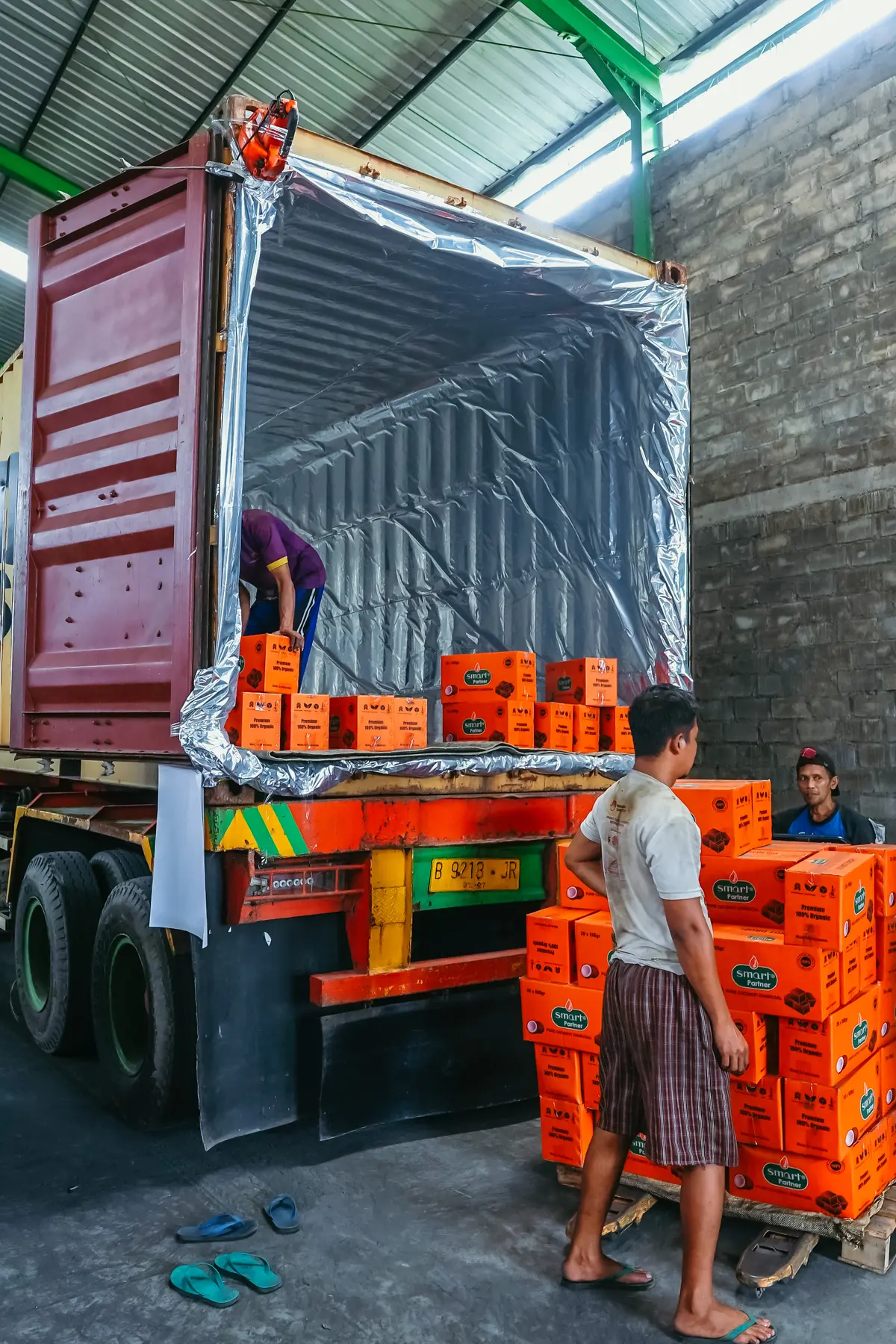
Volume versus usable fit
Cartons fit in whole rows and layers.
Charcoal carton dimensions container quantity calculations should begin with a filled, closed carton. Unfilled samples and artwork dimensions can miss bulging, closures, or variation that changes fit. Start with the master-carton specification and keep the dimensions tied to its revision.
Carton volume is external length × width × height, using consistent units. Dividing usable container volume by carton volume gives a theoretical screening ratio. It does not show whether whole cartons fit along each axis or whether the arrangement can be packed and secured.
For one uniform orientation, a geometric screening count is whole cartons along length × whole cartons across width × permitted layers. Each axis count must be rounded down after reserving required clearance. This is still a layout candidate: gross mass, stack strength, equipment access, and securing can reduce the usable quantity.
Two cartons with similar volume can produce different row counts because their footprints differ. Rotating a carton may improve geometric fit, but only if the product, carton construction, and handling instructions allow that orientation.
Calculation inputs
Eight inputs for a defensible load-plan review.
Provide measured data and identify unresolved assumptions. No carton count or container tonnage is confirmed by this checklist alone.
- 01
Final packed carton dimensions
Provide external length, width, and height with units, measured on a filled and closed carton made to the proposed specification. Include the carton revision and agreed dimensional variation. Internal box dimensions describe product fit; external dimensions are the starting point for stowage planning.
- 02
Product and weight basis
Record SKU, inner pack format, units per carton, net charcoal mass, and measured packed gross mass. Include packaging in the loading weight basis. A change in retail pack or inner arrangement can affect both carton size and gross mass.
- 03
Container and route details
Identify the proposed equipment and obtain its usable internal dimensions, door opening, and permissible mass information from the operator. Ask the logistics team to confirm route and handling constraints. A container label alone is not a complete load-plan specification.
- 04
Permitted orientation and stacking
State which faces may be used as the base and whether rotation is allowed. Compare row and layer arrangements using those orientations. Confirm carton stacking capability for the actual product, support, duration, and exposure before treating an extra layer as usable capacity.
- 05
Floor loading or pallet configuration
For floor loading, define placement and unloading access. For pallet loading, provide the pallet footprint, height, mass, cartons per layer, layers, finished loaded height, and whether overhang is permitted. Compare the complete load unit rather than carton volume alone.
- 06
Voids, protection, and handling clearance
Account for gaps at walls and doors, material needed for securing or protection, and space needed by people or equipment. Record how residual spaces will be treated. Do not erase practical clearance from a drawing simply to improve apparent carton packing efficiency.
- 07
Mixed SKUs and placement
Supply carton dimensions, gross mass, requested quantities, and orientation for every SKU. Define segregation, identification, unloading sequence, and stacking compatibility. Different carton footprints can create unusable spaces even when total volume appears to fit.
- 08
Review evidence and approval
Attach the proposed layout, count by SKU, gross cargo mass including pallets and securing materials, stacking basis, handling method, and review owner. Validate the proposed arrangement with packed-carton evidence or a suitable loading trial. Mark quantity provisional until the pack and load plan are confirmed.
More than cube utilisation
The first constraint reached controls the proposal.
Space: a proposed extra row may fail because the finished carton is wider than its nominal drawing. Review residual space and manufacturing variation rather than assuming every carton will be the smallest permitted size.
Mass: multiply proposed carton count by packed gross mass, then include pallets and other loading materials. Compare the complete load with the operator-confirmed equipment and route limits. More geometric room does not create permission to add mass.
Support: another layer may fit below the roof yet exceed the reviewed stacking capability. Carton compression, support pattern, duration, and exposure need their own evidence.
Handling: the finished load must pass the door opening and allow the agreed packing and unloading method. A diagram that fills all internal space can still be impractical at the door or during receiving.
The IMO/ILO/UNECE CTU Code provides a reference framework for packing and handling cargo transport units. Have the responsible logistics team review the actual load; a cube calculation is not a transport or securing approval.
Compare packaging economics
Compare complete configurations on the same basis.
A smaller outer carton can improve geometric fit while increasing handling work or changing product protection. A pallet configuration can occupy more space while simplifying receiving. Decide using the reviewed load, receiving requirements, and confirmed costs together.
For floor loading, record the orientation, stack pattern, securing, and unloading process. For pallets, review the loaded footprint and height, pallet mass, support, equipment access, and warehouse acceptance. These choices are included in the packaging and container-loading checklist.
When comparing carton revisions, keep the product quantity per carton and weight basis explicit. Compare confirmed charcoal net quantity per shipment, packaging and handling costs, protection evidence, and receiving effort. A higher carton count can be misleading if each carton carries less charcoal.
For mixed SKUs, draw the planned placement and record counts and mass separately. Recheck voids, load distribution, stacking compatibility, identification, and unloading sequence. A total-volume spreadsheet cannot establish that unlike cartons form a workable arrangement.
Carton planning FAQ
Know which result is still provisional.
Measurement, geometry, weight, and handling need to agree before loading quantity is confirmed.
01Why does container volume divided by carton volume overstate capacity?+
That ratio does not account for whole-carton row and layer fit, permitted orientation, door access, voids, pallets, clearance, stacking limits, or mass constraints. Use it as a screening value and validate a real layout.
02Should container planning use internal or external carton dimensions?+
Use measured external dimensions of the filled and closed carton for stowage. Internal dimensions help assess product fit. Retain the packaging revision and agreed variation so the layout reflects production packs.
03Does floor loading always give a better result than pallets?+
No. Floor loading can avoid pallet volume, but handling, unloading, protection, stacking, and buyer receiving requirements still matter. Compare reviewed configurations against the actual route and warehouse.
04Can Unimax confirm a carton count from an early artwork mockup?+
An artwork mockup alone is insufficient. Provide final filled-carton dimensions, packed gross weight, SKU mix, container details, and pallet or floor-loading requirements for a load-plan review.
Before quantity confirmation
Provide final carton dimensions for a load-plan review.
Send external dimensions with units, filled-carton gross weight, product and inner pack arrangement, packaging revision, SKU mix, equipment details, pallet or floor-loading preference, and destination receiving constraints. Include available packed-carton trial evidence and name the logistics approval owner.
Unimax can review the proposed packaging and loading brief. Container tonnage and carton count remain provisional until the actual pack and load plan are confirmed.