
Tabletop grill fuel evaluation
How Korean BBQ Operators Evaluate Charcoal
Measure charcoal against the restaurant's actual tabletop grill and seating rhythm. Tray fit, time to service, heat after a food load, replacement, cleanup, and cost per table matter more than a catalog burn-time headline.
Exact grillComparable seatingsCost per table
Restaurant-defined fit
Start with the table, the menu, and the service clock.
Korean BBQ describes a restaurant format, not one universal tabletop grill. Some operators prepare fuel centrally, others refill during service; trays, airflow, menu loads, and turnover targets vary. Build the test from the actual equipment and staff routine instead of assuming that one charcoal format works everywhere.
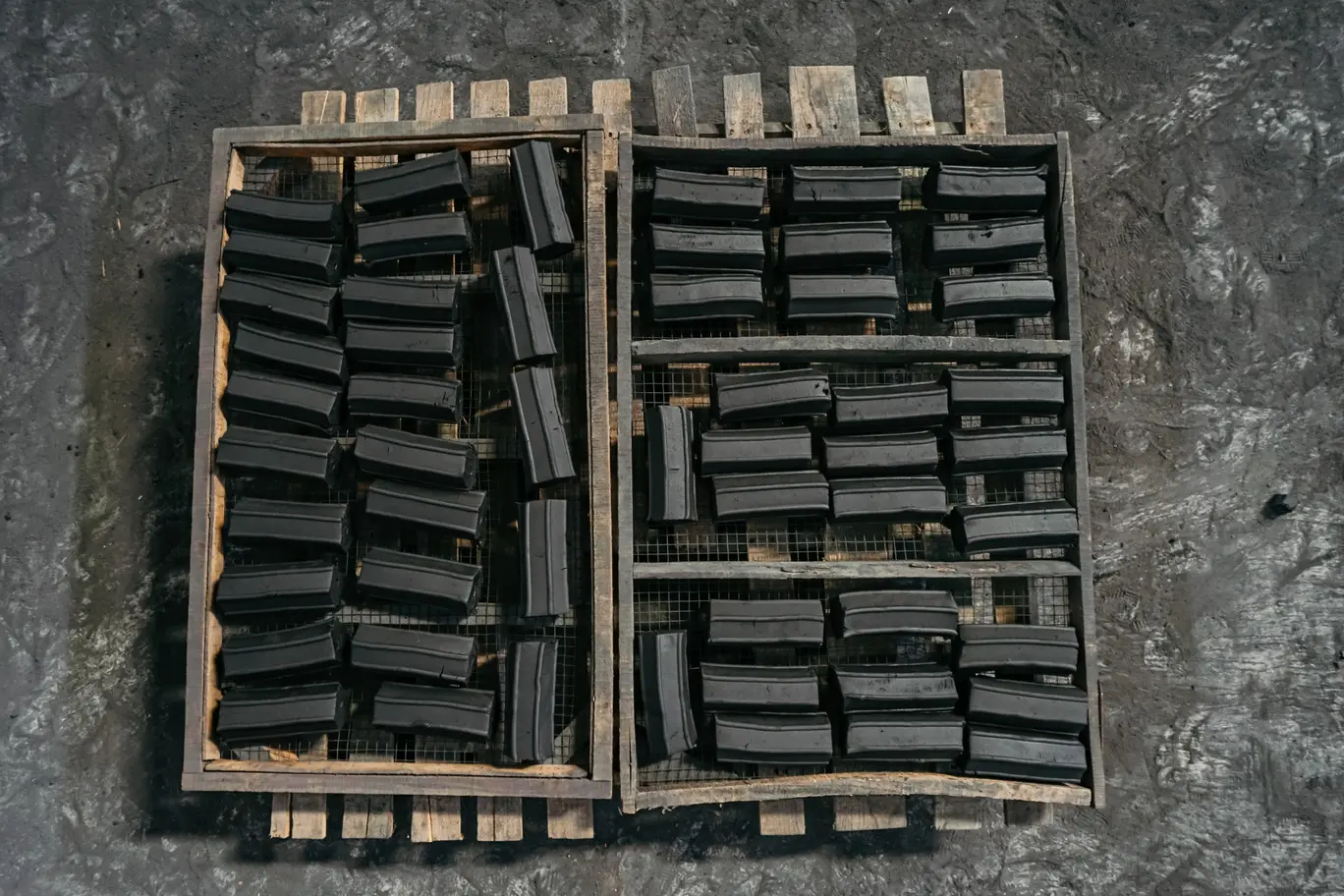
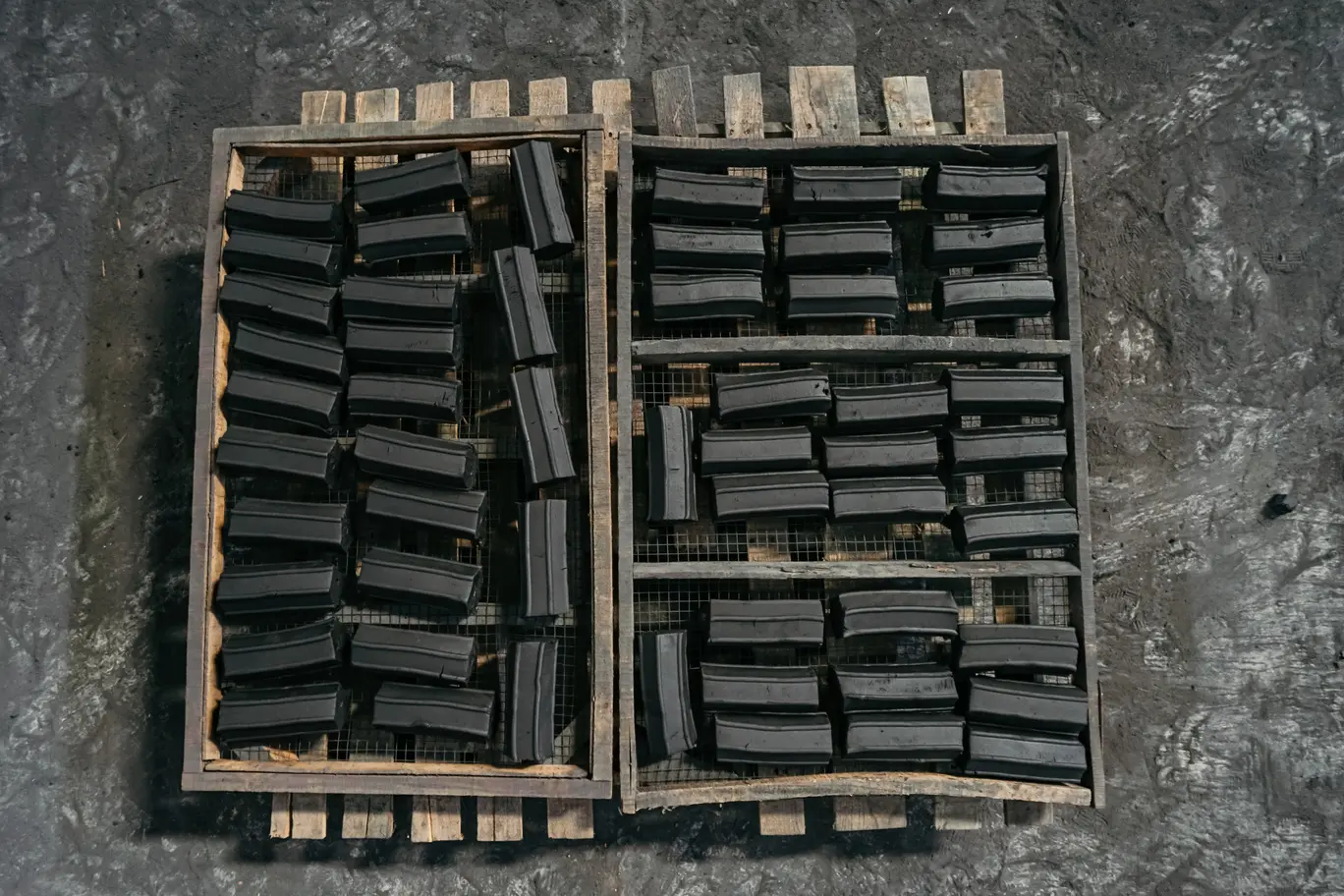
Unimax's current BBQ focus is hexagonal coconut shell briquettes. The center hole can provide an air path when the arrangement keeps it open, but it cannot guarantee a hotter or longer burn. Check dimensions, handling, and the current grade against the exact tabletop grill before claiming suitability.
Eight-part operator checklist
What to record at the table and behind the scenes.
Agree observations and pass conditions before opening the candidate pack. Separate a charcoal issue from the effects of food, starter, ventilation, or an unclean grill.
Measure the fuel tray, grate position, loading access, available fuel-bed depth, and typical briquette arrangement. Confirm that a full and a partially used piece can be handled in the actual unit.
Record: Tray fit, fuel mass per table, airflow path, and any blocked openings.
Agree a starting mass per table, the lighting method, and who prepares fuel before a guest is seated. Test the same setup across baseline and candidate.
Record: Kilograms and staff minutes to prepare each table; time to the agreed ready-to-cook point.
Use the restaurant's representative meats, vegetables, marinades, and batch rhythm. Separate fuel behavior from smoke caused by food fat or a dirty grill.
Record: Heat before and after loading, recovery time, uneven zones, staff intervention, and cooking throughput.
Run normal, peak, and late-service tables. Decide whether leftover heat can serve the next seating under the operator's own procedure, or must be counted as waste.
Record: Useful heat per seating, tables served per fuel charge, replacement frequency, and end-of-shift unusable fuel.
Observe how residue accumulates in the tabletop tray and what the staff must do before the next table. Keep laboratory ash content separate from recovered grill residue.
Record: Interruptions, containment, spill or fly-ash observations, tray cleaning time, and residue mass using a defined endpoint.
Observe pre-light, ignition, ready-to-cook, food load, and steady cooking as separate phases. Record starter and grease events alongside the charcoal observation.
Record: Visible smoke intensity, odor description, duration, ventilation conditions, and source attribution.
Check intact units and fines when opening the pack and after normal movement to the dining area. Confirm storage conditions and pack size against daily table volume.
Record: Breakage, moisture exposure, usable units per pack, staff carrying trips, replenishment, and stock rotation.
Compare landed fuel cost on an equivalent basis and include starter, refills, handling, ash cleanup, damaged fuel, and table output. Record shifts with very different loads separately.
Record: Cost per table or cover and cost per useful service hour, with all assumptions shown.
Evidence for a useful decision
Keep three records separate.
What is the candidate?
Document shape, dimensions, grade, sample and batch identity, specification, and pack condition.
What happened in service?
Log fuel mass, readiness, food load, recovery, replacements, residue, labor, and table output.
Can the order repeat it?
Agree tolerances, retained reference, packaging, sampling, lot traceability, and issue handling.
Matched restaurant trial
Give the candidate a fair and demanding service test.
A quiet table and a full peak shift answer different questions. Record both where relevant, and state every deviation from the agreed setup.
- 01
Capture the restaurant baseline
Record current fuel, tabletop grill model, fuel-tray dimensions, menu mix, typical seating duration, peak load, staffing, and service procedure.
- 02
Identify the candidate
Log supplier, grade, briquette dimensions, declared material, pack, sample ID, batch/date when available, and condition on arrival.
- 03
Set matched conditions
Use the same grill type, starting fuel mass or agreed alternative basis, lighting approach, menu load, airflow setting, observation intervals, and useful-heat endpoint.
- 04
Repeat across comparable seatings
Compare at least representative normal and peak table patterns; note food changes, ventilation changes, grill condition, and interventions.
- 05
Decide the next procurement step
Document pass, retest, or a limited pilot with conditions. Link the approved sample to written specifications, packaging, acceptance criteria, and repeat-order controls.
Practical boundaries
A good tabletop trial is a bounded finding.
Do not infer that an identified sample will behave the same across every grill model, restaurant, or future shipment. Link the result to the measured setup and the approved grade, and require production lots to meet the written order criteria.
Record the restaurant's ventilation and handling context for comparison, but follow local fire, building, workplace, food-service, and health requirements. Sensory smoke and odor notes do not establish indoor air safety or measure carbon monoxide.
Korean BBQ fuel FAQ
Decisions to make before the pilot order.
Operator input comes first. The supplier's sample and documentation must match it.
01What charcoal is best for a Korean BBQ tabletop grill?+
There is no universal winner. The operator should test an identified candidate in the exact tabletop unit with its actual menu, seating duration, airflow, staff routine, and acceptance criteria. Unimax offers coconut shell BBQ briquettes, but suitability for a named grill is an evaluation result, not a label claim.
02Can a long burn-time claim tell me how many tables one fuel charge serves?+
No. Total time until extinction differs from useful cooking heat. Measure the heat available during the intended seating, recovery after food loads, replacement frequency, and leftover fuel under the restaurant's defined procedure.
03How should an operator compare smoke and odor?+
Record observations by phase and describe the source. Lighting aids, marinades, dripping fat, old grill residue, and airflow can affect observations. A sensory test does not measure carbon monoxide or establish air safety; follow applicable local requirements.
04Does the hexagonal center hole guarantee better airflow in every tabletop grill?+
No. It provides a potential air path, but arrangement, ash buildup, broken pieces, and the grill's airflow can restrict it. Check fit and performance in the actual fuel tray before making a claim.
05Should I choose by price per kilogram?+
Compare fuel consumed per table or cover, useful service hours, starter, staff work, breakage, replacements, cleanup, and usable leftover fuel. A lower invoice price can lead to a higher service cost, or vice versa.
06Can one tabletop trial approve every container?+
No. The trial supports a bounded operating decision for the tested sample and conditions. Repeat supply needs agreed specifications, tolerances, sampling, batch identity, packaging, and shipment-linked acceptance evidence.
Test the actual setup
Trial the Briquette in Your Tabletop Grill
Share the grill model, tray measurements, menu and seating pattern, current charcoal issue, and expected volume. Discuss a traceable BBQ sample and the checks your restaurant needs before approval.
Discuss a tabletop sample