
Restaurant, catering & hospitality buyer guide
How Food-Service Buyers Evaluate BBQ Charcoal
Compare charcoal in the buyer's real operating system: ignition, useful cooking heat, refills, staff time, ash, breakage, storage, service output, and total usable cost.
6 operating criteria15 pilot checksPrint / save PDF
The buyer's first rule
Buy operating output—not a heroic number on a brochure.
Price per kilogram, visible flame, ash color, and total burn duration are incomplete signals. A food-service buyer needs to know what the charcoal does inside a specific grill, menu, team, and service period.
Define the operating job first. Then compare suppliers using one fuel load, one method, one output unit, and one cost basis. Otherwise the test mostly measures how creative each setup was.
Six operating lenses
What food-service buyers actually need to evaluate.
The priority changes by venue, menu, grill, ventilation, staffing, service rhythm, and customer expectation. The method must stay comparable even when the weighting changes.
Readiness for service
Record the full path from lighting to the agreed ready-to-cook point, including labor, turning, smoke, odor, sparks, and fuel arrangement.
Keep the ignition method, appliance, airflow, fuel load, and endpoint identical for every supplier.
Useful heat window
Measure how long the fuel remains useful for the buyer’s actual cooking load—not merely how long a visible ember survives.
Use a cooking-relevant heat indicator and fixed observation intervals across the complete service cycle.
Refill and tending burden
Count fuel additions, rearrangements, airflow corrections, interruptions, and the staff time required to keep the grill operating.
Log every intervention. A long burn claim is commercially weak if staff must constantly rescue the fire.
Ash, smoke, odor, and sparks
Observe the operating burden during ignition, cooking, refilling, shutdown, cleaning, and disposal.
Separate measurable results from sensory observations, and record when each observation occurs.
Usable product yield
Track breakage, chips, dust, moisture exposure, storage losses, and pieces rejected before or during service.
Define usable and rejected product before opening the sample. Do not rewrite the categories after seeing the result.
Cost per usable service
Convert landed price into the cost of the fuel actually consumed for one grill batch, meal period, or other repeatable service unit.
Include measured waste, refills, lighting and tending labor, cleanup, and rejected product where they materially affect the operation.
Buyer type changes the weighting
One charcoal can face four different operating jobs.
Keep the facts and test method stable. Adjust the commercial weighting to match the buyer's real channel.
Restaurant or grill operator
Prioritizes predictable heat through peak service, manageable refills, staff workload, kitchen cleanliness, and repeatable menu output.
Caterer or mobile operator
Adds setup speed, transport durability, compact storage, wind exposure, event timing, shutdown, and cleanup away from a fixed kitchen.
Hotel, resort, or hospitality buyer
May weigh guest-facing smoke and odor, operating consistency across shifts, storage control, housekeeping impact, and procurement documentation.
Distributor or food-service wholesaler
Needs a method that can be repeated across customer types while also reviewing packaging, breakage, stock handling, complaints, and supply consistency.
Seven-step food-service pilot
Turn the sample into an operating decision.
Define one real operating use
Choose the grill, menu, service period, expected cooking load, and service unit. A generic burn test cannot answer every kitchen question.
Identify the product and pack
Record supplier, grade, briquette form, stated dimensions, sample date, packaging condition, and any sample or batch reference.
Lock the comparison setup
Use the same appliance, starting fuel mass, arrangement, ignition source, airflow, turning routine, and ready-to-cook definition.
Record the operating timeline
Time ignition, ready point, cooking start, heat checks, fuel additions, staff interventions, service end, and shutdown.
Measure service output and waste
Count meals, grill batches, cooking cycles, or another fixed unit; then measure remaining fuel, ash, broken pieces, dust, and rejected product.
Convert results into operating cost
Calculate usable fuel cost per service unit, then add meaningful labor, cleanup, disposal, and product-loss costs on one written basis.
Repeat before deciding
Run more than one comparable service cycle. Separate critical pass/fail requirements from preferences that can be weighted commercially.
Operating scorecard
Record the result the kitchen can use.
A score is useful only after raw observations, setup, output, and mandatory pass/fail conditions are visible.
Fuel load, lighting method, start and ready times, turning, visible smoke, odor, sparks, and staff minutes.
Can the kitchen start predictably without adding hidden labor or delaying service?
Heat indicator, observation intervals, food load, airflow, intervention, and the agreed end of useful service.
Does the heat remain suitable for the menu—not just technically still burning?
Time and quantity of each top-up, rearrangement, airflow change, interruption, and recovery period.
How much product and staff attention are needed to maintain service?
Meals, batches, grill cycles, kilograms of food, or another defined output produced from the tested fuel load.
How much saleable or operational output does one controlled fuel load support?
Cooled ash, stability, fly-ash behavior, removal frequency, disposal steps, cleanup time, and contamination events.
Does ash create service interruptions, hygiene work, or a guest-facing problem?
When each observation occurs: storage, ignition, cooking, refilling, shutdown, or handling.
Is the result acceptable for the venue, ventilation, menu, staff, and guest environment?
Whole, chipped, broken, dusty, damp, and unusable product by one agreed count or weight method.
How much of the delivered product can actually enter service?
Pack closure, moisture protection, open-pack behavior, warehouse movement, stock rotation, and spill or dust handling.
Can the product survive the buyer’s real storage and daily operating routine?
Landed fuel cost, usable quantity, fuel consumed, output, measured waste, labor, cleanup, and rejection cost.
Is the apparently cheaper charcoal still cheaper after operating losses are included?
BBQ Charcoal Food-Service Pilot Checklist
A completed checklist does not make different kitchens identical. It makes the method, operating result, and supplier decision traceable for the buyer's actual service environment.
Cost per usable service
A cheaper kilogram can be an expensive service cycle.
Compare the cost of usable fuel consumed for one defined unit of operating output.
Choose one service unit
Use one grill batch, meal period, event, production shift, or another repeatable unit meaningful to the buyer.
Calculate usable fuel cost
Divide the landed cost of the tested quantity by the usable quantity after measured breakage, dust, moisture damage, and rejection.
Measure fuel used per service
Include the starting load and all refills consumed during the defined service unit.
Add material operating losses
Include lighting aids, labor, cleanup, ash disposal, interruption, and unusable leftovers only where the buyer can measure them consistently.
Compare like with like
Keep currency, landed-cost basis, service output, staff-cost method, test setup, and treatment of remaining fuel identical for every supplier.
Read supplier photographs correctly
Original photos are evidence—with strict boundaries.
Use photographs to verify visible product, production, packing, or loading facts. Use a controlled pilot to evaluate kitchen performance.
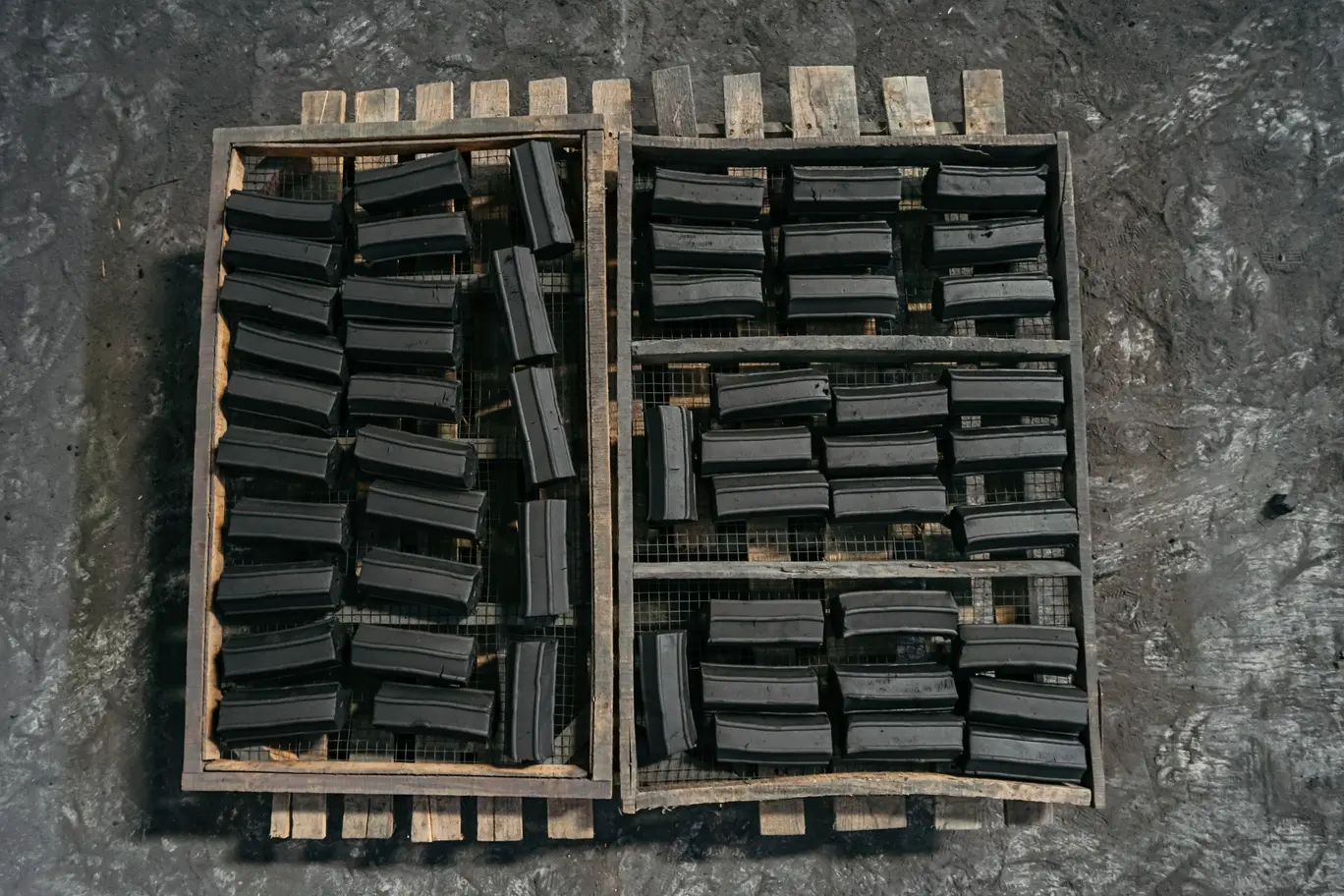
Visible BBQ briquette form
Proves: The photographed briquette profile, surface condition, tray arrangement, and production-stage context are visible.
Does not prove: Cooking heat, duration, ignition behavior, ash, food-service cost, or performance in the buyer’s grill.
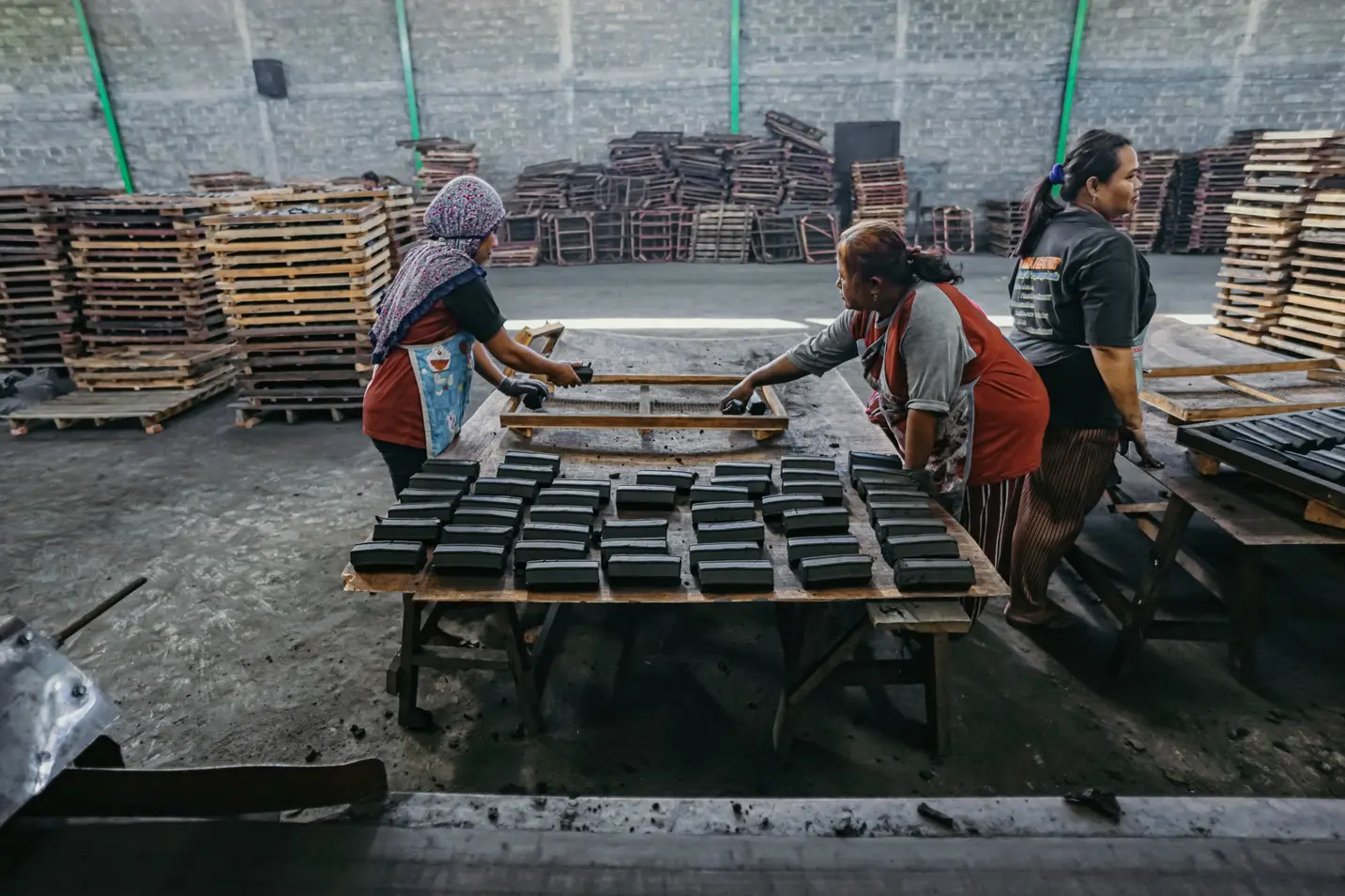
Production handling activity
Proves: Workers, briquettes, trays, and manual handling activity are documented at the photographed moment.
Does not prove: A named quality-control test, an analytical value, batch conformity, or kitchen performance.
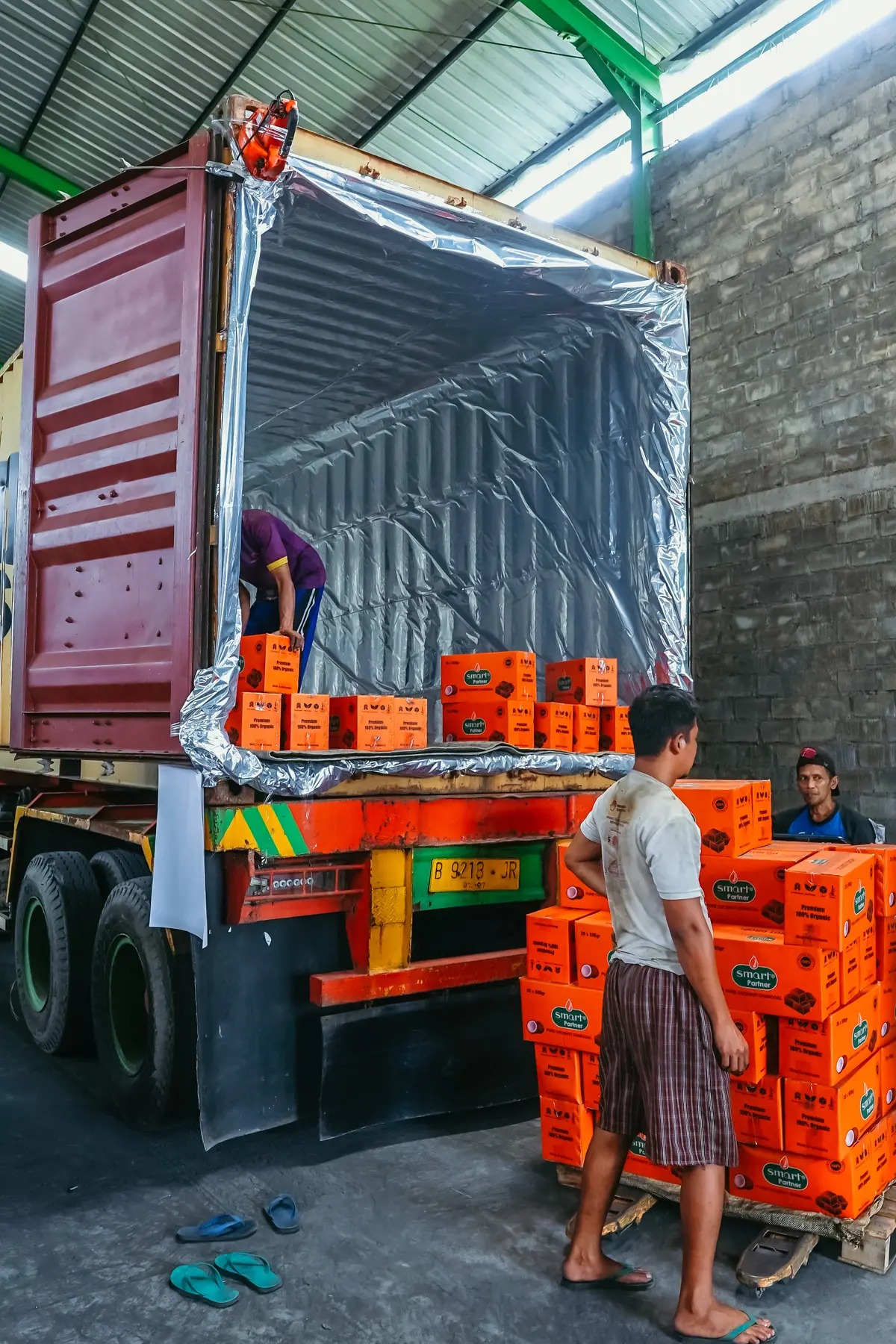
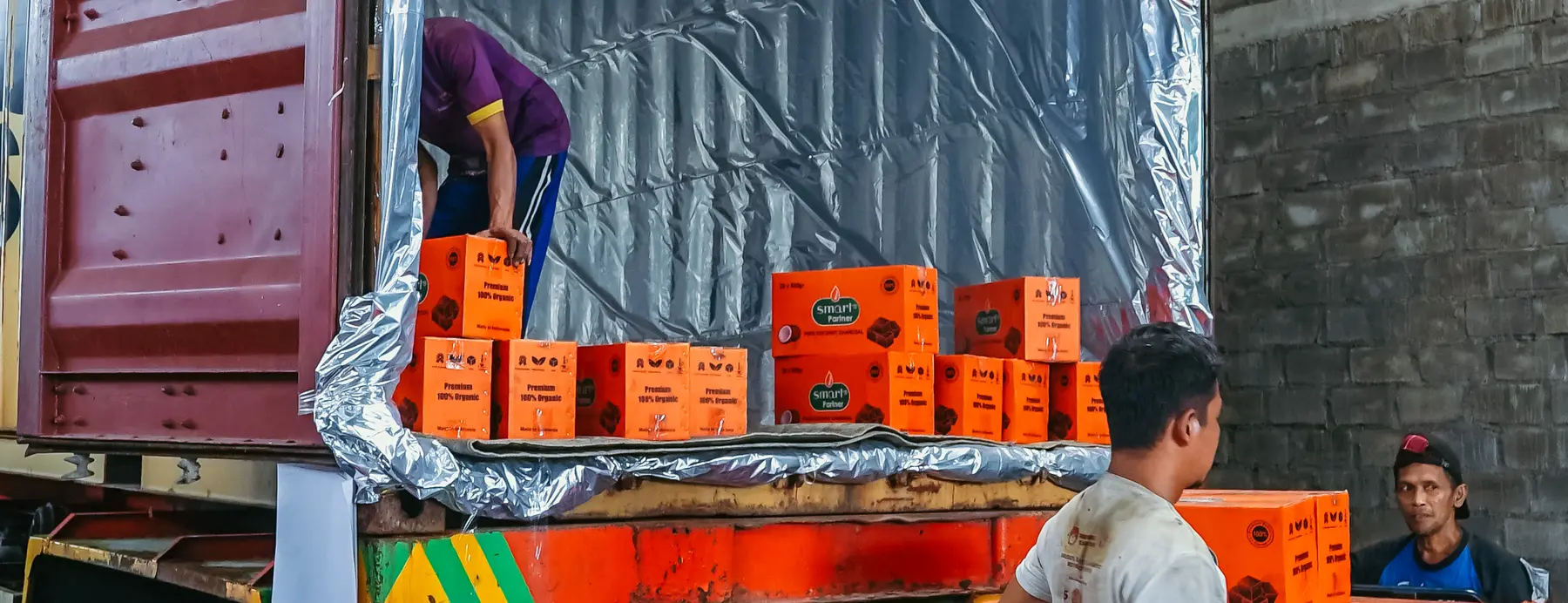
Container-loading activity
Proves: A lined container, printed cartons, workers, and loading activity are visibly documented.
Does not prove: The contents of every carton, arrival condition, food-service suitability, or the operating cost of the product.
Sample-to-order decision path
Escalate evidence as the commercial risk increases.
Desktop review
Compare the current specification, product form, packaging information, intended use, and missing confirmation points.
Product sample
Inspect the received pack, identity, dimensions, mass, visible condition, breakage, dust, and storage behavior.
Controlled pilot
Run the product in the intended grill and menu with the same method used for comparison suppliers.
Commercial review
Combine operating results with packaging, landed cost, supply evidence, private-label needs, and repeat-order controls.
Written acceptance
Define critical requirements, test and sampling basis, documents, packaging version, decision owner, and next-order conditions.
Food-service evaluation red flags
Six shortcuts that produce confident nonsense.
The failure is usually not a missing score. It is a missing operating definition, uncontrolled setup, or conveniently forgotten cost.
Price per kilogram is the whole decision
It ignores breakage, unusable product, refill quantity, staff time, ash handling, cleanup, and service output.
Burn time has no endpoint
A weak ember may still be visible long after it stops producing useful cooking heat for the buyer’s menu.
The sample is tested in a different appliance
Different fuel loads, airflow, grill geometry, lighting, and food load can overwhelm the supplier comparison.
One successful service proves consistency
A single run may hide setup error, operator effect, sample selection, storage differences, or ordinary variation.
Sensory claims are treated as universal
Smoke and odor observations need timing, ventilation, ignition stage, operator, and venue context.
A photograph replaces the pilot
Factory, tray, packaging, or glowing-charcoal images can document visible facts; they cannot run the buyer’s kitchen.
Apply the method with Unimax
Start with the grill, menu, and operating problem.
Request the current BBQ product information, then test an identified sample in the buyer's real food-service setup.
Unimax can discuss the available BBQ specification, sample procedure, factory verification, packaging brief, and loading-stage evidence for the buyer's sourcing stage. Exact performance, packaging, and commercial terms are confirmed for the reviewed product and order.
Food-service BBQ charcoal FAQ
Questions to settle before choosing a supplier.
Use the answers as a test framework, then define the exact appliance, menu, fuel load, service unit, method, and acceptance criteria.
01What is the most important BBQ charcoal metric for a restaurant?+
There is no single universal metric. The buyer should define the operating use, then prioritize useful cooking heat, service output, refill and labor burden, ash handling, usable yield, and cost per service. A metric matters only when it connects to the kitchen’s actual work.
02Is longer BBQ charcoal burn time always better?+
No. A briquette can remain visibly lit after its heat falls below the cooking requirement. Compare the useful heat window using the same fuel load, grill, airflow, food load, observation interval, and endpoint.
03Why should buyers calculate cost per service instead of price per kilogram?+
Price per kilogram does not show how much fuel is usable, how often it must be refilled, how much staff time it consumes, or how much output it supports. Cost per service links fuel, loss, labor, and operating output on one comparison basis.
04How many food-service pilot tests are enough?+
One successful run is weak evidence. Repeat the same written method across more than one representative service cycle and investigate unusual results before making a commercial decision. The number of repetitions should reflect the risk and scale of the purchase.
05Can a supplier’s lab report prove restaurant performance?+
No. A relevant lab report can support the parameters tested for the identified specimen and method. It does not automatically prove ignition, useful cooking heat, ash handling, breakage, staff workload, or cost in the buyer’s operation.
06Can Unimax provide BBQ charcoal for a food-service pilot?+
Yes. Product samples are free up to 10 kg, while the buyer pays international courier costs. Ask for the current BBQ specification and sample procedure for the intended grill, menu, destination, and pack format.
From sample claim to operating evidence
Evaluate BBQ Charcoal in Your Real Service Setup
Share your company, country, buyer type, grill, menu, preferred briquette, current fuel problem, pilot priorities, pack format, sourcing stage, and expected volume.
Discuss it on WhatsApp