
BBQ charcoal buyer guide
BBQ Charcoal Briquette Size Guide
How importers, distributors, food-service buyers, and brand owners can specify briquette geometry, verify samples, and match a format to the real grill and packaging system.
Cross-sectionLength + unit massTolerance + grill fit
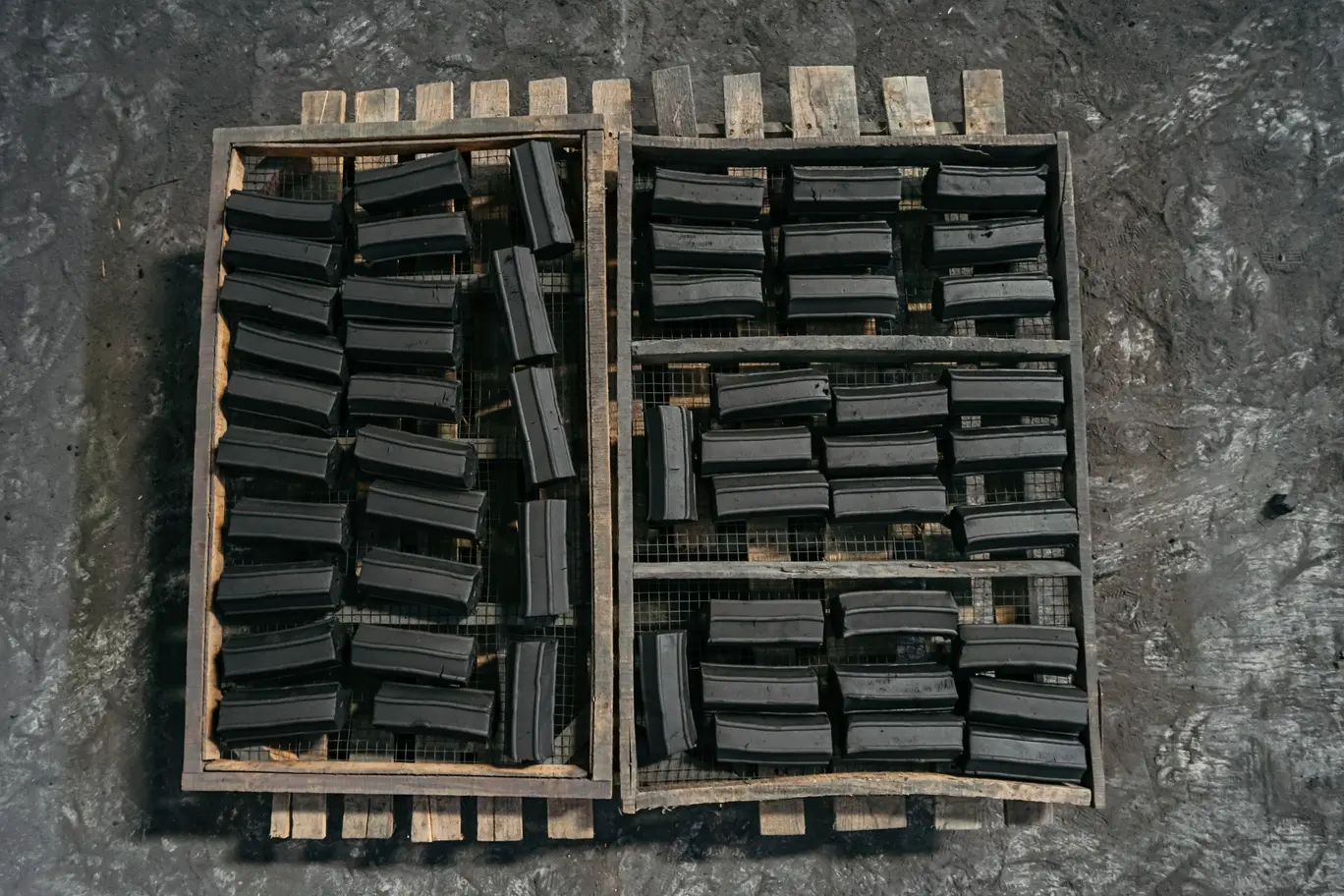
The first rule
Briquette size is not one number.
A label such as “5 cm,” “10 cm,” “large,” or “restaurant size” is incomplete. It does not define the cross-section, measuring direction, unit mass, tolerance, or how the piece fits the buyer's grill.
Good procurement starts by separating geometry from performance. Measure the product first, then test it under the intended operating conditions. Otherwise a neat dimension becomes a costume for guesswork.
Four fields to specify
Define the briquette before comparing the burn.
Each field needs a measuring method and sample rule. A catalogue photo or single nominal dimension is not enough for order control.
Profile and cross-section
What is measured?Record the shape and the exact measuring direction. For a hexagonal briquette, a supplier and buyer can still produce different numbers if one measures across opposite faces and the other across corners.
Cross-section changes exposed surface, gaps between pieces, airflow paths, ignition behavior, and how many pieces fit in the fuel bed.Overall length
What is measured?Measure end to end using an agreed rule for irregular edges, chips, and broken ends. Length must be stated separately from cross-section.
Length changes grill fit, orientation, refill handling, pack layout, and the leverage a piece experiences during handling and shipping.Individual piece mass
What is measured?Weigh multiple individual pieces and keep the raw values. One total pack weight cannot reveal variation from piece to piece.
Unit mass helps explain why equal piece counts may create unequal fuel loads, even when the briquettes look similar in a photograph.Tolerance and sampling
What is controlled?Write the target and permitted range, the sample count, where pieces are selected, and how results are reported. A nominal size without tolerance is an incomplete specification.
Tolerance determines whether the approved sample and the commercial order are being judged by the same rule.Geometry in operation
What size can change—and what buyers should record.
Geometry matters, but it never acts alone. Fuel mass, raw material, production, grill design, airflow, ignition, and handling remain part of the result.
How many pieces fit, their orientation, contact points, and open spaces between them.
Photograph the actual arrangement and record piece count plus total mass.
Piece spacing and cross-section can change how air moves through the bed.
Keep the grill, vent position, arrangement, and fuel load constant during comparison.
Surface exposure, mass, position, and lighting method all affect the observed ignition process.
Define one ignition device, duration, turning routine, and ready-to-use endpoint.
Geometry affects the heat pattern together with fuel mass, grill design, airflow, and tending.
Record usable cooking performance under the target application—not only total ember time.
Piece length, orientation, void space, and pack dimensions influence movement and contact.
Test the final product inside the proposed inner pack and master carton.
Longer pieces can experience different leverage; cross-section, cracks, pack restraint, and handling also matter.
Use one written breakage definition and compare the packed product before and after handling.
Six-step selection method
Match the format to the job—not the other way around.
The result should connect the buyer's appliance, sample measurements, operating test, packaging, and repeat-order acceptance rule.
- 01
Start with the appliance
Record the grill dimensions, grate clearance, airflow controls, operating fuel-bed area, cooking task, and refill routine. Choosing a briquette before defining the appliance reverses the decision.
- 02
Request a dimensioned reference
Ask for a current drawing or dimension check that separates shape, measuring direction, cross-section, overall length, unit mass, and tolerance.
- 03
Measure a representative set
Use the same ruler, caliper, and scale for every supplier. Keep individual readings instead of reporting only one best-looking piece or one average.
- 04
Check physical fit
Arrange the sample in the real grill and pack format. Record clearance, spacing, orientation, turning, refill handling, void space, and visible movement.
- 05
Run a controlled operating test
Test on one declared basis—such as equal mass or the buyer's real operating count—while also recording both piece count and total mass.
- 06
Freeze the approved rule
Connect the drawing, measurement method, tolerance, reference sample, packaging configuration, acceptance criteria, and order identity before repeat production.
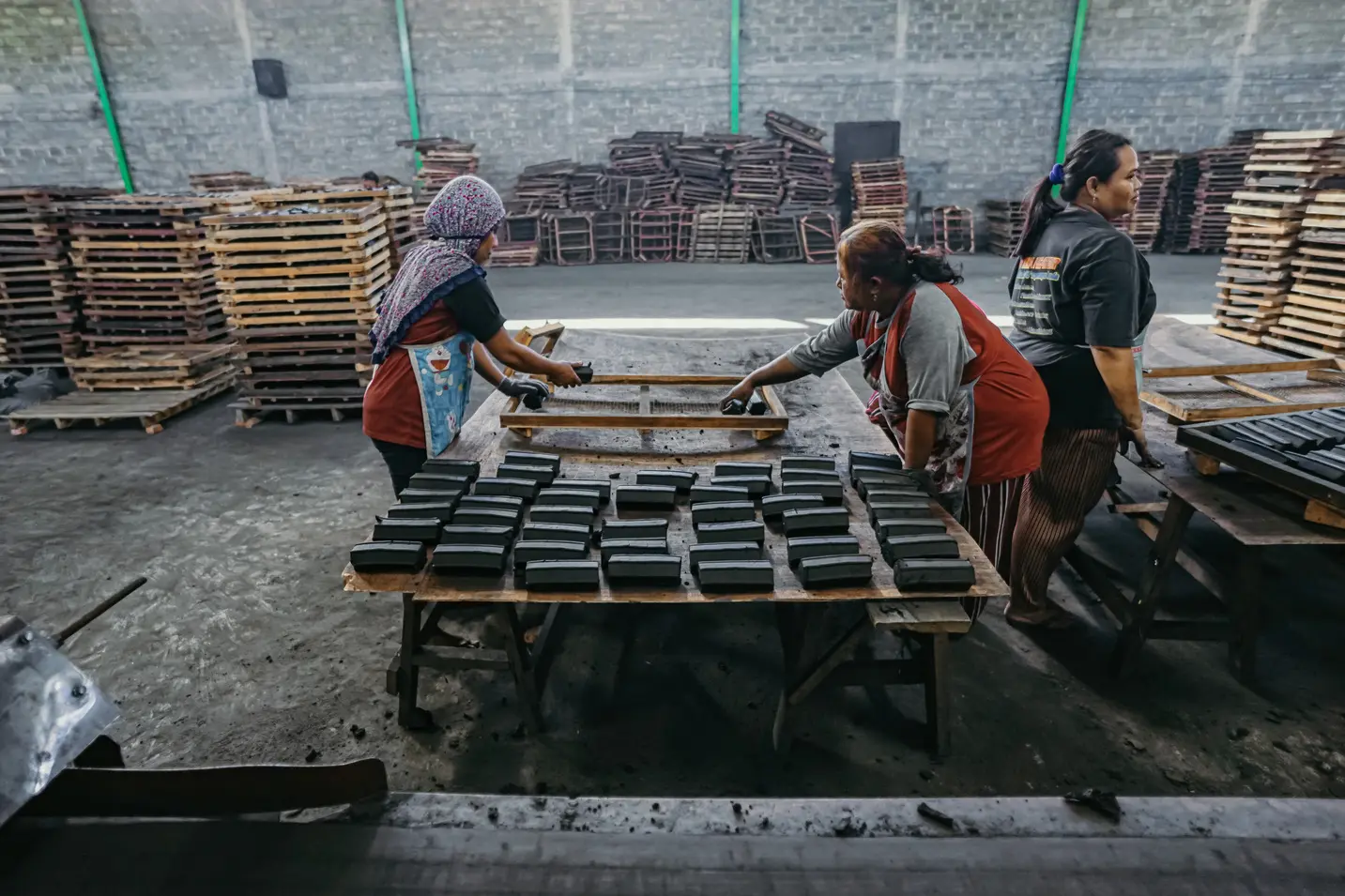
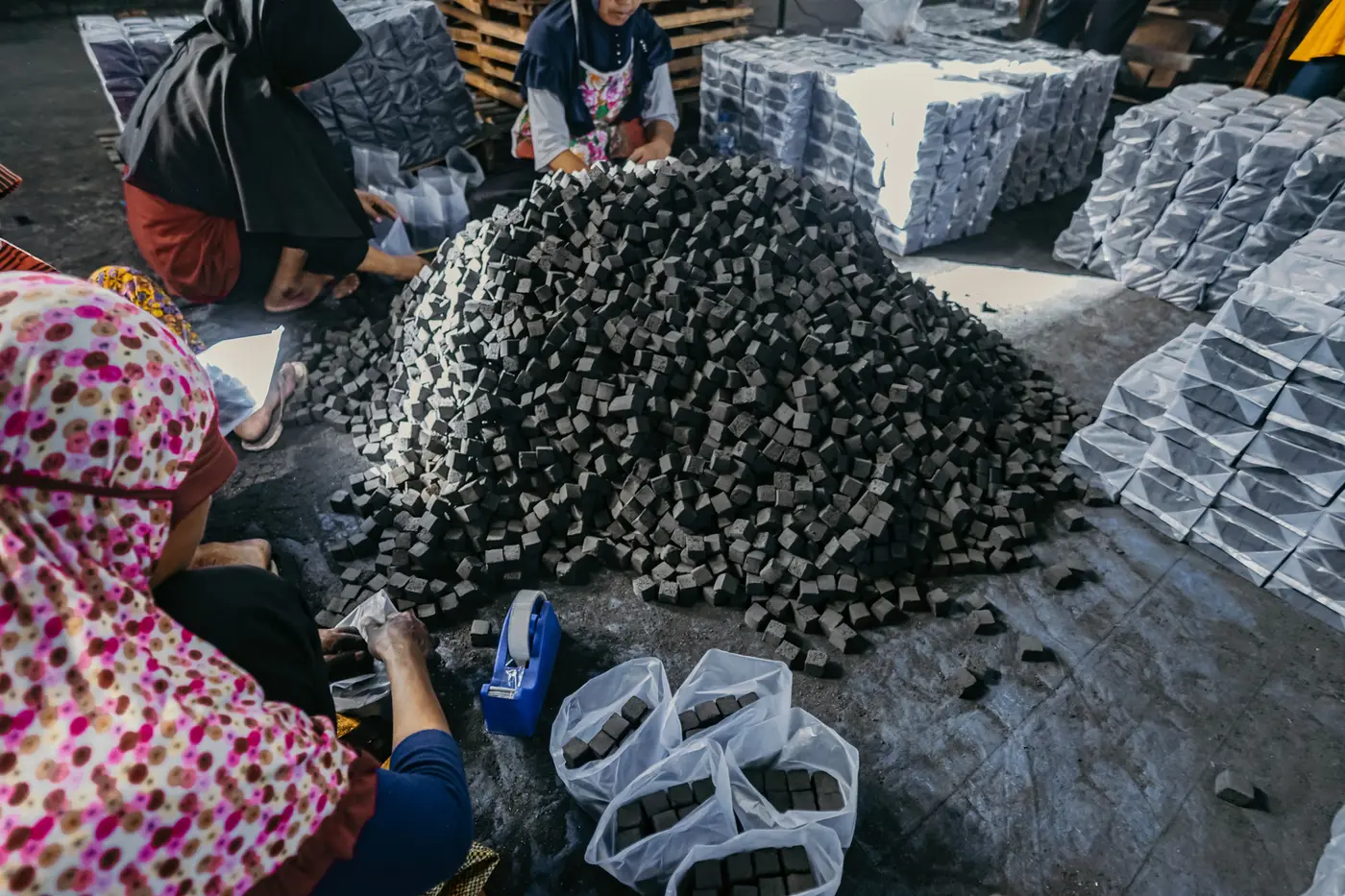
Photo evidence limit
A photo can identify form. It cannot certify dimensions.
Perspective, focal length, cropping, and the absence of a scale make photographs unreliable for exact measurement. Ask for a dimensioned drawing or an identified sample measured with the agreed instrument.
Use the BBQ sample-comparison scorecardBBQ Briquette Size Brief Checklist
A completed checklist does not declare one universal best size. It makes the requested format measurable, testable, and harder to misunderstand.
Size-guide red flags
Six shortcuts that produce a bad purchase brief.
Most failures begin with an undefined measurement, a staged sample, or a size decision made without the target grill and final pack.
Only one number is supplied
A length label is not a full size specification. Cross-section, profile, mass, tolerance, and method can still be undefined.
The photo has no scale
A close-up can show shape and surface condition, but perspective cannot prove millimetres, mass, or tolerance.
The measuring direction changes
Across-flats and across-corners measurements are not interchangeable. The drawing and method must remove that ambiguity.
One perfect piece represents the lot
A staged measurement does not show distribution. Ask how many pieces were selected and from where.
Equal count is called equal fuel
Different unit masses can quietly create different test loads. Record count and mass even if the operating routine uses a fixed count.
Size approval ignores packaging
A format that burns acceptably can still move, chip, or waste carton volume if the final pack configuration is never tested.
Turn size into order control
Approve a format, a method, and an acceptance rule.
The useful deliverable is not “buyer likes the long one.” It is a dimensioned profile, measuring method, sample record, operating result, pack configuration, tolerance, and order-linked reference that both sides can review again.
BBQ briquette size FAQ
Questions buyers should settle before sample approval.
Exact availability and tolerance should come from the current product document and identified sample—not from an old quotation or photo.
01What is the best size for BBQ charcoal briquettes?+
There is no honest universal best size. The right format depends on the grill, airflow, cooking task, fuel-bed arrangement, handling routine, packaging, and buyer acceptance criteria. Compare candidates in the target appliance using one documented method.
02Is a 5 cm or 10 cm briquette automatically better?+
No. A length label alone does not describe cross-section, unit mass, density, tolerance, or usable performance. It also does not show whether the piece fits the grill and pack. Treat 5 cm, 10 cm, or any other nominal length as one field in a larger specification—not as a quality grade.
03How should a hexagonal briquette be measured?+
Use a dimensioned drawing that states the measuring direction for the cross-section, plus the overall length. Buyer and supplier should agree whether the cross-section is measured across opposite faces, across corners, or by another defined method.
04Should BBQ briquettes be compared by equal mass or equal piece count?+
Choose the basis that matches the decision, then record both. Equal mass improves fuel-input comparability, while a fixed piece count may match an operating routine. Do not let an unstated size or mass difference decide the result by accident.
05Can a photograph prove briquette dimensions?+
Not without a reliable scale, measuring method, and identified sample. A factory photograph documents visible form and handling. It does not prove the exact cross-section, length, unit mass, tolerance, or consistency of a shipment.
06Can Unimax provide a BBQ briquette dimension check?+
Yes. Ask for the current dimension check and sample procedure for the grade and format being evaluated. Available dimensions and tolerances should be confirmed against the current product document and identified sample rather than inferred from an older photo.
Confirm the actual format
Request a BBQ Briquette Dimension Check
Share the target application, grill, preferred shape, pack format, and any existing cross-section or length requirement. We will align the current product information and sample procedure.
Request dimension check