
Commercial skewer-grill fuel evaluation
How Skewer-Grill Operators Evaluate BBQ Charcoal
A yakitori, satay, or kebab line needs fuel that fits its narrow channel and supports its real cooking rhythm. Measure channel geometry, direct heat, recovery after food loads, ash, and refills in the buyer's own grill.
Narrow-channel fitBatch recoveryCost per batch
The key operating question
Will this fuel work across the whole skewer line?
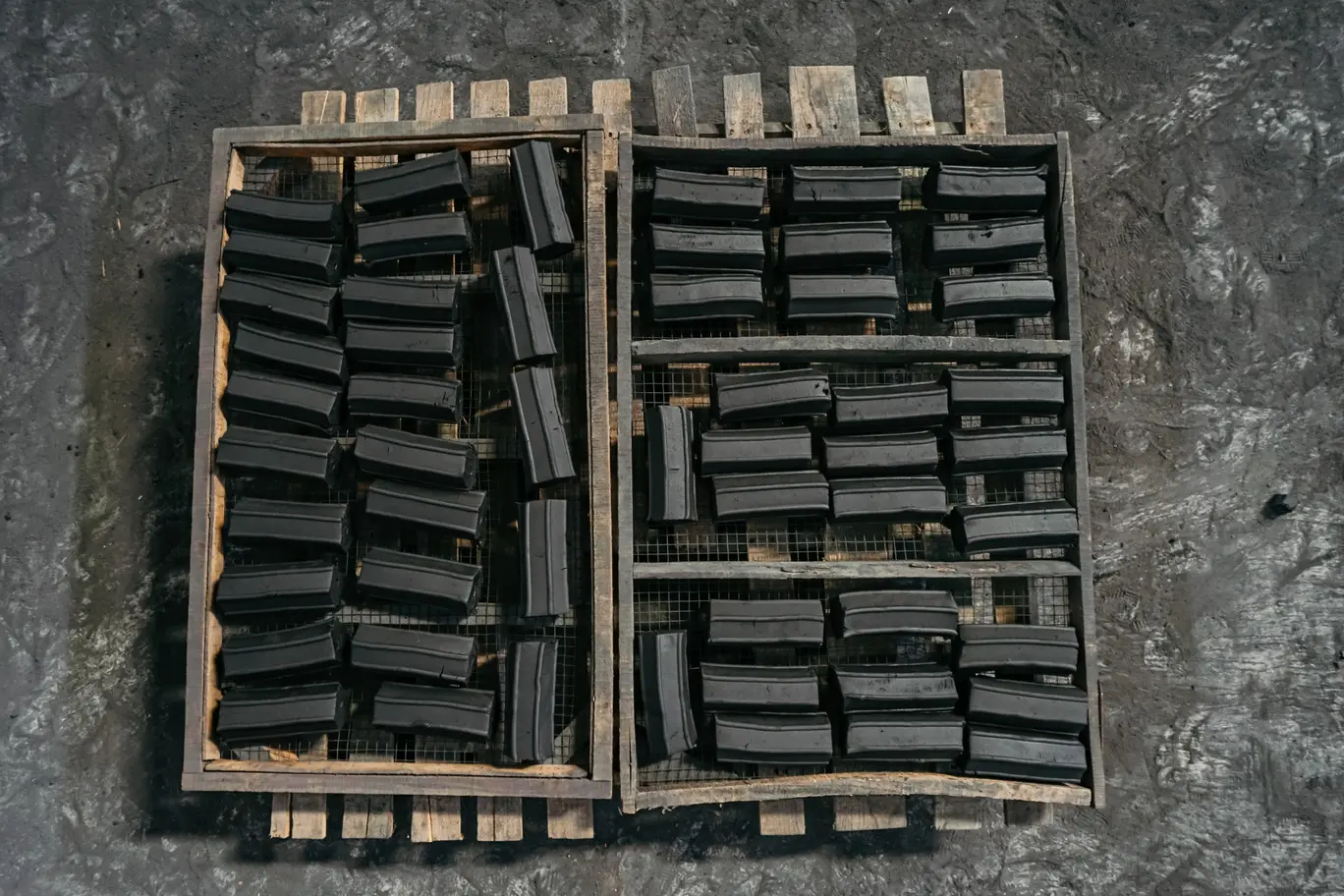
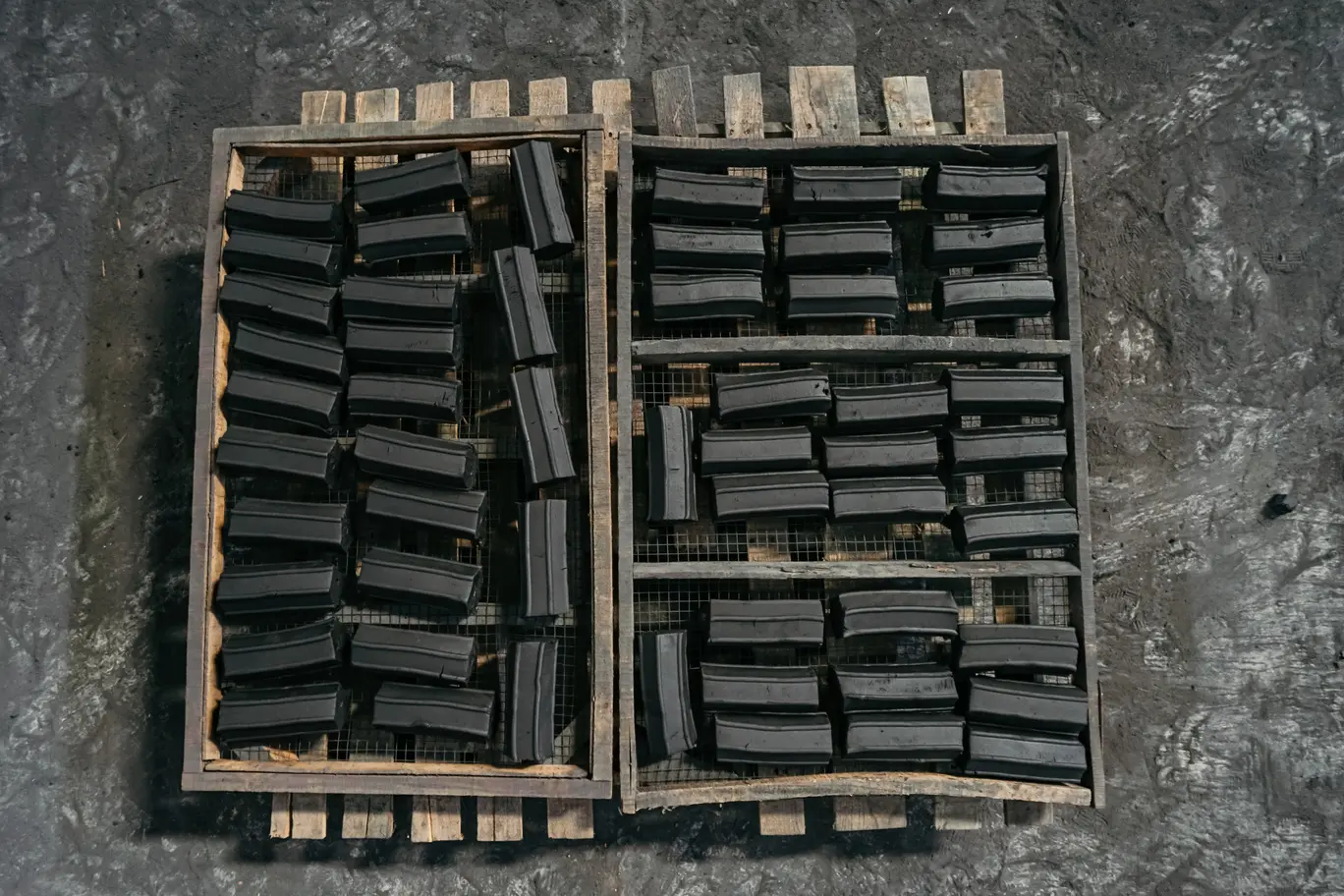
Skewer restaurants differ in channel width, air inlet, grate height, skewer loading, menu, and peak order volume. Unimax currently focuses on hexagonal coconut shell BBQ briquettes. The shape and center hole can be useful design inputs, but neither proves fit, stronger heat, longer duration, or lower fuel cost in a particular grill.
Unimax briquettes are a formed coconut product. They must not be described as binchotan or another named traditional charcoal. Operators may compare them with their current fuel as a distinct candidate, using actual dimensions and repeatable service tests.
Eight operating checkpoints
Fit, heat, refill, and yield—measured in the actual grill.
Record the baseline fuel and candidate against the same menu and grill setup. Agree what counts as a useful cooking result before the trial.
Measure the inner width, depth, usable length, grate-to-fuel distance, and loading openings. A briquette must fit alongside air gaps and permit routine adjustment.
Record: Record candidate length and cross-section, pieces per working section, and clearance after ash develops.
Try the operator's normal single or layered arrangement. Check whether the hexagonal center hole and spaces between pieces remain open or become blocked.
Record: Photograph the layout and log starting mass per grill length, vent setting, and any rearrangement.
Test representative skewers across the start, middle, and end of the active channel. Compare cooking zones and food loads under the same routine.
Record: Log time to ready heat, uneven spots, turning and moving frequency, surface results, and throughput.
Load the number of skewers normally placed during a busy window. Note how the grill recovers after chilled or wet food enters and fat begins to drip.
Record: Record the recovery interval, cooking delay, flare-up observations, and any intervention or fuel added.
Check how staff add fuel without disrupting skewers, whether a full briquette fits the refill opening, and how partially used pieces are handled under the operator's procedure.
Record: Count refills, added mass, handling minutes, breakage, and interruption to orders.
Observe whether ash falls through or accumulates along the narrow bed. Separate ignition emissions from food-fat, marinade, starter, and old-residue effects.
Record: Log ash removal, spills or fly ash, smoke and odor by phase, and the condition of vents and the grill.
Inspect the opened pack and the fuel after normal movement to the grill line. Match carton or sack size to the daily service and storage conditions.
Record: Count intact usable pieces, fines, moisture exposure, breakage after handling, and usable yield.
Compare landed fuel cost using equivalent menu output and service windows. Include lighting, replacements, unusable leftovers, cleaning, and staff time.
Record: Report kilograms and total attributable fuel-handling cost per skewer batch or per service hour.
Before asking for a sample
Send dimensions, not just a cuisine name.
What is the channel?
Inner width, depth, working length, airflow openings, loading access, and skewer height.
What is the rhythm?
Menu, skewers per batch, peak load, target service hours, starter and refill routine.
What is the pass rule?
Useful heat, recovery, ash, handling, smoke/odor observations, cost, and allowable variation.
Matched service protocol
Test the candidate against your existing fuel.
A steady Tuesday and a peak weekend shift cannot be treated as equivalent. Repeat representative blocks and record deviations.
- 01
Describe the working grill
Provide channel measurements, fuel-tray depth, vents, skewer height, menu mix, working length, service duration, and peak skewers per batch.
- 02
Identify baseline and candidate
Record current fuel and the proposed briquette's grade, dimensions, source, pack, sample ID, and condition. Do not substitute a photo for measured dimensions.
- 03
Agree the test basis
Match the starting fuel mass or document another fair basis. Keep the grill, lighting, airflow, skewer count, food load, observation interval, and endpoint consistent.
- 04
Run normal and peak blocks
Measure ready time, heat distribution, peak-load recovery, refill, ash, smoke and odor, broken pieces, and staff interventions across comparable blocks.
- 05
Approve only what was tested
Record pass, retest, or limited pilot for the specific grill and sample; connect any order to specification tolerances, packaging, sampling, and batch traceability.
Product and evidence boundaries
Make claims for the tested briquette, grill, and service window.
Measure the offered grade and the delivered sample. A center hole may provide a route for air when kept open; it does not make every skewer channel compatible. Likewise, a laboratory calorific value or total burn time cannot replace useful cooking heat measured under food load.
Food fat, marinades, ignition aids, grill residue, and ventilation can affect smoke and odor observations. Log them separately, follow applicable local operating and safety requirements, and do not use sensory notes to infer air safety. A successful sample test supports a bounded decision; repeat lots need specification, tolerances, sampling, and batch records.
Skewer-grill FAQ
Questions to settle before changing fuel.
Choose the exact test first. Supplier photos and category labels cannot do the cooking.
01What charcoal works best in a narrow commercial skewer grill?+
There is no universal answer. Fit depends on channel dimensions, fuel-bed depth, airflow, skewer height, food load, service rhythm, and staff handling. Test identified fuel in the operator's actual grill and record the results.
02Is Unimax coconut briquette the same as binchotan?+
No. Unimax's current BBQ offer is a formed hexagonal coconut shell charcoal briquette. It should not be represented as binchotan or another traditional charcoal category. Buyers who use those fuels can evaluate this as a distinct alternative in their own grill.
03Does the center hole guarantee adequate airflow in a skewer grill?+
No. It can provide an air path, but narrow-channel stacking, ash, broken pieces, and vent layout may restrict flow. Observe the arranged fuel bed during a representative service.
04Should the trial measure maximum temperature or useful cooking heat?+
Useful heat across actual skewer batches is the relevant operating measure. Record ready time, zone uniformity, recovery after food loading, refill, and the endpoint at which the grill no longer meets the menu requirement.
05How do I avoid blaming charcoal for smoke from food?+
Record separate phases for lighting, empty-grill operation, food loading, and steady cooking. Note starter, marinade, fat drips, grill residue, airflow, and changes in the cook's procedure. Sensory notes do not measure carbon monoxide or establish indoor air safety.
06What should a distributor ask a skewer restaurant before sending samples?+
Ask for the working channel's width, depth, and length; fuel-bed layout; airflow and loading access; representative skewer menu; service hours and peak load; current refill problems; and the intended pass criteria. Send the current BBQ specification and a traceable sample.
Test the actual channel
Share Your Grill Channel Dimensions
Send the channel width, depth, working length, menu, service duration, and current fuel problem. Discuss the current hexagonal BBQ sample and the specific test your skewer line needs.
Discuss a skewer-grill sample