
BBQ charcoal buyer guide
BBQ Charcoal Burn Test Protocol for Buyers
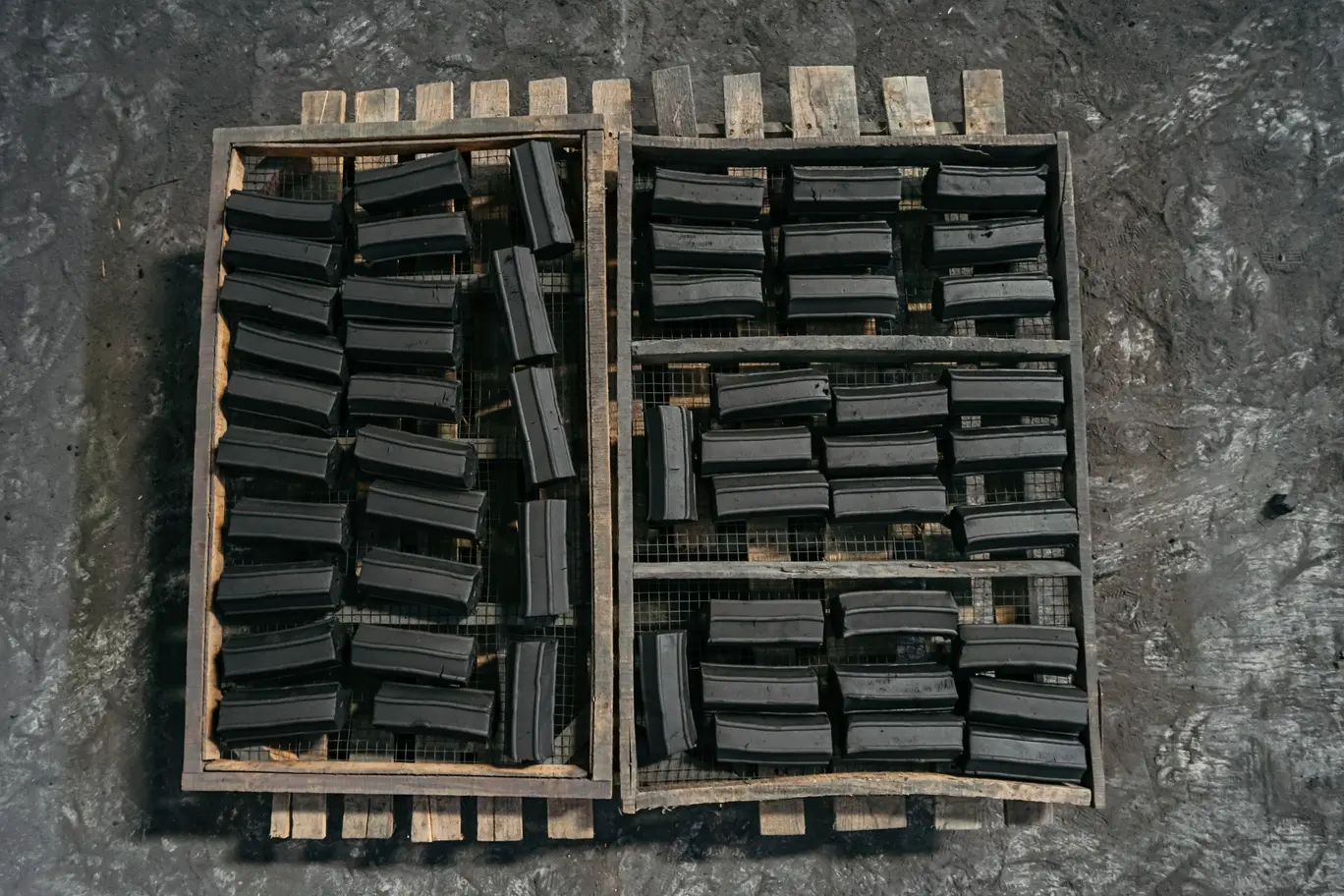
Compare briquettes under one sample identity, fuel mass, appliance, airflow, ignition route, observation schedule, and endpoint. A stopwatch alone does not measure cooking performance.
Control setupRecord useful heatApply one rule
The core rule
Burn time is a protocol result, not a product nickname.
A claim such as “up to six hours” has meaning only beside the fuel mass, dimensions, appliance, ventilation, ignition procedure, tending routine, start point, and endpoint. Change those controls and the same charcoal can produce a different time.
Buyers should record useful cooking heat separately from total burnout. Rewarding the last faint ember is a charming hobby, but a weak procurement metric.
Pre-test control sheet
Lock these ten fields before lighting the first briquette.
Write the chosen value or method beside each field. If a critical control changes, record the deviation and do not present the run as directly comparable.
Record supplier, product, grade, batch or lot, sampling point, dispatch date, receipt date, packaging condition, and storage history.
An anonymous or differently stored sample cannot support a clean supplier or batch comparison.
Record shape, cross-section, length, centre hole where applicable, individual mass, visible cracks, and number of pieces.
Size and mass alter exposed area, ignition, airflow, heat release, and duration.
Use the same total as-received mass for every candidate and record both mass and piece count.
Equal piece counts can conceal unequal fuel mass; equal mass can still require geometry notes.
Use the same grill or brazier, grate height, chamber condition, ash clearance, and starting temperature.
A different appliance can dominate the result more than the charcoal does.
Fix the starter type, quantity, placement, exposure time, turning routine, and timing start point.
More torch time can manufacture a faster apparent ignition result.
Lock vent positions and record wind, ambient temperature, humidity, and whether testing is indoors or outdoors.
Draft and weather change combustion rate, temperature, sparks, and smoke dispersion.
Fix spacing, stacking pattern, orientation, and whether pieces may be moved, turned, or consolidated.
A tight pile and a single layer do not answer the same performance question.
Use the same thermometer location or agreed heat indicator, observation interval, camera position, and evaluator scale.
Irregular notes turn a test into selected anecdotes.
Define the minimum cooking temperature or other agreed functional threshold and how long it must remain below that threshold.
Counting weak embers can inflate burn time without proving usable cooking performance.
Separately define extinction, no visible glow, or another terminal condition; state whether refuelling or tending is prohibited.
Useful heat and total burnout are different metrics and should not share one stopwatch result.
Observation schedule
Record the profile, not only the finish time.
Before ignition
Record: Sample ID, dimensions, mass, piece count, cracks, dust, odor, pack condition, appliance, vents, weather.
Why: Establishes what entered the test.
Ignition
Record: Start event, starter details, exposure, turning, smoke, odor, sparks, visible ignition, ready-to-use time.
Why: Separates lighting convenience from later heat performance.
Cooking window
Record: Fixed-interval temperature or heat indicator, glow, smoke, odor, sparks, cracks, collapse, tending, deviations.
Why: Shows whether duration is actually useful to the buyer.
Useful-heat end
Record: Threshold, time below threshold, elapsed time, briquette condition, last tending action.
Why: Creates the commercially relevant duration result.
Total-burn end
Record: Defined terminal condition, elapsed time, residual glow, unburned material.
Why: Keeps total duration separate from useful heat.
After cooling
Record: Ash or residue mass where planned, ash cohesion, dust, fragments, photographs, calculation, pass/fail disposition.
Why: Completes the evidence trail without judging hot ash unsafely.
Eight-step buyer protocol
Run every candidate through the same sequence.
Repeat runs are stronger than one-off demonstrations, but repetition does not repair an unidentified or unrepresentative sample. Preserve identity and deviations from start to finish.
- 01
Define the buyer question
Choose the actual decision: restaurant service window, retail consumer use, ignition convenience, useful heat, low smoke, ash handling, or another requirement. A protocol should answer a use case, not chase one flattering number.
- 02
Select and identify the sample
Use traceable pieces from the intended product and grade. Photograph the unopened pack, label, sample ID, representative pieces, damage, and weighing record.
- 03
Condition the test area
Clean the appliance, remove old ash, return it to the same starting condition, set vents, record weather, and keep the same safe test location for every candidate.
- 04
Measure the fuel charge
Record individual dimensions where needed, total as-received mass, piece count, arrangement, and starting condition. Do not top up one candidate to rescue the comparison.
- 05
Apply one ignition procedure
Start the clock at the defined event. Use one starter, exposure, placement, turning routine, and ready-to-use definition; record smoke, odor, sparks, and time to the agreed ignition endpoint.
- 06
Record the useful-heat profile
Measure at fixed intervals from the same location. Note heat, visible glow, flame, smoke, odor, sparks, cracking, fragmentation, tending, and any deviation from the protocol.
- 07
Apply both endpoints
Record useful-heat duration when the functional threshold fails, then continue only if total-burn duration is also required. Never merge the two results.
- 08
Cool, inspect, and decide
After safe cooling, record remaining ash mass if the method requires it, ash behavior, unburned material, collapse, and photographs. Apply the pre-agreed acceptance rule and retain the complete record.
Burn-test red flags
Six ways an impressive demonstration becomes weak evidence.
These issues do not automatically prove poor charcoal. They show that the claimed comparison is not controlled well enough for the conclusion.
Equal pieces, unequal mass
A candidate receives more fuel because its pieces are heavier, then wins the duration comparison.
Torch time is flexible
Ignition exposure continues until each sample looks ready, hiding a slower-lighting product.
Airflow is adjusted by feel
Vents, fans, wind shielding, or grate position change during the run without being recorded.
Only the final time is reported
The record omits useful-heat profile, smoke, odor, sparks, tending, cracks, and deviations.
Endpoints move after testing
Weak embers count for one supplier, while another is stopped when useful cooking heat ends.
One run becomes a guarantee
A single sample test is presented as proof of every production lot or future shipment.
From test to purchase decision
Write the acceptance rule before seeing the winner.
State which results are informative and which are pass/fail: ignition time, useful-heat duration, heat profile, smoke, odor, sparks, cracking, collapse, ash behavior, or another buyer-specific criterion. Define tolerances, repeat-run treatment, retest triggers, and the controlling record.
A buyer-side burn test evaluates use behavior in its stated setup. It does not replace laboratory analysis, prove that one sample represents an entire lot, or guarantee future shipments. For Unimax, confirm the current product-specific sample, protocol, evidence, and acceptance route before ordering.
BBQ burn-test FAQ
Control the variables that can move the result.
A repeatable protocol makes the supplier comparison more useful and the commercial discussion less theatrical.
01How much BBQ charcoal should a buyer use in a burn test?+
There is no universal fuel mass for every grill and use case. Choose a mass that represents the intended appliance and service requirement, document it, and keep it identical across candidates. Record piece count and dimensions as supporting context.
02When should BBQ charcoal burn-test timing start?+
Define the start event before testing—for example, when the ignition source is first applied. Also define separate endpoints for ready-to-use ignition, useful-heat end, and total burnout. A duration result without its start and endpoint is incomplete.
03Is total burn time the same as useful cooking time?+
No. Useful cooking time ends when the agreed functional heat threshold is no longer maintained. Total burn time may continue through weak embers that are not useful for the buyer's application.
04Should a burn test use equal piece count or equal mass?+
For supplier comparison, equal total as-received fuel mass is usually the cleaner primary basis, while piece count, dimensions, and arrangement should also be recorded. The purchase specification or use case may require additional geometry controls.
05Can a phone video prove BBQ charcoal burn performance?+
A continuous, time-referenced video can support the record, but it does not replace sample identity, mass, appliance, airflow, ignition details, temperature or heat observations, endpoints, and a written deviation log.
06Does this page promise one Unimax burn-test method for every order?+
No. This buyer guide provides a framework, not a universal contractual method or guarantee. Confirm the product-specific protocol, sample route, available evidence, acceptance criteria, and controlling result for the proposed order.
Make the burn test comparable
Share Your BBQ Application Before You Compare Samples
Send the briquette format, intended appliance, fuel mass, ignition route, required useful-heat window, critical observations, acceptance rule, destination, and sourcing stage.
Discuss it on WhatsApp