
Restaurant fuel decision guide
Coconut Charcoal Briquettes vs Hardwood Lump for Food Service
A food-service buyer needs repeatable cooking heat and manageable cost across a shift. Compare the actual coconut briquette and hardwood lump offers in the same grill before deciding which serves your menu.
Operating fitMatched service trialCost per cover
The procurement answer
Choose the fuel that works through a whole service.
Unimax focuses its food-service offer on coconut shell BBQ briquettes, especially the hexagonal format. The practical case is controlled geometry and a specification that buyers can test and repeat. Hardwood lump is not a priority direct-sale product; for a buyer-specific formulation, hardwood can be discussed as a raw material or blend component without publishing any proprietary formula.
Hardwood lump can still fit a kitchen that values selecting irregular pieces or prefers the result of a particular charcoal on its menu. Neither category guarantees a heat profile, sensory result, or lower service cost. The decisive evidence comes from named samples, matched conditions, and repeat-order controls.
Side-by-side operating questions
Compare what staff actually handle, refill, and clean.
These are tendencies and test questions, not laboratory results for every product in either category.
Briquettes: Specified briquette geometry can make fuel-bed setup and portioning more repeatable, subject to actual dimensions and breakage.
Lump: Irregular pieces may suit cooks who deliberately select piece sizes; sort the offered bag and measure the usable size distribution.
Check: Log mass loaded, bed depth, piece-size distribution, and airflow.
Briquettes: Record starter amount, lighting time, and time until useful cooking heat; geometry and formulation affect the result.
Lump: Piece size, moisture, species, and charcoal-making process can change ignition behavior.
Check: Use the same grill, starter, weather conditions, and readiness criterion.
Briquettes: A repeatable shape may help staff set a consistent bed. It does not guarantee hotter fuel or faster recovery.
Lump: Selected large or small pieces can give operators flexibility, but bag-to-bag size variation may change the routine.
Check: Measure usable heat and recovery after a comparable food load, not peak temperature alone.
Briquettes: Do not infer a neutral flavor or lower smoke from the word coconut. Evaluate the actual briquette and its binder during ignition and cooking.
Lump: Some kitchens prefer the sensory profile of a specific lump charcoal. Species name alone cannot predict a menu's flavor result.
Check: Run blinded food tasting where practical, plus phase-by-phase smoke and odor observations; separate grease and starter effects.
Briquettes: Record residue, intact unburned pieces, refill frequency, and staff cleanup time for the intended service length.
Lump: Lump ash and remaining char vary by product, piece size, and burn endpoint; compare under the same conditions.
Check: Never substitute grill residue for a laboratory ash result.
Briquettes: Regular cartons and units can simplify counting and storage, provided the packs protect against moisture and breakage.
Lump: Bag size grading, fines, and storage moisture can affect usable yield; inspect actual delivered packs.
Check: Record fines and unusable material at opening and after normal handling.
Briquettes: Quoted price per kilogram is only one input. Evaluate consumed kilograms, useful service hours, labor, waste, and landed logistics.
Lump: A higher or lower lump price can still win on the intended grill if usable yield and labor support it.
Check: Calculate total fuel and handling cost per service hour and per cover.
Three different evidence layers
A sample that cooks well still needs a repeatable order.
What was supplied?
Identify feedstock, formulation disclosures, dimensions or lump size grading, pack, sample ID, and batch.
What happened in the grill?
Measure usable heat, refill, recovery, smoke and odor, yield, and labor on comparable shifts.
Can it happen again?
Agree specifications, acceptable variation, retained reference, packaging, and evidence for the next lot.
Six-step service comparison
Make the comparison fair enough to act on.
Change one fuel variable at a time where possible, log deviations, and repeat across comparable service conditions. A single easy shift can flatter either candidate.
- 01
Define the operating target
Document grill, menu, service duration, covers, peak load, temperature or readiness criteria, staff routine, and ventilation conditions.
- 02
Identify each sample
Record supplier, product, feedstock or wood species where declared, batch, moisture, briquette dimensions or lump size distribution, packaging, and sample ID.
- 03
Run matched service blocks
Use the same grill and menu; balance trial order across comparable shifts. Weigh initial fuel and every refill, and use the same end-of-service rule.
- 04
Measure the full workflow
Log readiness, usable heat, recovery after food load, smoke/odor by phase, food observations, refills, residue, breakage, and cleanup labor.
- 05
Compare usable economics
Cost per cover = (landed fuel cost + attributable starter, labor, and disposal cost) / covers served. Compare similar service loads and report assumptions.
- 06
Lock the approved offer
Tie the selected sample to specifications, acceptance criteria, retained references, packaging, and batch checks before a repeat order.
Avoid the wrong metric
Cost per cooking hour needs a defined useful endpoint.
“Burns for six hours” means little if the grill cannot cook for the last two. Record the cooking window your menu requires, kilograms consumed during that window, refills and staff time, leftover usable fuel, and cleaning. Report both cost per usable cooking hour and cost per cover when service volume is available.
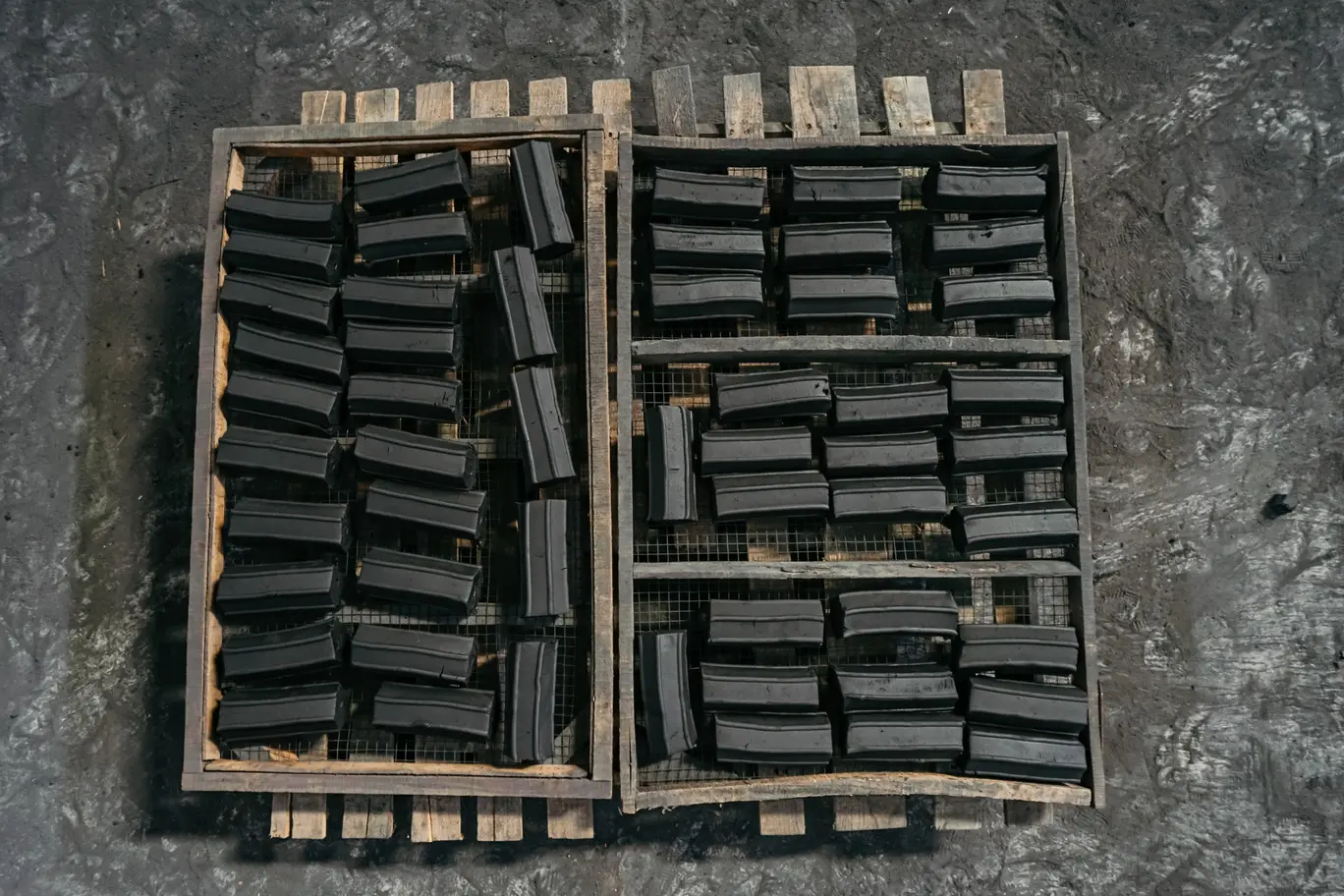
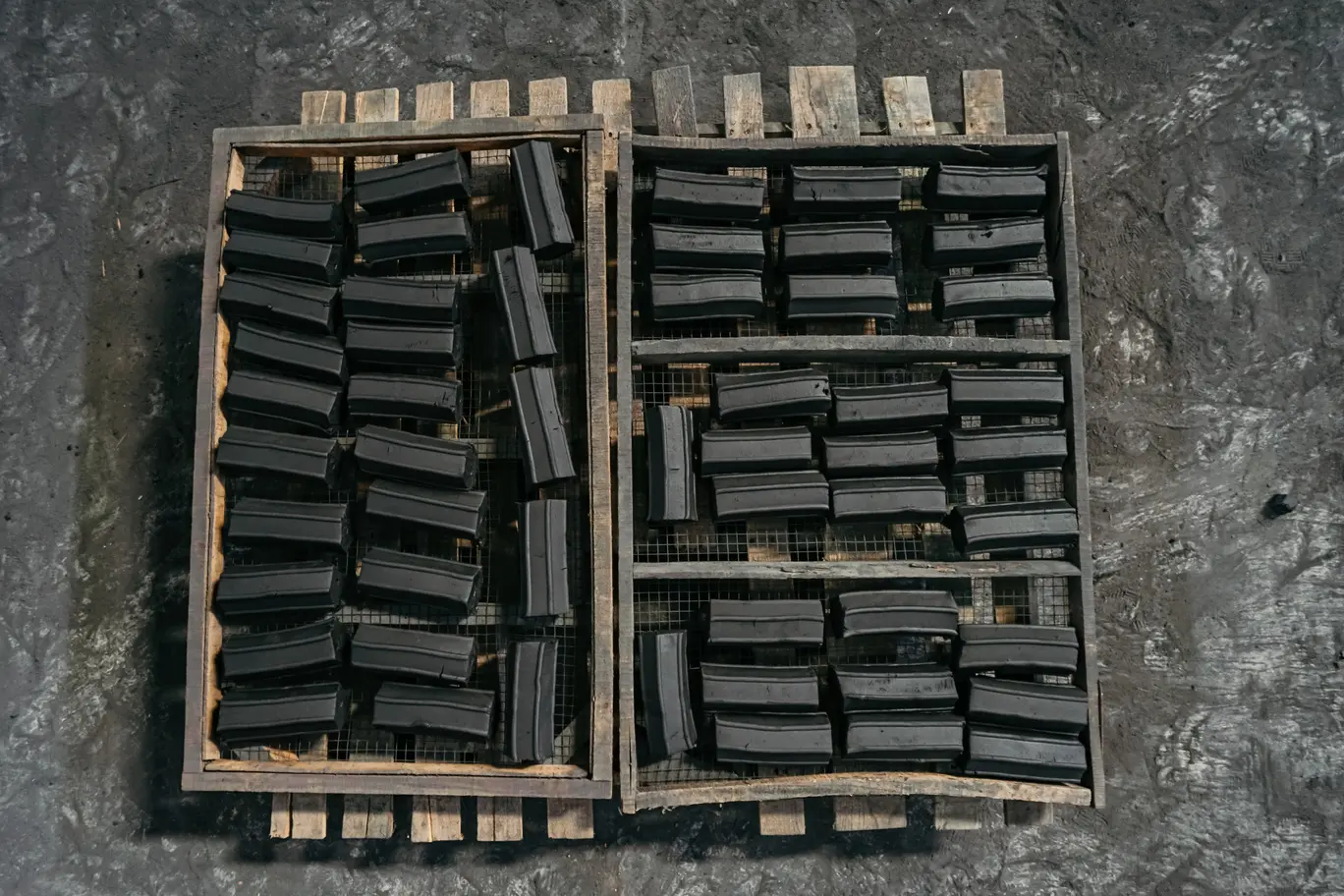
Use the same landed-cost basis for both products. Keep laboratory ash content separate from field residue, and do not treat an image of briquettes or a category name as proof of hardwood comparison results.
Food-service FAQ
Questions to settle before changing the grill fuel.
Decide on operating evidence and menu fit, then connect the approved sample to the product ordered.
01Are coconut charcoal briquettes always better than hardwood lump for restaurants?+
No. The better choice depends on grill airflow, menu, service rhythm, staff practice, local market expectations, and the tested products. Unimax focuses on coconut shell BBQ briquettes, while a specific hardwood lump may suit an operator who values its piece selection or sensory profile.
02Does hardwood lump always give food a wood-smoke flavor?+
No universal flavor result follows from the category. Species, carbonization, ignition aids, food fat, airflow, and cooking method matter. Evaluate the actual product with the intended menu and, where feasible, blinded tasting.
03Do briquettes burn longer or hotter than lump?+
Neither result is guaranteed. Compare useful cooking heat, recovery, fuel consumption, and service duration using identified samples, matched mass and grill conditions, and an agreed endpoint.
04Which product creates less ash and waste?+
Test the exact products. Laboratory ash content and recovered grill residue answer different questions; unfinished charcoal, grease, and old residue can distort a field comparison.
05Does Unimax sell hardwood lump as its main food-service product?+
No. Unimax's current food-service focus is coconut shell BBQ briquettes. Hardwood may be considered as a raw material or blend component for an agreed buyer-specific formulation; availability and specifications must be confirmed for each inquiry.
06How should a restaurant compare total cost?+
Start with landed fuel cost and measure consumed kilograms per comparable service hour or cover. Add starter, refill and cleanup labor, breakage, storage loss, and unusable end-of-shift fuel; document the method before comparing suppliers.
Plan a real service comparison
Discuss Coconut Shell BBQ Briquettes
Tell us your grill, menu, service hours, current fuel, destination, pack, and expected volume. We can discuss the relevant coconut briquette sample and the evidence your kitchen needs to evaluate it.
Ask about a BBQ sample