
Specifications & evidence
Fixed Carbon in BBQ Charcoal: What Buyers Should Know
Fixed carbon helps describe fuel composition within a proximate-analysis panel. It becomes commercially useful only when moisture, volatile matter, ash, method, reporting basis, sample identity, and grill performance remain attached.
Same basisFull panelApplication test
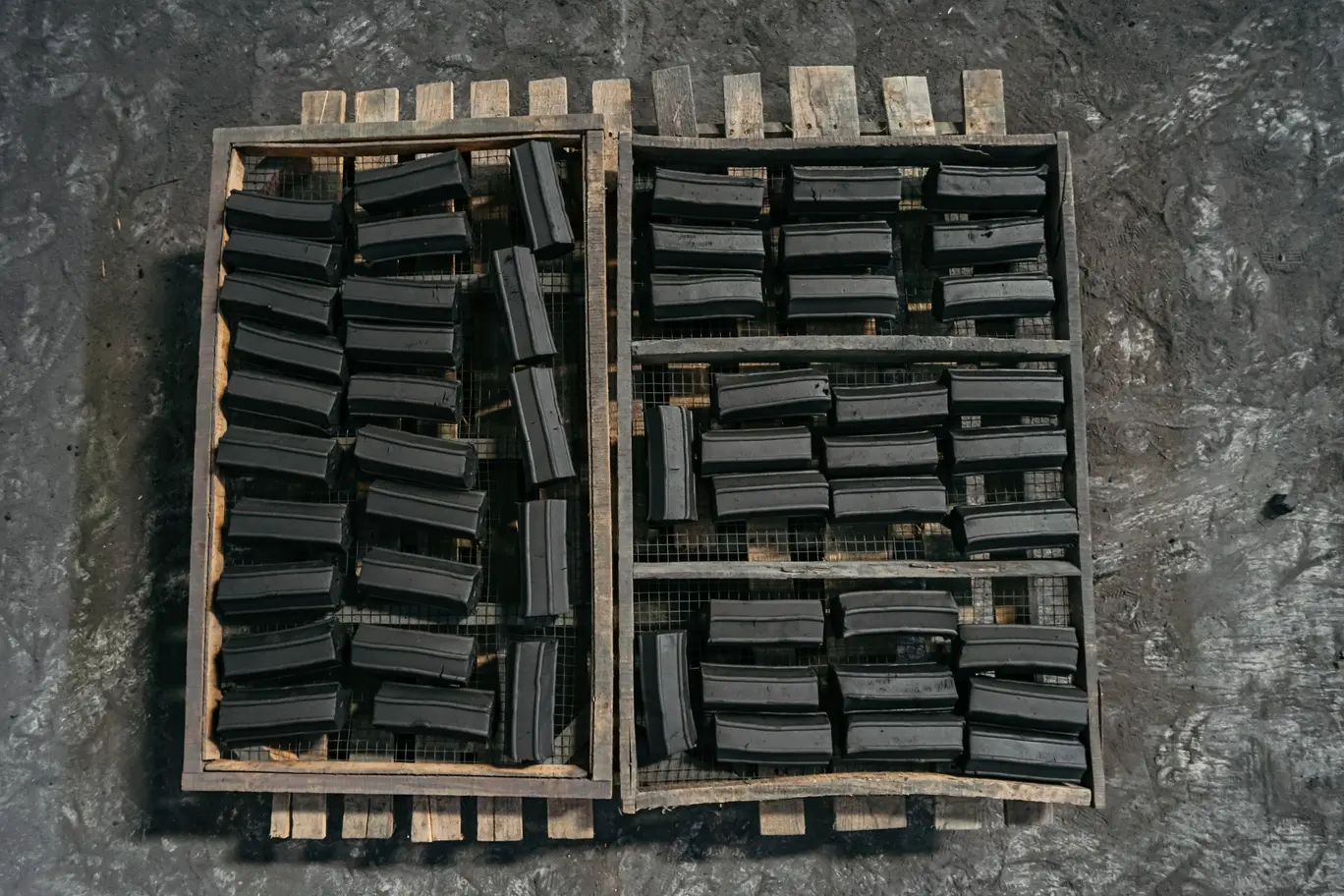
Start with the correct definition
Fixed carbon is a proximate-analysis result—not a universal quality score.
In routine proximate analysis, fixed carbon commonly represents the remainder after moisture, volatile matter, and ash are accounted for on the stated basis. Because it may be calculated by difference, every input value, method, basis, significant figure, and rounding decision matters.
It should not be confused with total carbon from elemental analysis. Nor should it be promoted as a magic dial that automatically controls ignition, useful cooking heat, burn duration, strength, smoke, odor, ash handling, or cost. Procurement would be wonderfully easy if one number did all that. It does not.
Read the complete panel
Four linked values describe the proximate-analysis picture.
The components must use a compatible method and reporting basis before a subtraction or supplier ranking makes sense.
- 01
Moisture
Water present in the specimen under the stated method and reporting basis. On an as-received panel, moisture occupies part of the total mass and can change through storage, packaging, and handling.
Buyer check: Confirm the sampling point, seal, timing, method, and whether the result is as received, wet basis, or dry basis.
- 02
Volatile matter
Material released when the prepared specimen is heated under the specified analytical conditions. It is a laboratory parameter, not a standalone prediction of smoke, odor, or ignition behavior at the grill.
Buyer check: Keep the method and basis attached, then verify ignition-stage observations separately in a controlled burn test.
- 03
Ash
The inorganic residue remaining after the analytical procedure. Ash percentage and visible ash color are different observations and should never be merged into one quality claim.
Buyer check: Compare the percentage on the same basis and method, then assess fuel-bed behavior and cleanup under the intended appliance.
- 04
Fixed carbon
In a conventional proximate-analysis panel, fixed carbon is commonly obtained by difference after the other stated components are accounted for on the same basis. It is not the same as a direct elemental-carbon measurement.
Buyer check: Request the full panel, calculation convention, raw results, rounding rule, and product identity—not a fixed-carbon number floating alone.
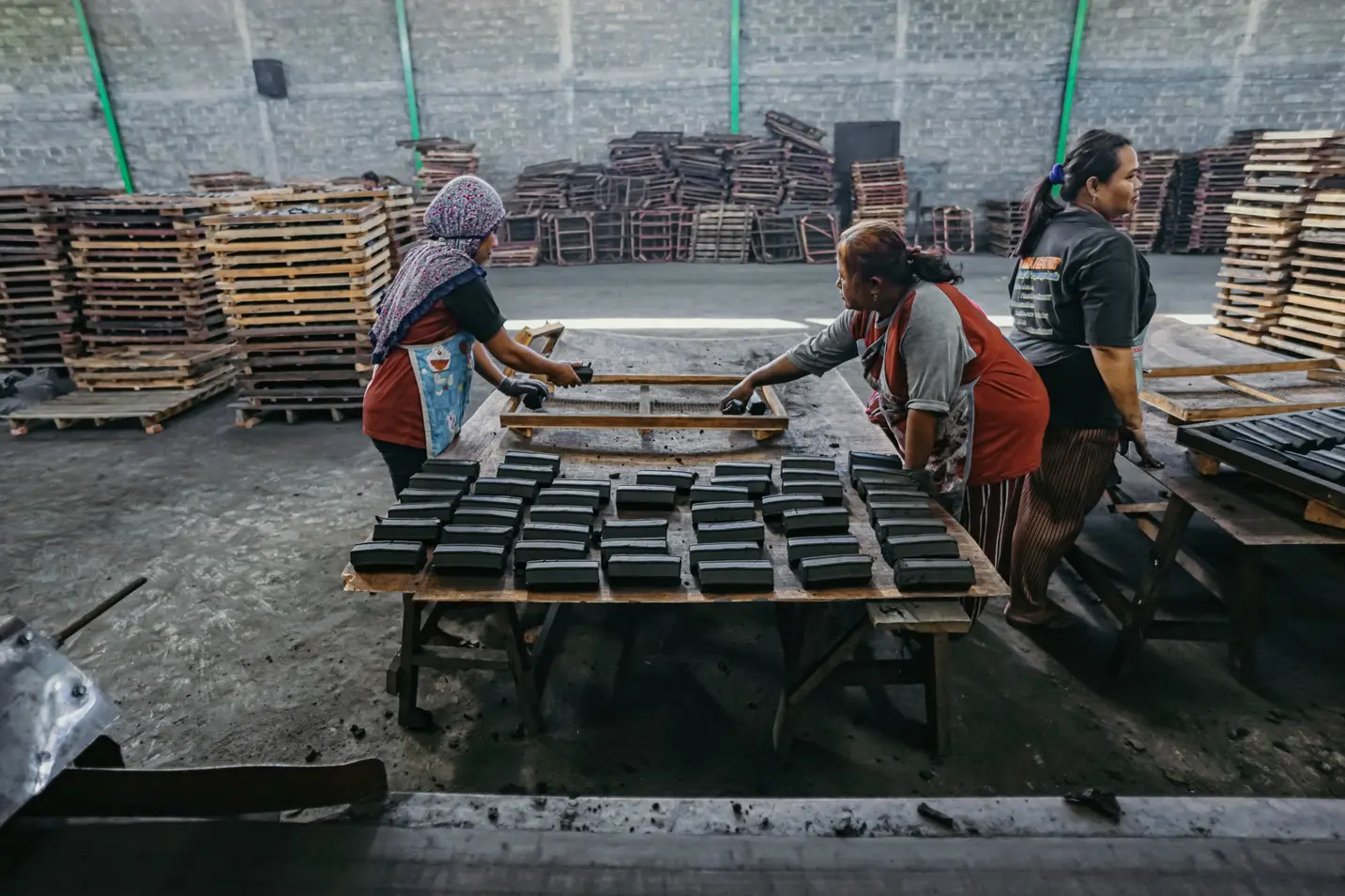
Basis changes the percentage
Before comparing suppliers, ask what the denominator contains.
As-received basis
Describes the tested material in its received condition, including the reported moisture. It can be commercially intuitive for delivered product but depends on sample condition and timing.
Dry basis
Mathematically excludes moisture from the reporting denominator. The remaining component percentages therefore change even if the underlying specimen has not.
Dry ash-free basis
Excludes moisture and ash for a different analytical comparison. It is not interchangeable with as-received or dry-basis values.
Unstated basis
Not suitable for serious supplier ranking. Ask for the basis and method instead of guessing from whichever percentage looks more impressive.
Six-step buyer method
Compare fixed carbon without turning one number into a verdict.
Start with product identity and finish with commercial order linkage. The percentage in the middle cannot carry the whole decision by itself.
- 01
Identify the product and sample
Record supplier, grade, raw material description, briquette form, sample date, lot or production reference, packaging condition, and sampling point.
- 02
Request the complete proximate panel
Obtain moisture, volatile matter, ash, and fixed carbon together. A single extracted value hides the composition and arithmetic needed to interpret it.
- 03
Confirm one reporting basis
State whether results are as received, dry basis, or another clearly defined basis. Do not rank percentages reported on different denominators.
- 04
Check method and calculation
Record the named procedure, specimen preparation, equipment or laboratory, calculation convention, raw values, rounding, and whether fixed carbon is measured or calculated by difference.
- 05
Run an application test
Use the same fuel mass, appliance, lighting method, airflow, arrangement, temperature checks, tending routine, and endpoint to observe ignition and useful heat.
- 06
Link evidence to the order
Connect the agreed specification revision, sampling rule, test point, acceptance language, result, relevant lot, purchase order, and retained evidence.
Supplier comparison worksheet
Five fields that must travel with every fixed-carbon result.
Put these fields into the quotation comparison, specification, sample report, inspection instruction, and acceptance record.
Percentage, raw result, rounded result, target or limit language, and whether the value belongs to a named grade or identified batch.
A typical marketing value may be mistaken for a contractual minimum or shipment result.
As-received, dry, dry ash-free, or another explicitly defined basis; include any conversion used.
The same material can produce different percentages when the denominator changes.
Moisture, volatile matter, ash, and fixed carbon reported together on a consistent basis.
An isolated fixed-carbon figure cannot reveal which other component or basis created the difference.
Procedure, preparation, laboratory, calculation by difference or other approach, significant figures, and rounding rule.
Two neat-looking numbers may not be technically comparable or may differ because of arithmetic conventions.
Sample identity, production or lot reference, test date, sampling point, specification revision, and order linkage.
A valid result for one historical specimen may be stretched into a claim about a different shipment.
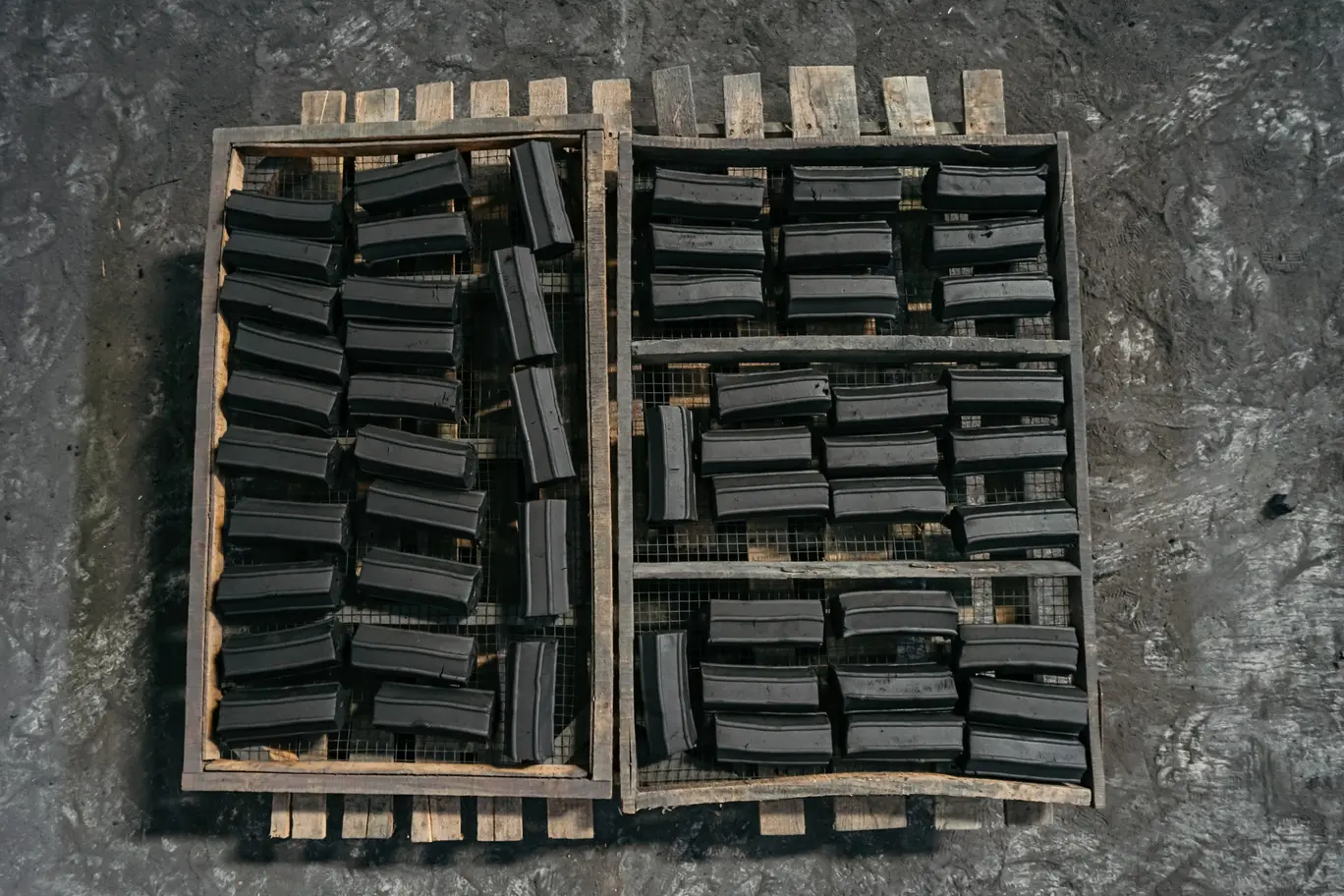
Evidence stack
Use composition data and grill evidence for different jobs.
Current product specification
Defines the grade, fixed-carbon target or limit, related panel values, method, reporting basis, revision, and acceptance language.
Identified full-panel result
Reports moisture, volatile matter, ash, and fixed carbon for a named specimen. It proves only what was sampled, tested, calculated, and reported.
Calculation review
Checks whether all components use the same basis and whether the fixed-carbon value, subtraction, significant figures, and rounding are internally coherent.
Controlled burn observation
Records ignition, useful heat, temperature profile, tending, smoke, odor, sparks, ash, and endpoint under one repeatable application setup.
Order-linked conformity record
Connects the agreed requirement and inspection route to the relevant production identity, shipment, purchase order, and retained evidence.
Fixed-carbon red flags
Six shortcuts that make a technical comparison unreliable.
None automatically proves poor charcoal. Each proves the evidence is weaker than the conclusion being advertised.
Only fixed carbon is shown
The quotation omits moisture, volatile matter, ash, reporting basis, method, and sample identity while presenting one percentage as complete proof.
Different bases are ranked
One supplier reports as received while another reports on a dry or dry ash-free basis, yet the percentages are placed in the same comparison column.
Fixed carbon is called elemental carbon
A calculated proximate-analysis remainder is described as if it were a direct chemical measurement of total carbon.
Higher automatically means better
The number is promoted as a universal guarantee of ignition, cooking heat, burn duration, strength, cleanliness, or restaurant economics.
The arithmetic is hidden
The stated panel does not reconcile because components use mixed bases, unreported values, aggressive rounding, or an unexplained calculation convention.
One report becomes every container
A result for one sample is treated as proof of future shipments without defined sampling, acceptance, order linkage, or change control.
Current Unimax grade targets
Use declared values as the start of technical review—not the end.
The current Unimax BBQ product page declares fixed carbon of 75% for Super Premium and 73% for Premium. Confirm the current grade-specific specification, method, reporting basis, full proximate panel, sample identity, acceptance language, and available evidence before relying on those values for an order.
Those declared values do not independently guarantee ignition time, useful heat, burn duration, ash behavior, strength, sensory performance, or repeat-container conformity. Each decision needs evidence matched to the claim.
Fixed-carbon FAQ
Keep composition, calculation, and grill performance in their own lanes.
Then reconnect them through one complete, comparable evidence package.
01What is fixed carbon in BBQ charcoal?+
Fixed carbon is the solid combustible fraction represented within a proximate-analysis framework after moisture, volatile matter, and ash are accounted for under the stated method and basis. In many routine panels it is calculated by difference rather than measured as elemental carbon.
02Is higher fixed carbon always better for BBQ charcoal?+
No. A higher comparable value can describe a different fuel composition, but it does not automatically guarantee easier ignition, stronger useful heat, longer practical cooking time, less ash, lower smoke, greater strength, or better cost per cooking hour. Those outcomes require complete-panel review and controlled application testing.
03Why does reporting basis matter for fixed carbon?+
A percentage depends on its denominator. Removing moisture mathematically before reporting on a dry basis changes the relative percentages even when the underlying specimen is the same. Buyers should compare results only on the same clearly stated basis.
04Is fixed carbon the same as total carbon?+
No. Fixed carbon in proximate analysis is not interchangeable with carbon reported by an elemental or ultimate analysis. The analytical purpose, method, and calculation are different.
05What should buyers request with a fixed-carbon percentage?+
Request the complete proximate-analysis panel, method, reporting basis, sample and grade identity, sampling point, test date, calculation convention, raw and rounded values, laboratory or inspection identity, and the requirement that applies to the proposed order.
06What fixed-carbon values does Unimax currently declare for BBQ grades?+
The current Unimax BBQ product page declares fixed carbon of 75% for Super Premium and 73% for Premium. Before using those values commercially, confirm the current product-specific specification, method, reporting basis, limit language, sample identity, and available evidence.
Complete evidence before commercial approval
Compare the Complete BBQ Charcoal Test Panel
Share your company, country, intended application, briquette format, required fixed-carbon value and basis, test method, other parameters, packaging needs, and sourcing stage.
Discuss it on WhatsApp