
Specifications & evidence
How Ash Content Affects BBQ Charcoal Performance
Ash content tells a buyer how much non-combustible residue remains under a stated analytical method. It becomes commercially useful only when method, moisture basis, sample identity, and real grill behavior are kept separate and comparable.
Same methodSame basisSeparate color
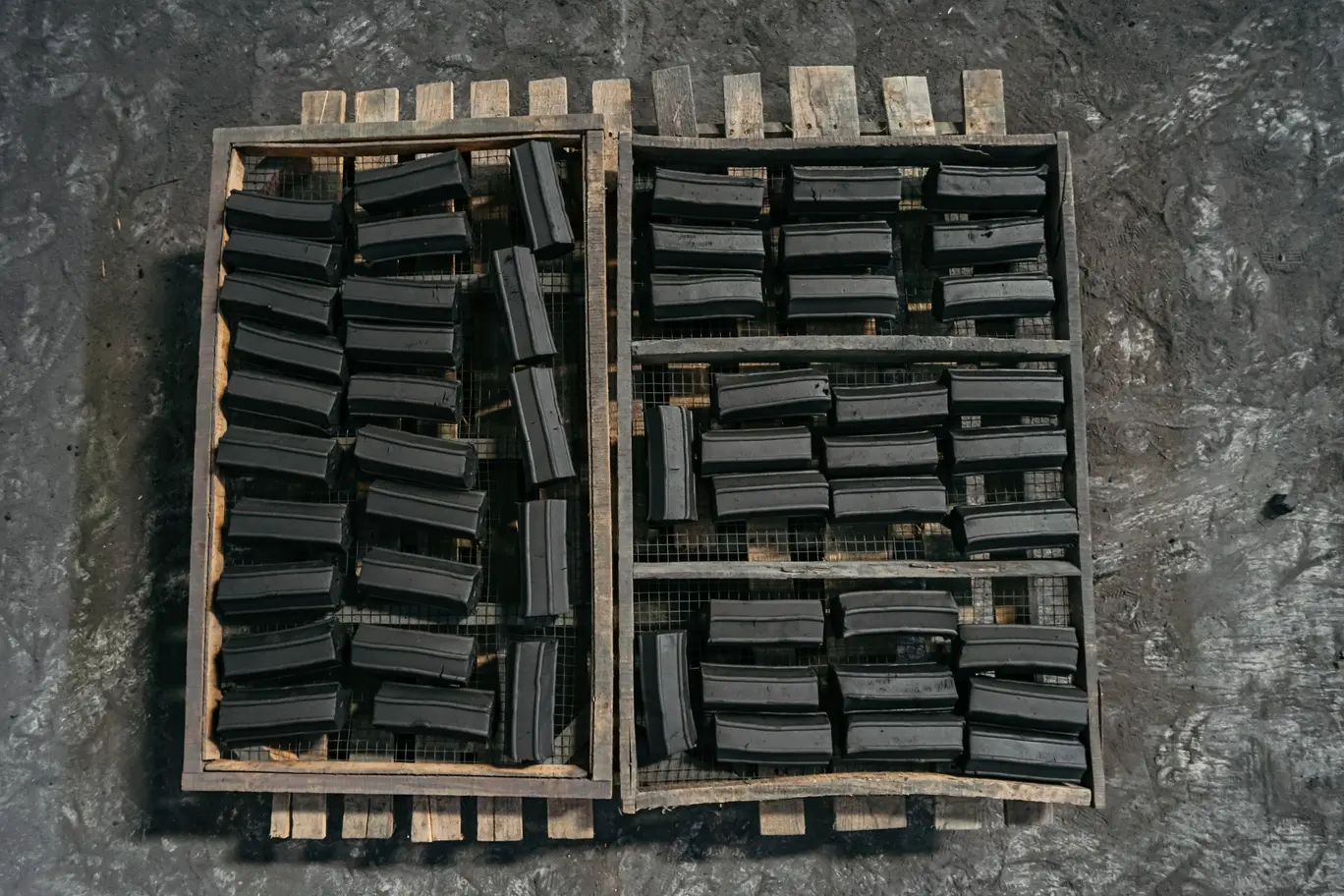
Start with the correct definition
Ash content is a residue measurement—not a complete quality score.
After a prepared specimen is heated according to a defined method, the remaining inorganic residue is expressed as a percentage of the stated sample basis. That analytical result helps quantify residue; it does not independently prove useful heat, ignition, strength, ash stability, or restaurant cleanup time.
Low ash can be valuable, but buyers still need a controlled operating test. Otherwise one tidy number gets promoted to chief executive of the entire specification. Charming, but technically lazy.
Operational effects
Connect ash quantity to the work around the grill.
The same laboratory percentage can create different operating outcomes in different grills. Appliance design, airflow, briquette geometry, fuel load, heat target, and staff routine all shape the result.
- 01
Fuel-bed airflow
Ash can accumulate around and between burning pieces. In some appliances, that buildup can restrict air paths or require the operator to shake, turn, or clear the fuel bed.
Comparison control: Keep grill geometry, vent position, fuel load, briquette arrangement, and tending routine constant when comparing suppliers.
- 02
Useful heat management
Ash is non-combustible residue, but an ash percentage alone does not predict the complete heat curve. Composition, fixed carbon, density, airflow, piece geometry, and operating method still matter.
Comparison control: Record useful cooking heat at fixed intervals instead of treating the lowest ash number as an automatic performance winner.
- 03
Refill and intervention
Ash behavior may change how often staff clear the grate, rearrange fuel, correct airflow, or interrupt service. The effect depends heavily on the appliance and fuel-bed design.
Comparison control: Log every intervention and the time it occurs during a representative operating cycle.
- 04
Cleanup and disposal
More residual material can increase collection, tray emptying, disposal, and housekeeping work. Fine, loose ash can create a different burden from ash that remains cohesive.
Comparison control: Weigh cooled ash and separately record fall-off, dusting, removal frequency, cleanup time, and disposal steps.
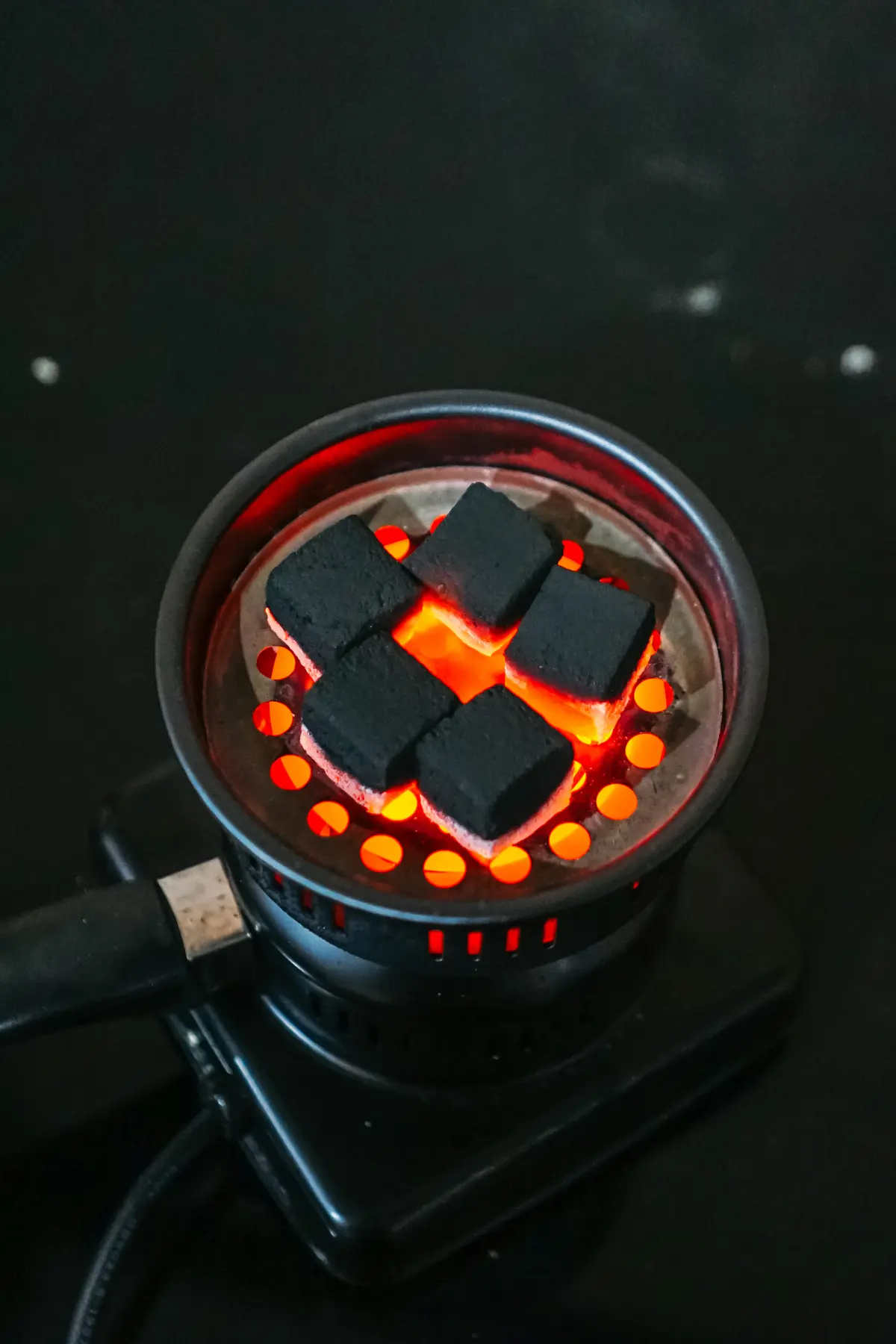
Do not confuse quantity and appearance
Ash percentage and ash color answer different questions.
Ash content
A quantitative laboratory result for residue mass under a stated method and reporting basis.
Ash color
A visual observation influenced by mineral composition, contamination, lighting, camera exposure, burn stage, and viewing conditions.
Ash stability
An operating observation covering cohesion, cracking, fall-off, fly ash, disturbance, and removal behavior.
Cleanup burden
An application result covering accumulation, interruptions, staff time, collection, dust control, and disposal.
Six-step buyer method
Compare supplier ash results without letting the basis move.
Fair comparison starts before the laboratory number arrives. Product identity, sampling, test method, reporting basis, operating observation, and order linkage must survive the whole decision.
- 01
Identify the product
Record supplier, grade, raw material, briquette form, stated dimensions, sample date, batch reference, and packaging condition.
- 02
Confirm the method
Ask which standard or laboratory procedure was used, including furnace conditions, sample preparation, equipment, and calculation rule.
- 03
Align the reporting basis
Do not compare an as-received result directly with a dry-basis result. Confirm moisture treatment and the exact basis for every supplier.
- 04
Use representative sampling
Define how many packs or increments are combined, where they are selected, and how the laboratory specimen is reduced from the bulk sample.
- 05
Separate analysis from operation
Use laboratory ash percentage for residue quantity, then run a controlled grill test for ash buildup, airflow, useful heat, stability, cleanup, and disposal.
- 06
Link evidence to the order
Reference the approved specification revision, identified sample, purchase order, lot or production record, test date, and acceptance decision.
Supplier comparison fields
Five fields that must travel with every ash number.
A percentage without context is data-shaped decoration. Keep these fields together in the supplier comparison and the approved specification.
Percentage, unit, limit language, raw value, rounding rule, and whether the value is a target, maximum, typical result, or batch result.
Two sheets may show similar numbers while creating different contractual obligations.
As-received, dry basis, or another explicitly stated basis; moisture value and any conversion used.
A lower-looking figure can win only because water mass or basis treatment differs.
Named standard or laboratory procedure, specimen preparation, furnace conditions, equipment, and calculation convention.
Identical parameter names do not guarantee directly comparable laboratory results.
Product, grade, source, production or sample date, lot reference, packaging condition, and chain of custody.
A clean report may describe an unrelated or hand-selected specimen rather than the offered order.
Fuel mass, appliance, arrangement, airflow, ignition, tending, heat checks, ash fall-off, cleanup, and endpoint.
Ash percentage gets stretched into claims about grill behavior that were never tested.
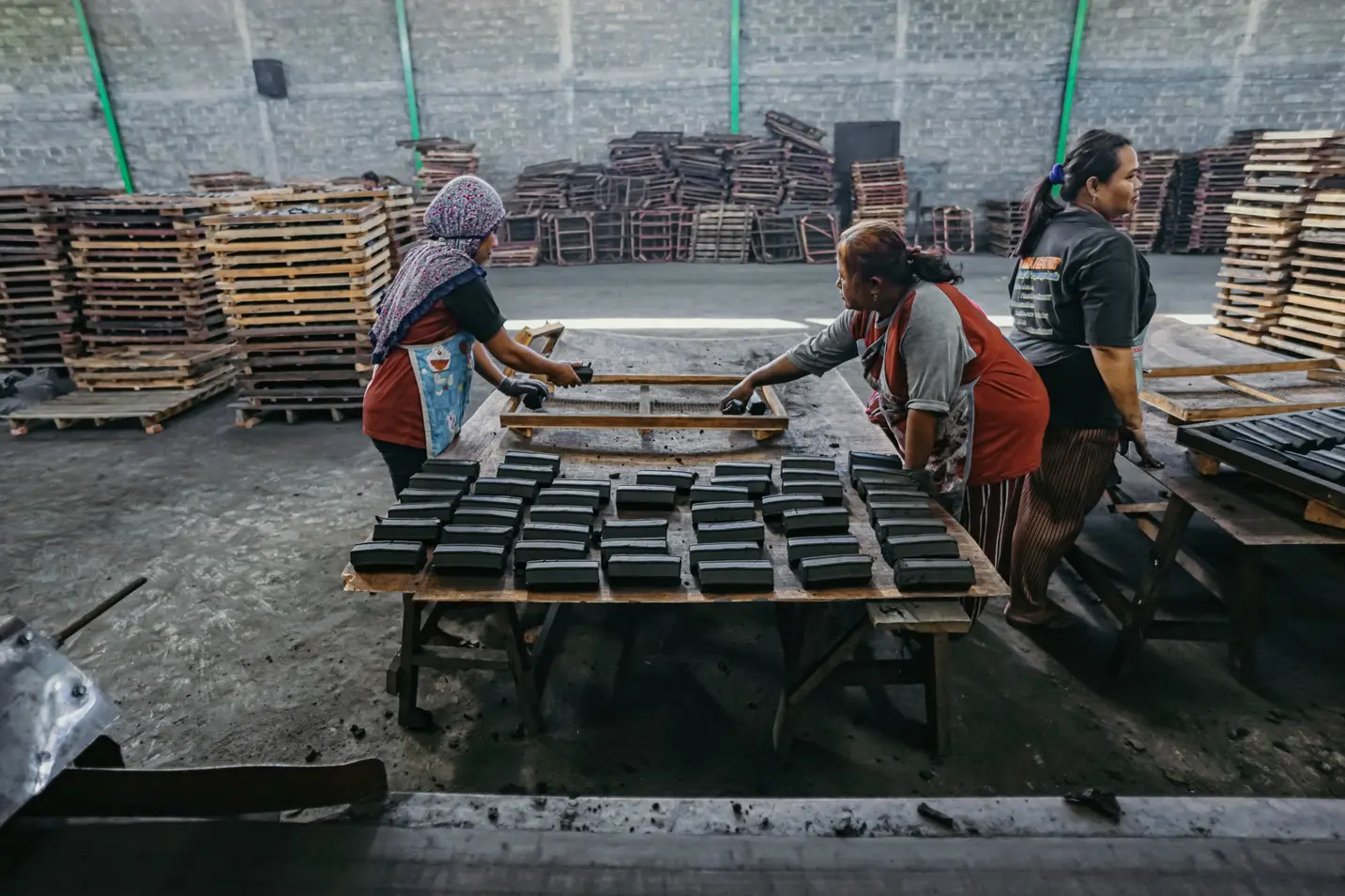
Evidence stack
Ask one evidence layer to do one honest job.
Current specification
Defines the grade, ash limit or target, reporting basis, method, revision, and acceptance language that apply to the reviewed requirement.
Identified laboratory result
Reports ash content for a named specimen under a stated method and basis. It proves only what was tested and reported for that specimen.
Controlled ash-yield test
Uses the same starting mass, appliance, burn endpoint, cooling procedure, collection method, and scale for each comparison sample.
Operating observation
Records airflow restriction, ash stability, fall-off, dusting, interventions, useful heat, cleaning time, and disposal burden in the target application.
Order-linked conformity record
Connects the approved document and evidence route to the purchase order, relevant production identity, inspection, and retained records.
Ash-content red flags
Six shortcuts that make supplier comparisons unreliable.
None of these automatically proves bad charcoal. They prove the evidence is too weak for the conclusion being sold.
Ash percentage has no basis
The sheet publishes a number but does not state whether it is as-received, dry basis, or calculated under another convention.
White ash is called low ash
Color and quantity are separate observations. A pale photograph cannot establish the percentage remaining after combustion.
One staged burn photo is the proof
A photograph can show appearance at one moment. It cannot prove starting mass, complete combustion, cooled ash mass, method, or representativeness.
The lowest value automatically wins
Ash is one procurement field. Useful heat, ignition, strength, breakage, sparks, odor, packaging, landed cost, and supply control still matter.
Methods are assumed equivalent
A supplier name for the parameter is not a test definition. Laboratory preparation and reporting conventions can change comparability.
A sample result becomes a shipment promise
A result for one specimen does not control future containers unless sampling, acceptance, change control, and order linkage are defined.
Current Unimax grade targets
Use declared values as a starting point—not as missing test paperwork.
The current Unimax BBQ product page declares ash targets of maximum 8% for Super Premium and 8-10% for Premium. Confirm the current product-specific specification, reporting basis, method, sample identity, acceptance language, and available evidence before relying on those values for a purchase decision.
Ash color is declared separately as white-cream for both grades. That color description is not the ash-content measurement.
BBQ ash-content FAQ
Keep the percentage, the picture, and the grill test in their own lanes.
That separation makes supplier evidence easier to compare and much harder to inflate.
01What does ash content mean in BBQ charcoal?+
Ash content is the proportion of non-combustible residue measured after a prepared charcoal specimen is heated under a stated analytical method. Buyers should read the percentage together with the method, reporting basis, sample identity, and limit language.
02Is lower ash always better for BBQ charcoal?+
Not automatically. Lower ash can reduce residual material, but the commercial decision still depends on useful heat, ignition, airflow, ash behavior, strength, breakage, sparks, odor, packaging, price, and the buyer's appliance. Compare the complete operating result under one method.
03Is white ash proof of low ash content?+
No. Ash color is a visual observation; ash content is a quantitative result. Lighting, camera exposure, burn stage, mineral composition, contamination, and airflow can affect appearance. Record color separately and measure quantity under a defined method.
04Why do dry-basis and as-received ash results differ?+
The denominator changes. An as-received result includes the sample's moisture in the original mass, while a dry-basis result expresses the residue relative to dry material. The values should not be compared until they are placed on the same stated basis.
05How should a food-service buyer test ash performance?+
Use the same starting fuel mass, grill, arrangement, airflow, ignition, tending routine, heat checks, and endpoint. Cool and weigh collected ash, then separately log buildup, fall-off, interventions, cleanup time, and disposal. Repeat representative cycles before deciding.
06What are Unimax BBQ charcoal ash specifications?+
The current website declares a maximum ash target of 8% for BBQ Super Premium and 8-10% for BBQ Premium. These are declared grade targets, not a substitute for a current product-specific specification, stated reporting basis, method, identified test result, or order acceptance agreement. Request the current documents for the requirement being reviewed.
Comparable evidence before commercial approval
Request the Current BBQ Ash Specification and Test Evidence
Share your company, destination, intended application, briquette format, required ash limit and basis, test method, packaging needs, and sourcing stage.
Discuss it on WhatsApp