
Specifications & evidence
Why Moisture Content Matters in BBQ Charcoal Briquettes
Moisture content affects the mass a buyer receives, the energy needed during ignition, and the condition that packaging must protect. The percentage is useful only when method, basis, sampling point, and product identity stay attached to it.
Same basisSealed sampleDefined test point
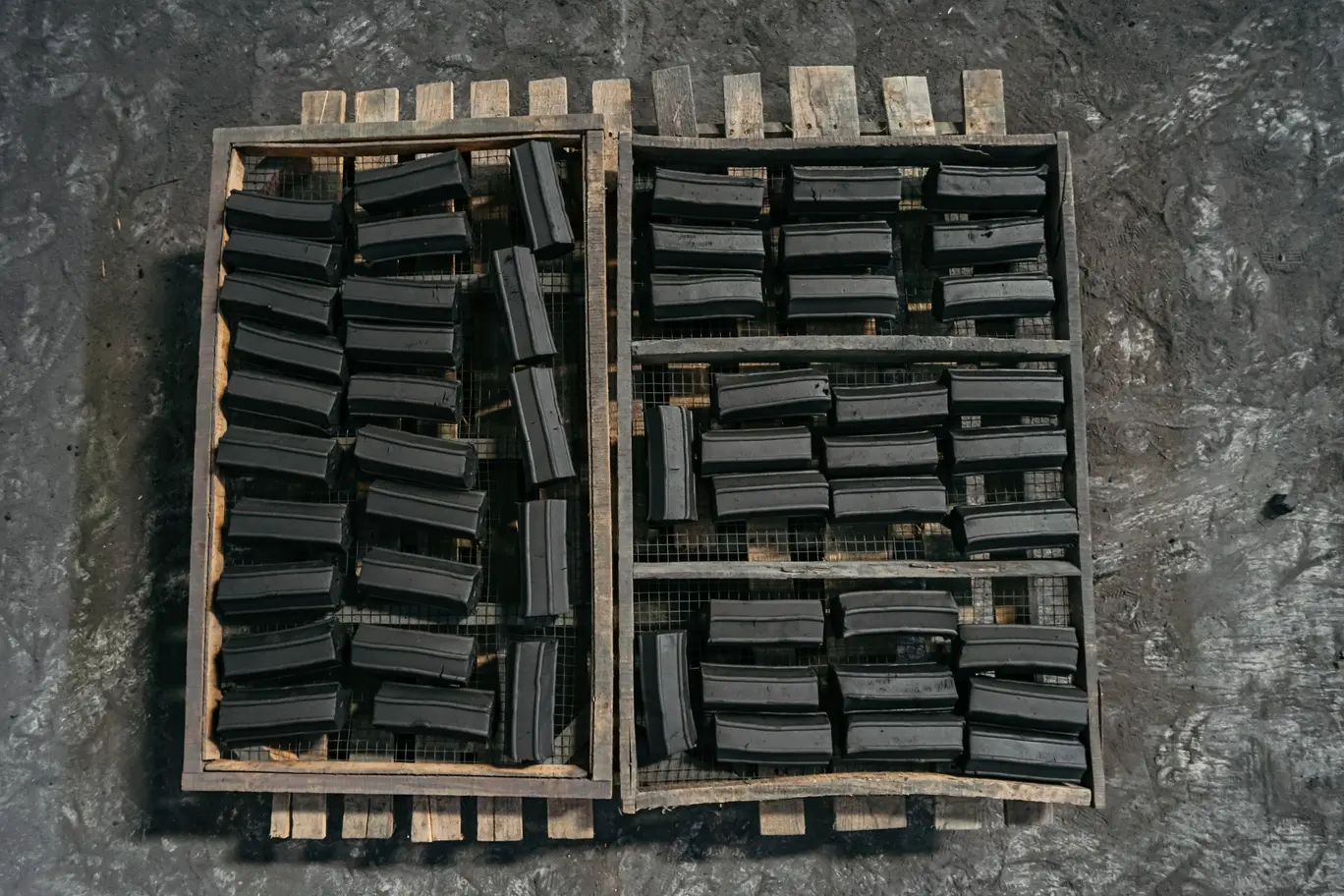
Start with the correct definition
Moisture content is a measured mass relationship—not a complete quality score.
A moisture result describes how much water is removed from an identified prepared specimen under a stated method and calculation basis. It does not independently prove burn duration, useful heat, strength, ash behavior, odor, or shipping survival.
Low moisture is commercially relevant, but it does not get to wear every quality badge in the catalogue. Buyers still need comparable composition data, physical checks, controlled burn observations, and packaging evidence.
Performance and purchasing effects
Connect moisture to the fuel, the grill, and the delivered tonne.
The same headline percentage can mean little when suppliers use different bases, test points, or sample handling. Control those variables before ranking the result.
- 01
Ignition and warm-up
Before wet fuel can heat normally, part of the supplied energy is used to warm and evaporate water. In a controlled side-by-side test, higher moisture can delay the agreed ready-to-cook point.
Comparison control: Use the same starting fuel mass, appliance, lighting method, airflow, turning routine, and ready-to-cook definition.
- 02
Useful heat
Moisture can reduce early usable heat because evaporation consumes energy. It does not, however, predict the complete heat curve by itself; dry fuel mass, fixed carbon, density, geometry, airflow, and tending still matter.
Comparison control: Record temperature or another agreed heat indicator at fixed intervals instead of scoring only total burn time.
- 03
Early vapor, smoke, and odor
Water can create visible vapor or condensation during heating. Smoke and odor may also occur for other reasons, so buyers should record these observations separately rather than calling every visible plume a moisture result.
Comparison control: Observe vapor, visible smoke, odor, sparks, and condensation as separate fields under the same ignition setup.
- 04
Delivered usable fuel
When moisture is expressed on an as-received basis, more water in the delivered tonne means less dry material in that tonne. This affects supplier comparison even before the briquettes reach the grill.
Comparison control: Compare moisture on one stated basis and calculate dry matter from the same verified delivery mass.
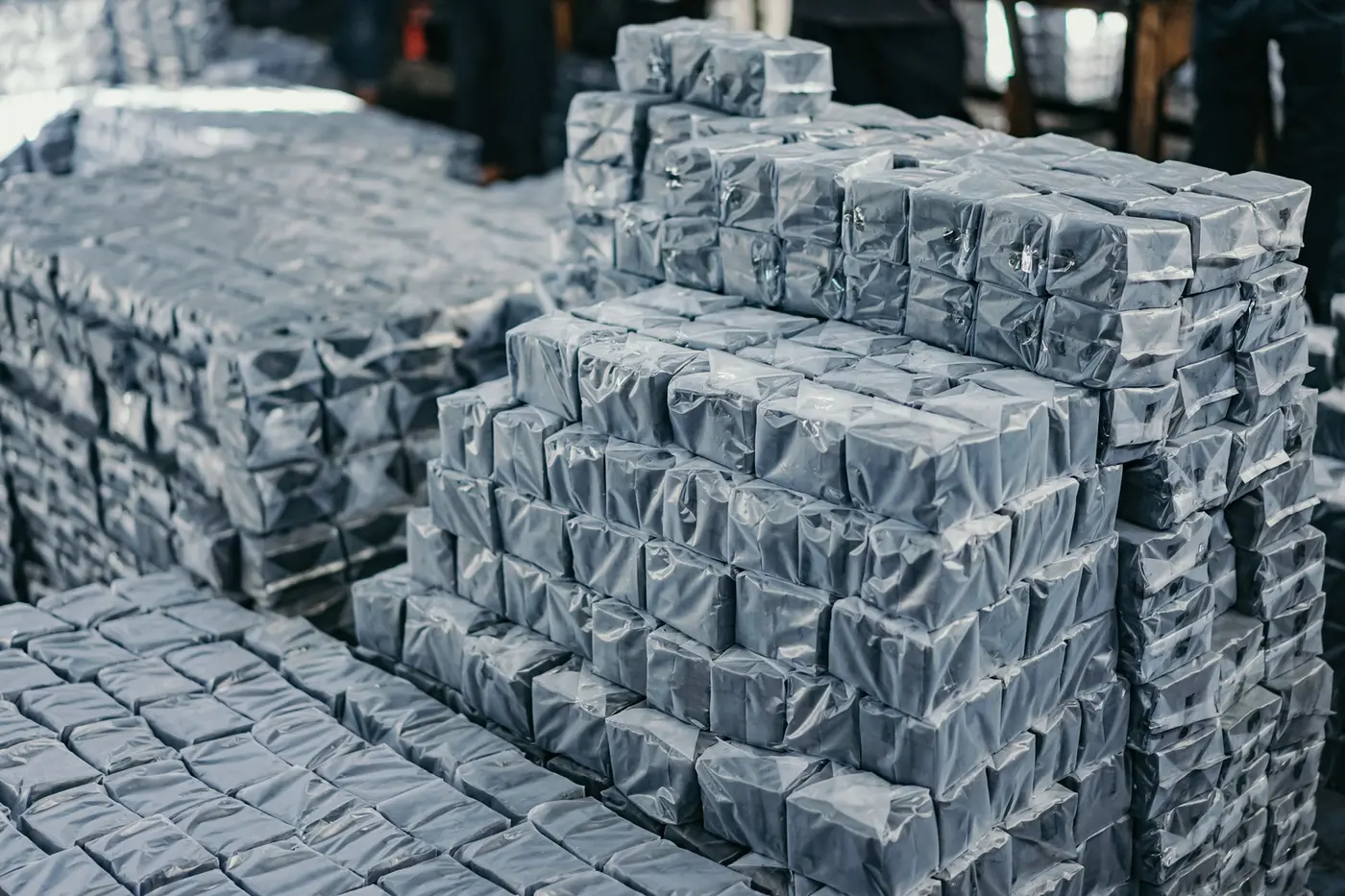
Moisture can move after production
The inspection point matters as much as the percentage.
After drying
Useful for production control, but not automatically the condition after later cooling, handling, packing, storage, and transport.
Before shipment
Closer to commercial dispatch when the sampling plan, pack condition, test timing, and lot identity are controlled.
At destination
Reflects arrival condition but also includes packaging, transit, storage, handling, temperature, and humidity influences.
During a dispute
Requires sealed retained samples, arrival records, photographs, package inspection, and agreed responsibility—not a random open bag.
Six-step buyer method
Compare supplier moisture results without moving the goalposts.
Fair comparison starts with sampling and ends with order linkage. A naked percentage in a quotation is not evidence; it is typography with ambition.
- 01
Identify the product and lot
Record supplier, grade, raw material, briquette form, sample date, production or lot reference, pack condition, and where the sample was taken.
- 02
Define the sampling point
State whether testing occurs after drying, before packing, at pre-shipment inspection, from a sealed sample, or after arrival. Moisture can change between these points.
- 03
Confirm the method and basis
Record the drying method, equipment, specimen preparation, temperature and endpoint rule, unit, calculation, and whether the percentage is as received, wet basis, or dry basis.
- 04
Protect sample integrity
Use representative increments and a sealed, identified container. Record the time between sampling, sealing, transport, opening, and testing.
- 05
Run a controlled performance test
Keep fuel mass, ignition, appliance, airflow, arrangement, heat checks, tending, and endpoint constant while separately recording vapor, smoke, odor, and ignition time.
- 06
Link acceptance to the order
Reference the approved specification revision, sampling rule, test point, laboratory or inspection record, purchase order, relevant lot, and decision rule.
Supplier comparison fields
Five fields that must travel with every moisture number.
Keep these fields together in the supplier comparison, specification, inspection instruction, and acceptance record.
Percentage, unit, raw result, rounding rule, and whether it is a maximum, target, typical value, or identified batch result.
A similar-looking number can carry a completely different commercial obligation.
As-received or wet-basis percentage, dry-basis percentage, and the exact formula used if a conversion is shown.
Two percentages can be mathematically different even when they describe the same water and dry-matter masses.
Named standard or laboratory procedure, preparation, drying temperature, drying duration or constant-mass rule, equipment, and calculation.
The word moisture does not make results directly comparable when procedures differ.
Sampling location, number of packs or increments, seal, storage, timing, ambient exposure, sample identity, and chain of custody.
An open or delayed sample may no longer represent the material at the agreed inspection point.
After production, before packing, pre-shipment, container loading, arrival, or another contractually defined point.
A compliant factory result can be misread as a guarantee of condition after later storage or transport.
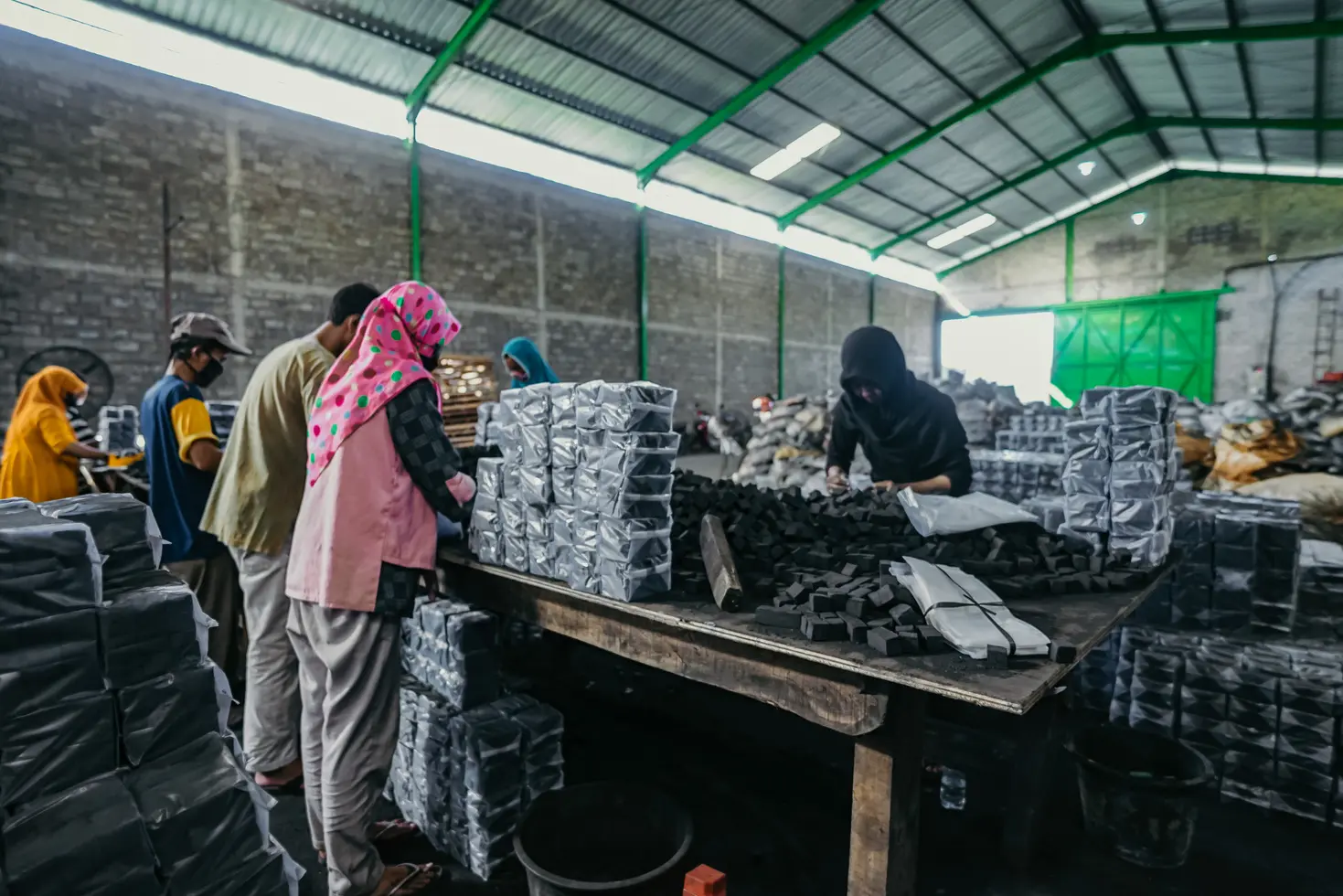
Evidence stack
Ask one evidence layer to do one honest job.
Current product specification
Defines the grade, moisture limit or target, method, reporting basis, sampling point, document revision, and acceptance language.
Identified moisture result
Reports the result for a named specimen under a stated method and basis. It proves only what was sampled, tested, and reported.
Packing and storage record
Documents pack condition, sealing, finished-goods handling, storage environment where available, and the time between packing and dispatch.
Controlled ignition test
Records ready-to-cook time, early heat, visible vapor, smoke, odor, sparks, and other observations under one repeatable setup.
Order-linked conformity record
Connects the approved requirement and inspection route to the purchase order, relevant production identity, shipment, and retained evidence.
Moisture-content red flags
Six shortcuts that make supplier comparisons unreliable.
None automatically proves bad charcoal. Each proves the evidence is too weak for the conclusion being sold.
The percentage has no basis
The supplier publishes a moisture number but does not state whether it is as received, wet basis, dry basis, or calculated another way.
The test point is missing
A result taken after production is treated as if it automatically proves the condition at loading or destination.
An open sample is called representative
The specimen sits exposed before testing, with no seal, timing, packaging condition, or chain-of-custody record.
Visible smoke is blamed only on water
Vapor, smoke, odor, binder behavior, contamination, ignition method, and incomplete combustion are collapsed into one unsupported diagnosis.
Lower moisture automatically wins
Moisture is one specification field. Useful heat, ignition, strength, breakage, ash, sparks, odor, packing, landed cost, and supply control still matter.
One result becomes a shipment guarantee
A test for one sample is stretched across later lots without defined sampling, acceptance, storage, change control, or order linkage.
Current Unimax grade target
Use the declared value as a starting point—not as missing test paperwork.
The current Unimax BBQ product page declares maximum moisture of 6% for both Super Premium and Premium. Confirm the current product-specific specification, reporting basis, method, sampling point, sample identity, acceptance language, and available evidence before relying on that value for a purchase decision.
A moisture result for an identified specimen does not automatically prove ignition time, burn duration, arrival condition, or every future container. Those claims need their own defined evidence.
BBQ moisture-content FAQ
Keep the percentage, the sampling point, and the grill test in their own lanes.
That separation makes supplier evidence easier to compare and harder to inflate.
01What does moisture content mean in BBQ charcoal briquettes?+
Moisture content expresses the water removed from a prepared specimen under a stated test method relative to a stated mass basis. Buyers should read the percentage with the method, reporting basis, sample identity, sampling condition, and test point.
02Does higher moisture make BBQ charcoal harder to light?+
It can delay warm-up because energy is used to heat and evaporate water before the fuel reaches the same operating condition. The effect should be verified with the same fuel mass, appliance, ignition method, airflow, arrangement, and ready-to-cook definition.
03Are wet-basis and dry-basis moisture percentages the same?+
No. Wet-basis or as-received moisture divides water mass by total received mass, while dry-basis moisture divides water mass by dry-material mass. Compare suppliers only after confirming the basis and calculation.
04Can moisture change after the briquettes leave the factory?+
Yes. Packaging barrier, seal quality, storage time, humidity, temperature changes, handling, and water exposure can affect condition. A factory result should therefore be tied to a defined sampling point and not casually promoted into an arrival guarantee.
05How should importers sample charcoal for moisture testing?+
Define a representative sampling plan across the relevant packs or lot, place the combined or reduced specimen in a sealed identified container, record its condition and timing, and test it under the agreed method as soon as the procedure requires.
06What is the Unimax BBQ charcoal moisture target?+
The current Unimax BBQ product page declares maximum moisture of 6% for both Super Premium and Premium grades. Confirm the current product-specific specification, method, reporting basis, sampling point, and available evidence before using that value as an order acceptance criterion.
Comparable evidence before commercial approval
Request the Current BBQ Moisture Specification and Test Evidence
Share your company, destination, intended application, briquette format, required moisture limit and basis, test point, packaging needs, and sourcing stage.
Discuss it on WhatsApp