
Importer packaging and logistics guide
How to Order and Evaluate an International Charcoal Sample
A useful sample has a defined purpose, a traceable identity and a test plan. Confirm the shipping arrangement before dispatch, then document what arrived and how you evaluated it.
Buyer briefShipping reviewSample evaluation
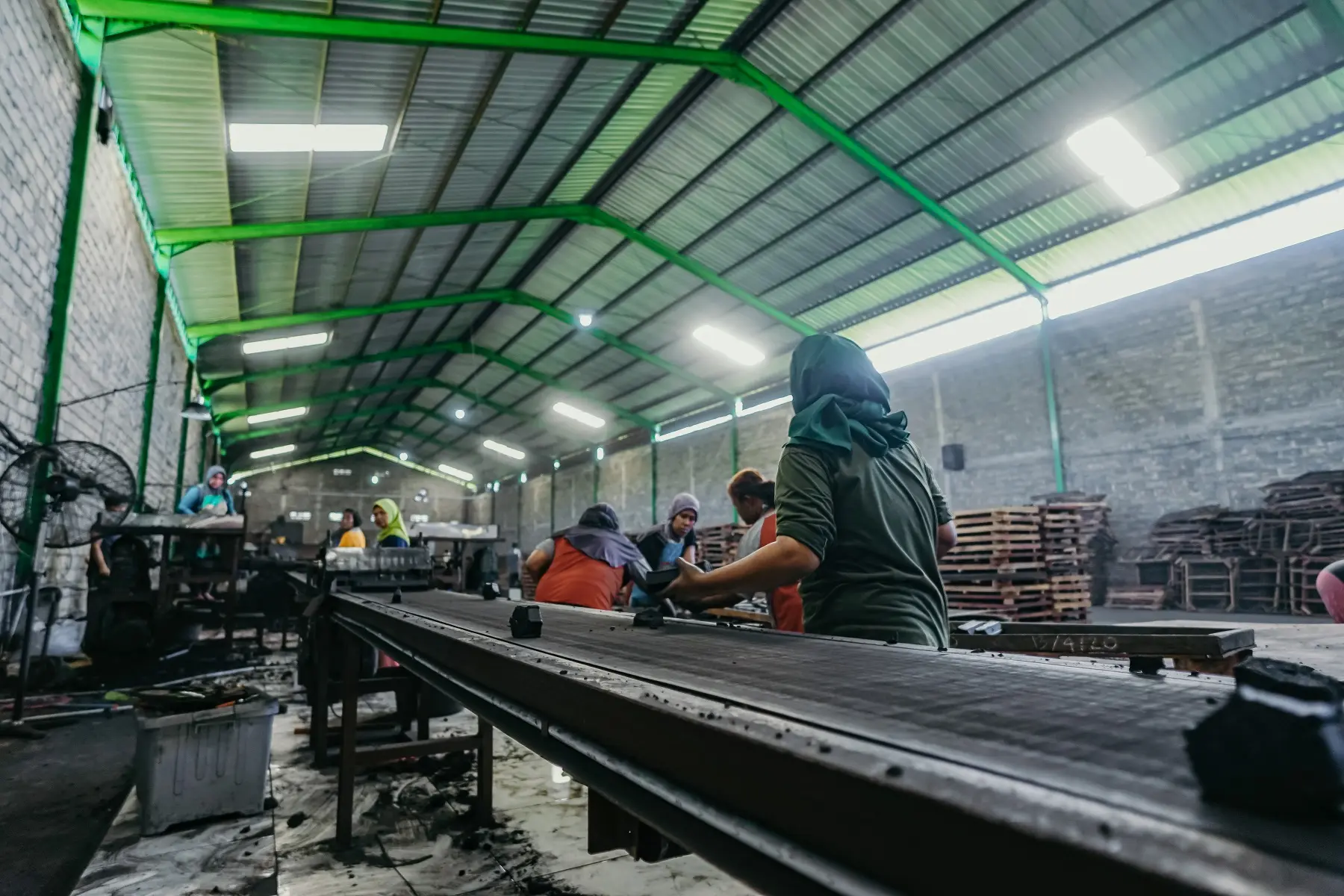
International BBQ charcoal sample
Decide what the sample needs to answer.
For an overseas importer, a sample can help evaluate fit for a cooking application, product specification or customer requirement. Start with the buying question. A sample selected only because it looks attractive may not represent the format or grade you intend to order.
Unimax’s product sample is free up to 10 kg; the buyer pays international courier cost. Sample availability and shipping feasibility are confirmed case by case. This is a product-sample policy, not a promise of free delivery or acceptance on every route.
Review the BBQ charcoal range and describe the coconut charcoal briquette format you want to evaluate. Unimax currently focuses on hexagonal BBQ briquettes.
Request BBQ briquette sample
Send a brief the supplier can act on.
| Field | What to provide |
|---|---|
| Buyer and application | Company, buyer role, country, cooking equipment and intended sales channel. |
| Product requirement | Format, dimensions, proposed grade and specification or performance questions. |
| Quantity and tests | Requested quantity, planned runs, laboratory allocation and retained portion. |
| Delivery details | Recipient, full address, postcode, phone and any courier account preference. |
| Shipment review | Confirm carrier acceptance, cost, packaging, documents and destination needs before dispatch. |
| Evaluation decision | Name the reviewer, acceptance criteria, report format and expected next step. |
Sample identity and quantity
Agree what is being sent and how much you need.
Ask for a sample reference, product description, dimensions, proposed specification and available batch or preparation record. Confirm whether different grades or formats will be packed and identified separately. Use the sample and batch identification guide to keep records connected.
Choose a requested quantity around the evaluation plan: repeat cooking runs, laboratory work where relevant and a retained portion for review. Up to 10 kg is the stated free-product allowance, not a required quantity for every test or an assurance that every destination accepts that amount.
Agree the quantity and allocation before dispatch. Keep a supplier-selected evaluation sample distinct from evidence about consistency across future commercial lots.
Charcoal sample shipping
Confirm the actual route before arranging collection.
Ask Unimax and the proposed carrier to review the real product, quantity, origin, destination and shipment preparation. Do not assume that a small parcel or the word “sample” removes transport restrictions. Carrier acceptance must be established for the actual shipment.
DHL’s published guidance says acceptance depends on the goods and route, and that some shipments require advance review, packaging or documents. This is a reason to confirm the arrangement; it is not confirmation that DHL or another carrier will accept your charcoal sample.
Describe the contents accurately. Have the responsible shipper and carrier confirm classification and required preparation rather than selecting a declaration from a generic online guide. If the proposed service cannot accept the shipment, ask for a reviewed alternative before booking.
Confirm the international courier charge and any other quoted charges or exclusions before agreeing to dispatch. Ask who handles destination questions and any additional costs. This page gives no fixed courier price or transit promise.
Packaging and documents
Protect identity as well as the product.
Ask how the sample will be separated, identified and protected during handling. Packaging must satisfy the accepted shipment arrangement; do not treat a generic carton-and-bag description as a transport packing instruction.
Confirm the shipment records and destination requirements with Unimax, the carrier and the recipient’s relevant adviser. Product description, quantity, recipient details and declared information should match the actual contents. A free product sample does not justify inaccurate shipment information.
Keep the sample list and tracking reference available to the evaluator. Record any difference between the agreed sample and the dispatch record before comparing results.
Receipt and conditioning
Record what arrived before preparing the test.
Photograph the unopened parcel and label, then document internal packaging, sample identifiers and visible condition. Note broken pieces, fines, damaged packaging or signs of moisture exposure. Report issues promptly with the shipment and sample references.
Do not silently discard damaged pieces and report the remainder as the condition of the whole parcel. If intact pieces are selected for a specific test, record that selection and report the arrival condition separately.
Store and prepare samples according to the agreed evaluation method. Record any conditioning and its purpose. Avoid improvised drying or other treatment that changes the sample without being disclosed. If arrival damage compromises the planned evaluation, agree whether to pause, adapt the scope or request another sample.
Evaluate imported charcoal sample
Make the comparison repeatable.
Use the BBQ sample-comparison guide to define the equipment, fuel charge, ignition method, airflow, cooking task, observation intervals and endpoint. Keep those conditions comparable across products.
Record the outcomes that matter to your application, such as handling, usable heat, cooking performance and remaining material. Keep observed results separate from laboratory properties. Match test methods and reporting basis before comparing numerical specifications.
Plan repeat runs and record exceptions. One favorable burn is an observation under its recorded conditions; it is not a guarantee of every shipment. Use suitable equipment and follow the appliance and fuel safety instructions for the evaluation.
Receipt-to-decision checklist
Keep the evidence with the sample.
Use one dated record per identified sample and note any deviation from the agreed plan.
- 01
Identify the sample
Match the pack label and supplier record; preserve sample and batch references.
- 02
Record arrival condition
Photograph the unopened parcel, labels and internal packs; note damage or moisture exposure.
- 03
Prepare comparable portions
Follow the agreed method; record storage, preparation and any conditioning rather than silently altering the sample.
- 04
Run the agreed evaluation
Keep equipment, charge mass, ignition, airflow and endpoint definitions consistent. Record repeats and deviations.
- 05
Write a scoped report
Attach observations, measurements, conditions and photos to the identified sample; separate facts from judgments.
- 06
Agree the next step
Discuss acceptance, further evidence, a revised sample or commercial planning; link any approval to the intended product.
Report and next step
Approve a defined product, not a supplier slogan.
Write the sample identity, receipt condition, methods, results, limitations and decision in a sample approval report. State which requirements passed, which need clarification and which were not tested.
If the result is promising, discuss the commercial product specification, packaging, quantity and production controls. Use the sample-to-production matching guide to connect the approval to the proposed order.
If the result falls short, share the recorded conditions and finding before asking for a revised sample. A changed product needs its own identity and evaluation; do not reuse the first approval automatically.
International sample questions
Is the Unimax sample free?
The product sample is free up to 10 kg. The buyer pays international courier cost, and availability and shipping feasibility are reviewed case by case.
Can it be shipped to any country?
Do not assume universal coverage. Confirm carrier acceptance, destination requirements and the actual shipping arrangement before dispatch.
Do I need the full 10 kg?
Request the amount needed for the agreed tests and retained portion. Confirm the quantity with Unimax and the carrier.
Does a successful sample guarantee a container order?
A sample result supports a scoped evaluation. Commercial-lot consistency, specification, packing and acceptance arrangements need their own agreement.
Shipping reference
DHL Express Indonesia — shipment acceptance guidance
Reviewed 4 October 2026. Confirm the current requirements for the actual shipment.
Country and application first
Request a sample with a clear evaluation purpose.
Send your company, country, application, product requirement, requested quantity and delivery details. Unimax can review sample selection, availability and the proposed shipping scope.
After evaluation, compare a trial order and a full-container order against the evidence, market demand and shipment structure your project can support.