
Remote supplier screening
Questions to Ask on a Live Charcoal Factory Video Call
Use this charcoal factory video call checklist to turn a supplier walkthrough into specific questions and documented observations. Follow the product through agreed areas, request clear views, and keep unverified claims open before deciding whether to travel or commission further checks.
Agreed routeResponsive questionsDocumented limits
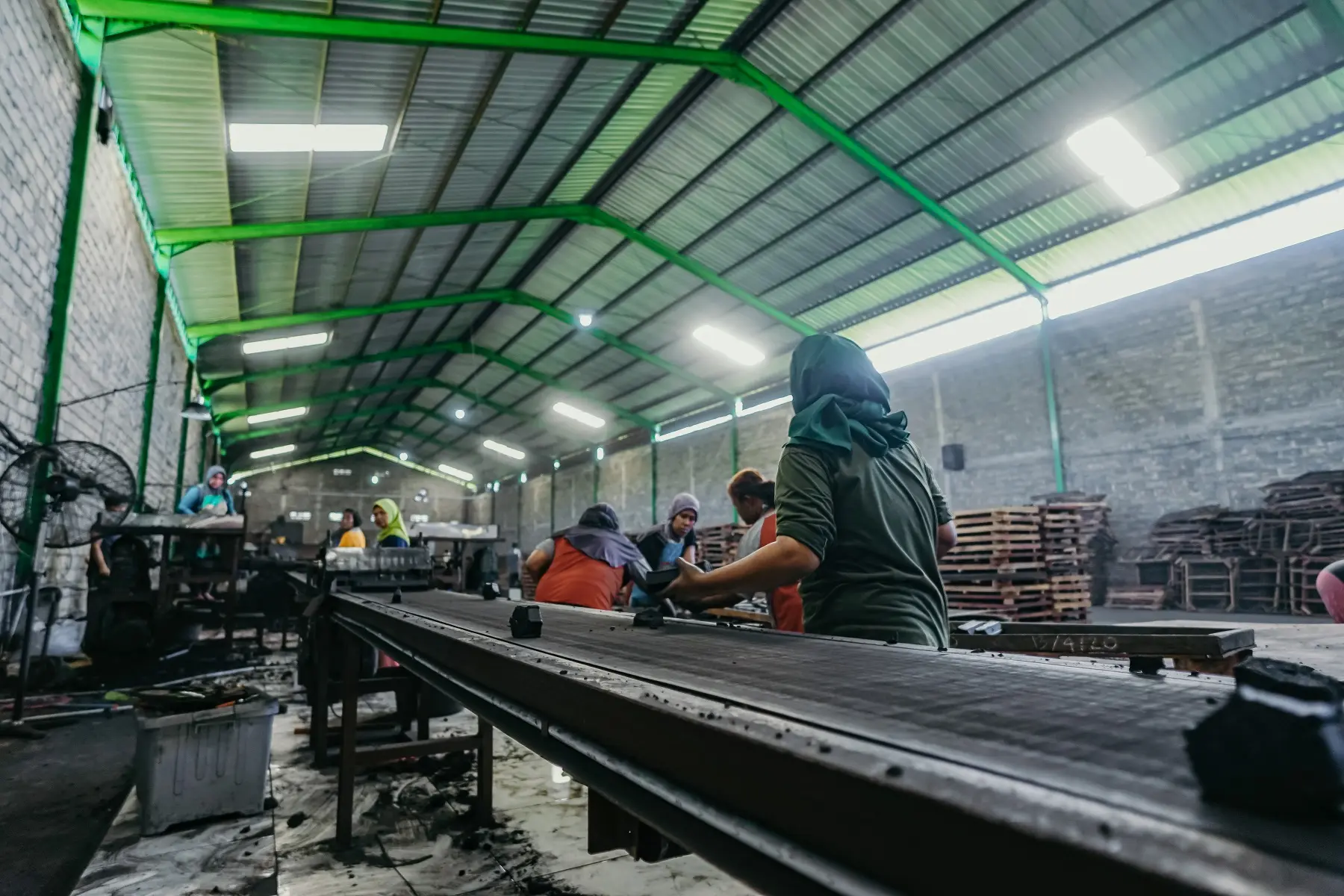
Before connecting
Agree the route and protect confidential details.
Send the supplier your product format, proposed specification, sourcing questions, preferred time zone, and evidence priorities. Ask which operations will be running and who can answer production and quality questions. Reserve time for clarification rather than accepting only a prepared presentation.
Agree camera access, staff participation, and permission for screenshots or recording before the call. Ask the host to cover other buyers’ brands, personal details, pricing, and restricted records. Safety and operational boundaries apply throughout the route; an alternative view or redacted document can be agreed when access is limited.
Use the factory-verification guide to organise the broader supplier review. These live factory tour questions support preliminary screening before a visit; each answer should have a clear evidence status.
Live-call route
Ten questions to guide the camera and conversation.
For every stop, note what you saw, what the host explained, which evidence reference was available, and what still needs follow-up. Adapt the sequence to safe access and actual operations.
- 01
Exterior and facility context
Ask: Which facility are we viewing, and how is it connected to the company quoting our order? Where permitted, request a safe view of the entrance or another agreed location marker. Compare the stated address with the supplier information already received. A sign or exterior view does not establish ownership.
- 02
A current date cue
Ask the host to show a prepared note with the agreed date and a buyer-selected word, then continue the live route. Request a simple camera movement or clarification during the conversation. These cues help establish that the interaction is responsive; they do not independently authenticate the location, date, or company relationship.
- 03
The actual product
Ask: Which charcoal format and specification is this? Can you show several pieces beside a permitted size reference? Clarify whether the product is current production, retained stock, or a demonstration sample. Appearance on camera cannot confirm raw-material composition, ash content, or burn performance.
- 04
The production stage
Ask: What stage is running now, what comes before and after it, and which steps happen elsewhere? Request a safe view of the product entering or leaving the agreed stage. If production is idle, record that fact and request a separate observation or supporting records rather than assuming the full process was witnessed.
- 05
Packing arrangements
Ask: How is this product packed, checked, and released? Request a view of an unbranded or authorised pack example, inner arrangement, and permitted weight-check setup. Confirm whether it represents your proposed configuration. Keep other buyers’ artwork, commercial terms, and order details outside the camera view.
- 06
Finished goods and status
Ask: Which goods are awaiting inspection, approved for release, or held? Have the host explain the visible status system and show an authorised example. Stacked cartons do not prove stock ownership, availability for your order, or monthly production capacity.
- 07
Labels and batch identity
Ask: Can we follow one permitted batch code from a pack to its related production or inspection reference? Request a close view with sensitive details covered. Record the code or approved reference in your notes and identify any missing connection. Agree a redacted follow-up copy where a screen is unreadable.
- 08
QC tools and records
Ask: Which property does this tool check, which method applies, and who releases the batch? Request a permitted equipment view and a redacted result linked to the selected reference. A tool on screen does not prove it is checked, correctly used, or that the entire shipment meets your specification.
- 09
Staff interaction
Ask an authorised production, packing, or quality contact to explain their role and one relevant control. Arrange this in advance, respect consent, and avoid filming identifiable workers unnecessarily. Do not ask anyone to interrupt a hazardous task or reveal personal information to answer a buyer question.
- 10
Buyer-directed camera requests
Ask for a closer view, another safe angle, or a return to an earlier agreed point when something is unclear. Keep requests within the agreed access boundaries. If the request cannot be met because of safety, privacy, connectivity, or restricted operations, record the reason and agree another evidence route.
Evidence limits
A responsive walkthrough leaves some claims unproven.
A video call cannot establish legal ownership, contractual authority, full production capacity, raw-material composition, or repeat-order consistency simply by showing a busy facility. It also cannot confirm every batch, every outsourced stage, or operations outside the camera route.
Camera quality, selected views, limited time, and unavailable records restrict the conclusions you can draw. Separate direct observations from staff statements and documents. For example, seeing a packing line run supports an observation about that moment; it does not establish an order-specific output commitment.
Plan further checks around the gaps: company and facility documents, identified samples, agreed tests, batch records, inspection arrangements, or a qualified visit. The factory-audit checklist helps define a more detailed on-site review.
After the call
Turn unresolved questions into a written follow-up.
Send a short summary covering the date, participants, stated facility, product scope, areas viewed, evidence references, and limitations. List each open question with the requested evidence, responsible contact, and agreed response date. Invite corrections to factual details.
If a batch label and QC result could not be connected, request a redacted reconciliation before treating the link as established. If a stage was idle, agree whether another live view or suitable records will answer your question. Keep unavailable evidence pending rather than marking every checklist item complete.
Use the outcome to decide the next sourcing step. A useful call may justify requesting samples or planning a visit, while unresolved identity or traceability questions may need clarification first. Keep the follow-up alongside your sample and batch references.
Live verification FAQ
Match your decision to the evidence available.
Document the route, permissions, and unanswered questions when you review a supplier remotely.
01Can a live call verify a charcoal factory remotely?+
It can provide useful preliminary observations and responsive answers. The buyer still needs to reconcile company identity, facility relationship, specifications, samples, records, and order controls. Record the scope and unresolved claims.
02Should buyers record the entire call?+
Agree recording and photography permission in advance. Protect workers, buyer brands, records, and sensitive operational details. Written notes and authorised redacted evidence may be more appropriate for some parts of the call.
03What if the connection fails or a stage is unavailable?+
Mark that part as unobserved or unclear. Reschedule the relevant view or request suitable follow-up evidence. A connection problem alone does not establish a supplier problem, and an incomplete view does not establish verification.
04Does a charcoal supplier video audit replace a factory visit?+
A live call is an initial screening tool. It cannot replace every on-site observation, specialist assessment, independent test, or order inspection. Use the findings to decide which follow-up checks your sourcing decision requires.
Plan your call
Request a scheduled live verification call.
Share your company, destination market, product specification, preferred date and time zone, and the factory questions you want to resolve. Identify production, packing, batch-label, and QC priorities, plus any recording or document needs.
Unimax can discuss a suitable live-call route. Timing, operating stages, authorised participants, safe camera access, and evidence-sharing arrangements need to be confirmed for the actual session.