
Investigate repeat-order changes
How Raw-Material Variation Affects Coconut Charcoal Briquettes
Coconut charcoal raw material variation is one area to review when briquettes perform differently between orders. Connect feedstock, preparation, formulation, moisture, and blending questions to identified samples and comparable evidence. A symptom can guide the investigation; it cannot establish the cause by itself.
Comparable evidenceRelevant changesConfirmed controls
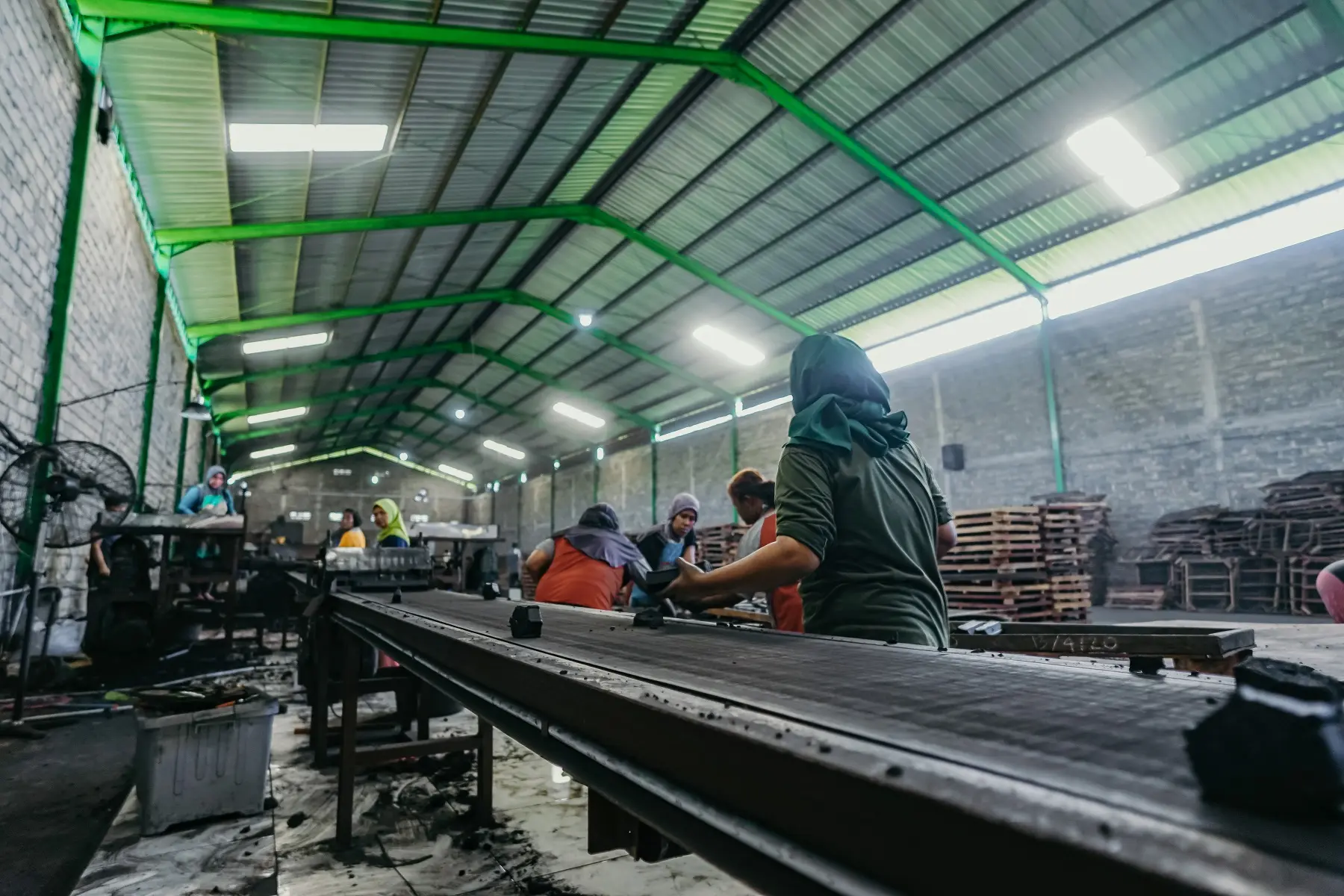
More than a feedstock name
Coconut shell charcoal quality needs a defined evidence basis.
A coconut-shell charcoal description identifies the declared feedstock category. It does not establish a universal ash value, moisture level, particle distribution, or finished-product performance. Ask which properties matter to the approved specification and how the incoming lot is connected to the goods you intend to buy.
Raw material is only one part of charcoal briquette consistency. Preparation, binder system, forming, drying where applicable, packaging, and later storage conditions can also matter. Start with the quality-consistency guide to keep the investigation broader than a single suspected cause.
Experimental research on coconut-shell charcoal briquettes has examined binder type, binder concentration, and particle size alongside physical and combustion measurements. It supports reviewing these as interacting variables; its particular formulations and results are not Unimax specifications or proof of the cause of a buyer complaint. Read the published study
Charcoal raw material control
Seven questions to connect inputs with batch evidence.
Record the property or change under review, the available reference, the method, and what remains unverified. Confirm the supplier’s actual controls without requesting a confidential recipe.
- 01
Charcoal feedstock properties
Ask how incoming charcoal is identified and assessed against the intended product specification. Relevant properties may include moisture, ash, volatile matter, and physical condition. Request the available method and batch reference; the coconut-shell description alone does not establish the measured quality of a particular lot.
- 02
Contamination and segregation
Ask how unwanted material is identified, excluded, and handled during receipt and storage. If unexpected debris or an ash change is reported, examine relevant observations and test evidence. Do not label a batch contaminated solely because its ash result differs; material, formulation, sampling, and reporting basis also need review.
- 03
Particle preparation
Ask how crushing, screening, and the particle-size distribution are controlled for the product. Changes in preparation may be relevant to forming behaviour and physical consistency. Avoid assuming that one mesh size is universally best; review the actual process, binder system, product format, and agreed performance evidence.
- 04
Formulation and binder control
Ask which product-relevant formulation changes require review and buyer approval, and how the supplier maintains the approved specification. Binder type, amount, mixing, and added water can be relevant to physical and combustion properties. Request evidence of control rather than a proprietary recipe or an unsupported claim that less binder always means better quality.
- 05
Moisture and storage context
Distinguish incoming-material moisture, water added during preparation, finished-product moisture, and later exposure in storage or shipment. Ask which point was sampled and how it was measured. A finished-product result cannot by itself locate when or where the moisture changed.
- 06
Blending and lot boundaries
Ask whether input lots are combined and how the resulting production scope is identified. Clarify any material substitution relevant to your approved product. Blending may be part of a controlled process, but a visual inspection cannot prove blend composition or demonstrate that variation has been eliminated.
- 07
Changes and evidence availability
Ask what incoming checks, relevant changes, batch references, retained samples, and release information are actually available for the order. Keep unavailable fields pending. This guide does not state that every control or record is present in the current Unimax operation.
Observation to investigation
One symptom can have several explanations.
If briquettes break more easily, review identified samples, forming and preparation context, formulation, moisture, packaging, and handling. Do not conclude that a binder change or lower-quality feedstock caused the issue merely from a photograph of broken pieces.
If a lab result changes, compare the product and batch references, sampling, method, units, and reporting basis before attributing the difference to incoming material. The lab-report guide explains why a measured result must stay connected to its sample and scope.
For a moisture concern, separate the condition at production release from later exposure and sampling conditions. Use the moisture guide to frame the evidence request. Keep each possible explanation labelled as a hypothesis until supported.
Follow the change
Compare the approved scope with the batch under review.
Identify the approved specification, sample reference, and affected order. Ask which relevant input, preparation, formulation, or production changes occurred within that scope, and what evidence can connect them to the goods. A material change and a performance change occurring together do not automatically prove causation.
Compare affected and unaffected samples under sufficiently aligned conditions where practical. Review available results and records with the responsible team, then decide whether a further test or inspection would distinguish competing explanations. The batch-records guide helps organise the reference trail.
For repeat orders, agree how product-relevant substitutions and formulation changes will be reviewed against the approved specification. Ask how incoming lots are identified, what happens when a check raises a concern, and who authorises a release or a proposed change. Confirm which controls and records are actually available rather than assuming a universal system.
Keep sourcing claims specific. A photo, dark colour, or feedstock label does not establish absolute purity, verified origin, or a sustainability claim. Request traceable documentation appropriate to the stated claim and avoid extending limited evidence to every material lot.
Raw-material variation FAQ
Review causes with evidence, not a single symptom.
Material identity, preparation, formulation, and test scope belong in the same investigation.
01Does coconut-shell charcoal always produce identical briquettes?+
No. The feedstock description alone does not establish identical measured properties. Preparation, formulation, forming, moisture, packing, storage, and test conditions also need review when comparing batches.
02Does higher ash prove a raw-material substitution?+
No. It is a result to investigate against the same method, reporting basis, sampling scope, and product specification. Relevant material and formulation evidence may help, but one result does not establish a particular cause.
03Can buyers review binder control without receiving the recipe?+
Yes. Ask for the declared product information needed for your specification, relevant change controls, and appropriate test or physical evidence. The supplier can protect proprietary proportions while clarifying which changes require agreement.
04Can a raw-material photo prove purity or sustainability?+
No. A photograph describes a visible scene. Composition, source, purity, and sustainability claims require evidence appropriate to the specific claim and scope, including traceable documentation where relevant.
Clarify the control scope
Ask how incoming material and batch changes are controlled.
Share your product, specification, order and sample references, observed difference, and any comparable test results. Identify questions about feedstock properties, contamination, particle preparation, binder control, moisture, or blending.
Unimax can discuss the relevant controls and evidence available for the actual product and order. Review and sharing scope must be confirmed with the responsible team; proprietary recipes and unsupported purity, source, or sustainability claims are not needed to frame a focused investigation.