
Read factory visuals critically
What Production-Line Evidence Can Prove to Charcoal Buyers
Charcoal production line evidence is useful when the claim matches the view. Photos and videos can show a facility scene, visible products, or an observed action. Buyers still need to connect those observations to the date, facility, specification, batch, and order they intend to verify.
Visible observationsDefined limitationsRelevant follow-up
Observation before inference
Describe the scene before accepting the claim.
Remote buyers often receive a mixture of close-ups, factory photographs, edited clips, and loading videos. Start by recording what each item visibly shows. Then record what the supplier says it proves. If the claim is broader than the view, identify the evidence still needed.
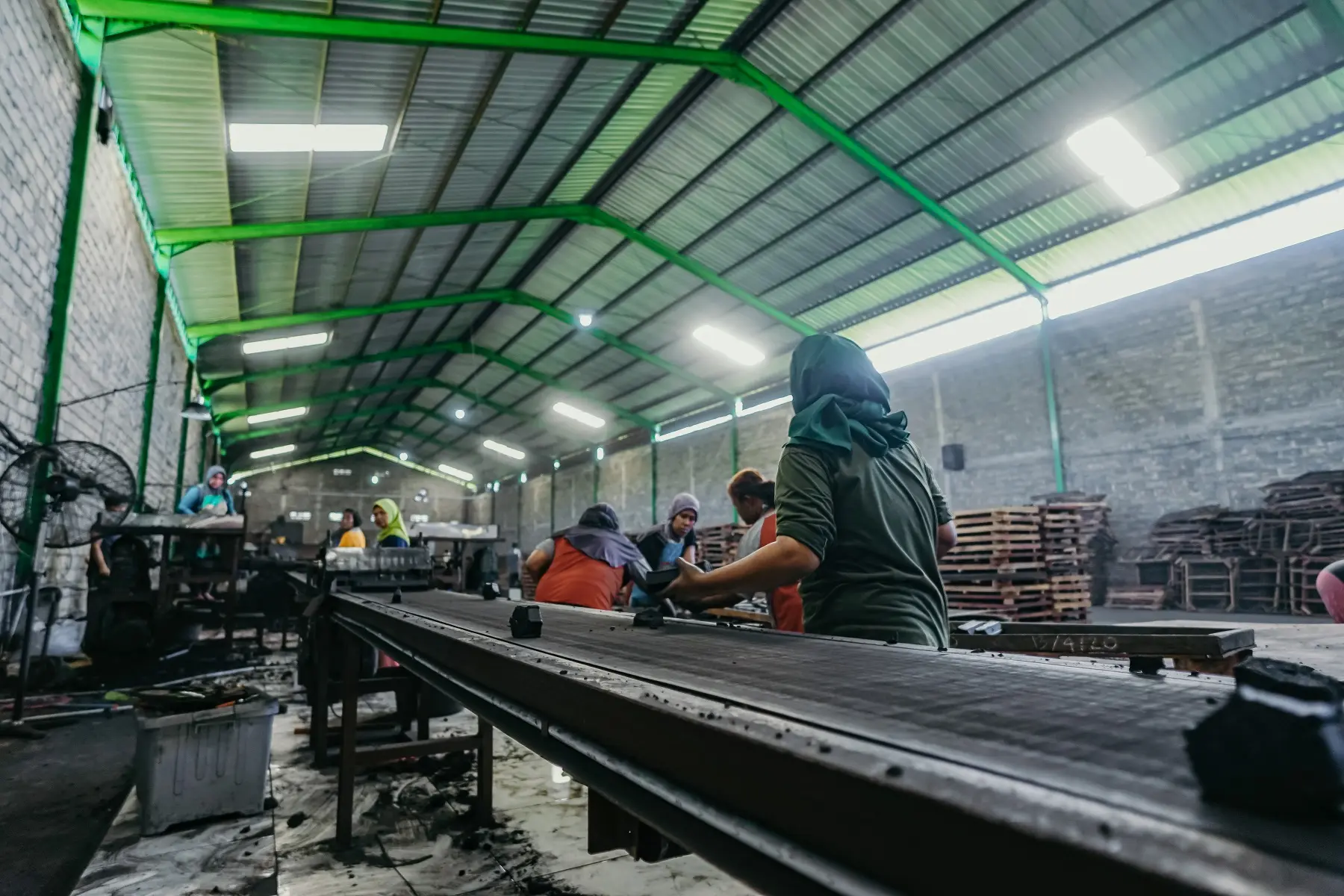
For example, people standing beside equipment in a factory space support a description of that scene. The photograph alone does not establish what the equipment is doing, the material composition, ownership of the facility, or the output available for your order. A filename is a filing label, not a verified process description.
Review the Unimax gallery for visual context and Factory & Quality for the stated production and control framework. Keep the image, its caption, and the evidence supporting a particular claim distinct.
Briquette manufacturing evidence
Eight ways to assess a production image or clip.
Note the source, stated capture date, visible scene, related product, claimed conclusion, and limitations. Ask for clarification where the sourcing decision depends on something outside the view.
- 01
Facility activity
Workers, equipment, and material movement can support observations about the scene shown. A still image does not establish that a line was running; a video shows only the activity within its frame and duration. Ask which facility and operation you are viewing and how they relate to the company quoting your order.
- 02
Product appearance and shape
A clear close-up can show visible form, surface condition, and apparent uniformity of the pieces selected. A suitable reference may help discuss dimensions, but camera perspective can distort size. Appearance alone cannot establish coconut-shell composition, grade, ash content, moisture, strength, or burn performance.
- 03
A particular process stage
An extended view may help show product entering or leaving an identified stage. Ask the host to explain the stage, its inputs, outputs, and any off-site steps. A tight crop of equipment does not establish the complete manufacturing sequence or prove that all stages take place at the same facility.
- 04
Date and current operation
A supplier-stated date, original file details, and an agreed live date cue provide context to review together. None independently authenticates the full story. Ask for current, responsive evidence when timing matters; an old video cannot establish that the same line or product is operating today.
- 05
Visible scale
A wider view can show the equipment or stock within the frame. It cannot establish total line count, saleable monthly output, available capacity, or stock reserved for your order. Request product-specific output records and a reviewed schedule for those claims.
- 06
Control activity
A video of a size or weight check may show someone performing that particular action. Ask which method, specification, sample, and batch it relates to. The view does not establish equipment checks, sampling coverage, acceptance criteria, recorded results, or release authority unless those connections are supported separately.
- 07
Product and shipment identity
A permitted label close-up may show a code on the item filmed. Connect it to packing, batch, inspection, and shipment records before attributing it to your order. Generic cartons, a loading clip, or an unrelated product close-up do not prove the identity or condition of your whole shipment.
- 08
Evidence continuity and source
Ask who supplied the file, where it was captured, what it represents, and whether it is original, edited, or illustrative. A stock image illustrates a scene; it does not verify the supplier’s own facility. Crops and edited clips can omit context. Request a wider view or buyer-directed live clarification when a material question remains.
Context and currency
Stock images, crops, and old videos leave different gaps.
A stock image can illustrate a generic manufacturing scene, but it cannot establish that the supplier operates the depicted facility. An old supplier video may document a past scene; it does not establish current equipment availability, staffing, production, or order readiness.
A tight crop can make the product easier to see while hiding the surrounding process and location. Ask for a safe wider angle or a continuous view linking the detail to its surroundings. Record the scope of edited footage instead of treating separate scenes as one uninterrupted production flow.
These limitations do not automatically establish dishonesty. They mean that the evidence cannot yet support the broader claim. If the concern is monthly supply, use the production-capacity guide to request output and scheduling evidence.
Buyer-directed verification
Request the view that answers your actual question.
Replace a general request for more factory photos with a specific question. To clarify a process stage, ask for an authorised wider view and an explanation of where the material comes from and goes next. To clarify a batch reference, ask for a permitted label view and the redacted record that connects it to inspection or packing.
Arrange current live evidence when responsive camera movement or staff clarification would help. Agree the route, operating time, safe access, participants, and recording permission beforehand. Protect workers’ privacy, other buyers’ brands, commercial records, and sensitive operations.
The factory-video call guide provides a practical route. For product identity, use the sample and batch guide. Mark unobserved areas and unclear references as pending until the appropriate follow-up is reviewed.
Keep a short evidence log: question, file or call reference, observation, stated explanation, supporting record, remaining gap, and agreed follow-up. The next step may be a redacted document, identified sample, agreed test, or inspection rather than another photograph.
Production evidence FAQ
Match the conclusion to the scope of the view.
Visual context helps supplier screening when dates, identities, and limitations are documented.
01Are charcoal factory photos proof of production capacity?+
They can show visible equipment, people, or stock. Monthly output and available capacity need product-specific operating assumptions, records, commitments, and scheduling evidence. A photograph alone does not establish those figures.
02Can an old manufacturing video still be useful?+
Yes, as clearly dated historical context for the scene shown. It cannot establish current operation, current capacity, or the identity of a new shipment. Request updated evidence for time-sensitive sourcing questions.
03What should a buyer do with a tightly cropped clip?+
Ask for safe wider context, an explanation of the stage, and relevant product or batch references. Record anything that remains outside the view. A limited crop is a limitation to resolve; it is not by itself proof of misconduct.
04Does buyer-directed live evidence verify every claim?+
No. It can clarify context and support responsive observations. Company relationships, product metrics, batch identity, repeat-order consistency, and shipment release still require the appropriate documents, tests, or inspections.
Resolve the evidence gap
Request current, buyer-directed evidence where needed.
Share your product, specification, process or batch reference, and the question you need to verify. State whether a closer view, wider context, staff explanation, redacted record, or scheduled live call would help your review.
Unimax can discuss appropriate evidence-sharing arrangements. Current operations, safe camera access, authorised records, confidentiality, and timing must be confirmed for the request. Visual material alone does not provide a blanket assurance about every product or shipment.